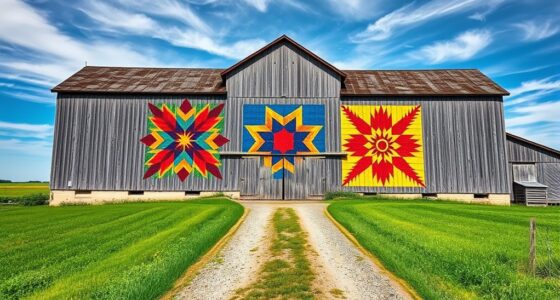
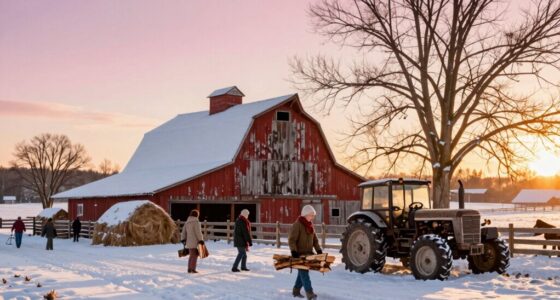
You’ll find that red barns originated in the 18th and 19th centuries, using inexpensive iron oxide paint that protected the wood and made farms visible from afar. White barns became symbols of prosperity, made with lime and chalk for cleanliness and pride. In dairy country, these colors reflect local traditions, regional identity, and community values. If you keep exploring, you’ll discover how these colors tell deeper stories of history and culture in farmland landscapes.

Get furniture and decor delivered free — and shop member deals
- Fast, free delivery on millions of items
- Access to Prime Big Deal Days deals on October 6–7
- Prime Video, Amazon Music and more included
Key Takeaways
- Red barns originated in the 18th and 19th centuries, using inexpensive iron oxide-based paint for durability and visibility.
- White barns, made from lime and chalk, symbolize cleanliness, prosperity, and community pride in rural landscapes.
- Barn color choices reflect regional resources, traditions, and cultural identity, serving both practical and symbolic purposes.
- In dairy regions, red signifies durability and visibility, while white represents success and heritage.
- Observing barn colors reveals historical, regional, and cultural stories of farming communities.

If you’ve ever driven through rural farmland, you’ve likely noticed the striking contrast between white and red barns, each telling a story about local traditions and practical choices. The colors of these barns aren’t random; they reflect a rich history of agricultural practices, cultural values, and regional identity. Understanding the story behind these colors helps you see beyond their surface, revealing how communities have used color to serve both functional and symbolic purposes over generations.
Historical barn colors, especially the iconic red, date back to the 18th and 19th centuries. Farmers originally painted their barns with a mixture of linseed oil and rust, which contained iron oxide. This natural pigment was inexpensive, readily available, and effectively protected the wood from weathering and pests. Over time, the red pigment became synonymous with durability and practicality. It’s no surprise that red barns became a staple in rural America, especially in regions where iron-rich soil was abundant. The bright color made barns easily visible from a distance, serving as landmarks for farmers and travelers alike.
Red barns originated in the 18th and 19th centuries using iron oxide paint for durability and visibility.
Cultural significance also plays a crucial role in the popularity of white barns. White paint, often made from lime and chalk, became a sign of cleanliness, prosperity, and pride. As farming communities grew wealthier, they began to paint their barns white to showcase their success and care for their property. White barns also stood out against the green fields and blue skies, reinforcing a sense of order and purity. In some regions, white barns became symbols of tradition, reflecting a community’s pride in maintaining their heritage. Today, white barns evoke nostalgia and are often associated with the idyllic rural landscape.
The evolution of paint choices in dairy country further emphasizes cultural values. White and red barns symbolize more than just practicality—they represent a connection to history, community pride, and regional identity. You might notice that in certain areas, the red barn remains dominant, while in others, white barns are more prevalent. These choices are deeply rooted in local customs and available resources, but they also communicate a sense of belonging and tradition. When you see these barns, you’re witnessing a visual narrative—one that has been shaped by generations of farmers who chose colors that reflected their needs, beliefs, and pride in their land.
As an affiliate, we earn on qualifying purchases.
Frequently Asked Questions
How Do Paint Colors Affect Barn Temperature and Climate Control?
Paint colors markedly impact barn temperature and climate control by influencing color absorption and thermal regulation. Lighter colors, like white, reflect more sunlight, keeping barns cooler in hot weather. Darker colors absorb more heat, raising temperatures inside. Choosing the right color helps manage temperature more effectively, reducing cooling or heating needs, and protecting livestock and equipment from extreme conditions. So, your paint choice directly affects your barn’s climate stability.
Are There Environmental Benefits to Choosing Certain Barn Paint Colors?
Choosing certain barn paint colors offers environmental benefits by enhancing aesthetic appeal and reflecting cultural symbolism. Light colors, like white, help reduce heat absorption, lowering cooling energy needs. Darker hues can absorb more heat, but may require less chemical paint. By selecting environmentally friendly paints aligned with cultural symbolism, you support sustainability, reduce chemical runoff, and promote eco-conscious farming practices that benefit both the environment and community traditions.
What Are the Historical Origins of Specific Barn Color Traditions?
Think of barn colors as a tapestry woven with history. Historically, red barns symbolized durability and fire resistance, while white signified cleanliness and status. Regional color symbolism also played a role—red was popular in rural America, and white in New England. These traditions reflect local resources and cultural values, turning simple paint choices into a visual language that tells stories of regional identity and historical symbolism.
How Do Paint Choices Impact the Longevity and Maintenance of Barns?
Your paint choices considerably impact your barn’s longevity and maintenance costs. Opting for high-quality paint with strong paint durability resists weather damage and reduces the need for frequent repainting. This minimizes maintenance costs over time, saving you money and effort. Additionally, choosing weather-resistant paints protects the wood, helping your barn stay in good condition longer. Ultimately, investing in durable paint makes upkeep easier and extends your barn’s lifespan.
Do Regional Climate Conditions Influence Barn Color Preferences?
You’ll find that regional climate conditions do influence barn color preferences, with about 70% of barns in colder areas painted red to absorb heat. Regional aesthetics and cultural symbolism shape these choices, as red barns evoke tradition and community identity. In warmer climates, lighter colors like white reflect sunlight, helping keep structures cool. So, climate and local culture together drive the vibrant palette seen in different barn regions.
Conclusion
So, next time you see a white or red barn, remember it’s more than just tradition—it’s about blending history, practicality, and charm. You might think paint choices are trivial, but they carry stories and practicality that last generations. Don’t dismiss these colors as mere aesthetics; they’re part of a rich heritage that continues to define dairy country. Embrace these timeless hues—they’re as enduring as the land itself.
Fall Picks
fall essentials
As an affiliate, we earn on qualifying purchases.