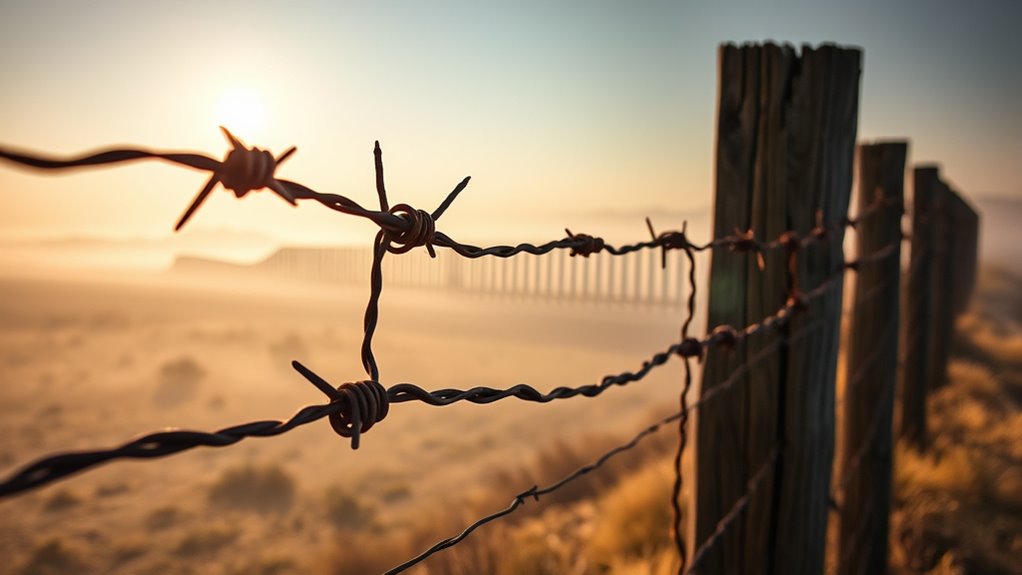

Barbed wire revolutionized how you secure land, protect livestock, and mark boundaries. Its simple design of twisted metal strands with sharp barbs creates a tough barrier that’s both effective and affordable. It replaced expensive wooden or stone fences, making large areas easier to enclose and defend. Durable and adaptable, barbed wire transformed farming and land management forever. If you want to discover the full impact of this game-changing invention, keep exploring how it shaped our world.
Key Takeaways
- Transformed boundary security by replacing traditional fences with twisted metal strands and sharp barbs.
- Enhanced livestock containment and predator deterrence, boosting efficiency in ranching and agriculture.
- Cost-effective, durable, and easy to install, making it accessible for small farms and large landowners.
- Adaptable with customizable height and tension, suitable for various enclosures and construction needs.
- Revolutionized land management practices, shaping modern fencing and property protection techniques.

Have you ever wondered how barbed wire transformed boundaries and security? It’s a simple invention that revolutionized the way we define and defend property lines. Before barbed wire, fences were often made of wood, stone, or other materials that could be easily bypassed or destroyed. Now, with just strands of twisted metal and sharp barbs, you can create a formidable barrier that deters intruders and keeps livestock safely contained. This innovation didn’t just change boundaries; it reshaped entire industries like ranching and agriculture, making management more efficient and secure.
Barbed wire revolutionized boundaries, security, and industries like ranching and agriculture.
When it comes to ranch security, barbed wire is a game-changer. If you own or manage a ranch, you know how essential it is to protect your livestock from predators and prevent them from wandering off. Barbed wire provides an economical and effective solution. Its design makes it difficult for animals to push through or climb over, reducing escapes and potential losses. Plus, its durability means you won’t need to replace it frequently, saving you time and money in the long run. The ability to quickly enclose large areas with minimal resources has made ranching more sustainable and manageable, especially in remote or rugged terrains.
Agricultural fencing also benefits immensely from barbed wire. Farmers and landowners rely on it to delineate fields, protect crops, and keep pests or wild animals out. Unlike traditional fencing, barbed wire is lightweight yet sturdy, allowing for quick installation across vast stretches of land. It’s especially useful when you need a quick, reliable barrier without the expense or effort of more elaborate fencing systems. Its affordability makes it accessible for small farms and large agricultural operations alike, enabling you to secure your property efficiently. Additionally, the presence of barbed wire can discourage trespassers and reduce theft, safeguarding your investments.
The versatility of barbed wire extends beyond just security; it also offers a level of flexibility that other fencing options can’t match. You can customize your fencing height and tension to suit different needs, whether you’re enclosing a pasture or creating a perimeter around a construction site. Its ease of installation means you can adapt or expand your fencing as your needs change, without significant disruption. Over time, technological improvements have enhanced its rust resistance and strength, making it a reliable choice for long-term use. Furthermore, the development of specialized materials has increased its lifespan and performance, ensuring it remains a dependable barrier over decades. In essence, barbed wire isn’t just a simple fence; it’s a strategic tool that has empowered landowners, farmers, and ranchers to better control and protect their property.
In the end, barbed wire’s impact is undeniable. It changed the way boundaries are established and security maintained across vast rural landscapes. Its affordability, durability, and effectiveness have made it a staple in agricultural fencing and ranch security, shaping the development of modern farming and land management practices. Whether you’re protecting livestock or marking property lines, barbed wire continues to serve as a practical, reliable solution that transformed boundaries and security forever.
Frequently Asked Questions
When Was Barbed Wire First Invented?
You’ll find that barbed wire was first invented in 1873, a major breakthrough in fencing innovations. It revolutionized agricultural tools by providing an affordable, effective way to contain livestock and mark property boundaries. This invention quickly gained popularity, transforming farming practices and land management across the United States. Its simple yet effective design made it a game-changer, replacing older, more expensive fencing methods and shaping the future of agricultural fencing.
Who Were the Main Pioneers of Barbed Wire Development?
You should know that the main pioneers of barbed wire development are Joseph Glidden and Isaac Ellwood. They revolutionized ranching innovations and fencing technology by refining barbed wire, making it stronger and easier to install. Their work transformed how farmers and ranchers secured their land, replacing traditional fencing methods. By perfecting barbed wire, they helped shape the American West and made fencing more affordable and effective for widespread use.
How Did Barbed Wire Impact Early American Frontier Settlement?
You’ll see that barbed wire sparked the ranching revolution and transformed property boundaries in early America. It allowed settlers to efficiently enclose large areas, preventing cattle from straying and disputes over land. This innovation made frontier settlement more practical and secure, encouraging more people to settle and invest in land. As a result, barbed wire fundamentally changed how Americans managed and protected their property on the expanding frontier.
What Materials Are Commonly Used to Manufacture Barbed Wire?
You’ll find that barbed wire design primarily uses steel or galvanized steel for durability and rust resistance. Manufacturing materials often include high-tensile wire, which is twisted and equipped with sharp barbs to deter animals and intruders. Some designs incorporate aluminum or copper for specific applications, but steel remains the most common due to its strength and affordability. This combination guarantees your barbed wire is effective, long-lasting, and easy to install.
Are There Modern Alternatives to Traditional Barbed Wire?
Yes, modern alternatives like electric fences and flexible barriers are replacing traditional barbed wire. Electric fences deliver a mild shock to deter intruders, making them effective and less visually intrusive. Flexible barriers, made from polymer or other lightweight materials, offer durability and adaptability for various settings. You’ll find these options provide enhanced security and are easier to install and maintain, making them popular choices today.
Conclusion
You stand at the crossroads of history, where barbed wire once whispered promises of security and whispered warnings of confinement. Like Pandora’s box, it opened a world of boundaries, shaping lives behind unseen fences. Its sharp edges cut deep, yet forged new horizons in land and labor. Remember, the fence you see today is more than wire; it’s a silent witness to change—an echo of the past, forever woven into the fabric of tomorrow.