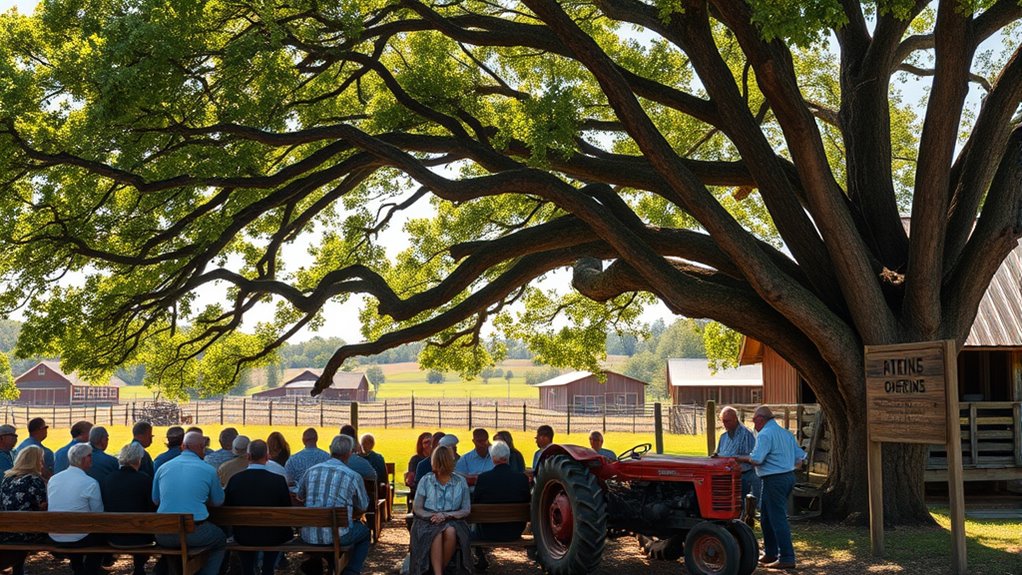

Co-ops and Granges help organize the countryside by fostering cooperation and mutual support among rural residents. They allow you to pool resources, access better markets, and negotiate fair prices for supplies and products. These groups build strong social networks, share knowledge, and support community projects that create jobs and improve infrastructure. If you want to learn how these organizations contribute to long-term prosperity and stability, keep exploring how they empower rural communities.
Key Takeaways
- Co-ops and Granges promote rural cooperation, enabling members to pool resources and access better markets.
- They foster social networks that strengthen community ties and facilitate knowledge sharing.
- These organizations encourage civic engagement and leadership, empowering members to influence local development.
- They support rural projects like land purchasing, infrastructure, and marketing initiatives to boost local economies.
- Co-ops and Granges contribute to long-term stability by enhancing productivity, sustainability, and community prosperity.

Co-ops and Granges have played a pivotal role in strengthening rural communities by promoting cooperation and mutual support. When you participate in these organizations, you’re engaging in a tradition rooted in shared goals of economic stability and community resilience. They serve as essential tools for advancing agricultural economics, helping farmers and residents pool resources, reduce costs, and access better markets. By working together, you can negotiate fairer prices for supplies, equipment, and produce, which directly impacts your farm’s profitability and contributes to the overall economic health of your rural area. This collective approach to economic activity helps stabilize income streams and fosters a more sustainable agricultural landscape.
Co-ops and Granges promote cooperation, reduce costs, and strengthen rural communities through shared resources and economic stability.
As you become involved, you’ll notice how these organizations foster rural community development beyond just economic gains. Co-ops and Granges create social networks that strengthen local ties, providing a platform for sharing knowledge, skills, and resources. They often host educational programs, workshops, and meetings that empower members with information on agricultural practices, market trends, and new technologies. This knowledge sharing enhances your ability to adapt to changing conditions, ultimately improving the productivity and sustainability of your farm or rural business. Additionally, these groups serve as advocates for rural interests, lobbying for policies that benefit agricultural communities, such as better infrastructure or fair trade practices.
Participation in co-ops and Granges also encourages leadership and civic engagement. As you take on roles within these organizations, you contribute to shaping the future of your community, ensuring that local needs are addressed. This active involvement helps build a sense of ownership and pride, fostering a stronger, more cohesive community identity. You’re not just a passive recipient of services; you’re an indispensable part of a collective effort to improve living standards and economic prospects for everyone in your area.
Furthermore, these organizations often expand their reach into rural development projects, such as cooperative purchasing of land or equipment, community improvements, and local marketing initiatives. Your involvement can directly influence the growth and sustainability of your community by supporting projects that create jobs, improve infrastructure, and attract new residents or businesses. Whether it’s through cooperative efforts to develop local markets or organize community events, co-ops and Granges serve as catalysts for positive change in rural areas. Recognizing the importance of projected economic stability through collective action can help ensure long-term prosperity for your community.

Zxweqr 13-inch Sand-Grade Chicken Poop Scooper, Large Adjustable Metal Poultry House Manure Scoop, Chicken Poop Scooper Suitable for Cleaning Chicken Coops, Stables, Gardens, and Small Farms
Durable and Rust-Resistant: This Chicken Poop Scooper features a metal shovel head and stainless steel handle. The metal…
As an affiliate, we earn on qualifying purchases.
As an affiliate, we earn on qualifying purchases.
Frequently Asked Questions
How Do Co-Ops and Granges Differ in Their Organizational Structures?
You’ll find that co-ops typically have a membership model where members own and control the organization through democratic governance, often voting on key decisions. Granges, on the other hand, usually follow a more hierarchical governance structure with elected officers leading activities. Co-ops emphasize shared ownership and profit distribution, while Granges focus on community service and social activities, reflecting their different organizational approaches.
What Are the Common Challenges Faced by Rural Co-Ops and Granges?
You face challenges like funding constraints, which limit your ability to expand or improve services, and member recruitment, making it hard to sustain operations. Both rural co-ops and granges often struggle to attract new members who can bring fresh energy and resources. Additionally, geographic isolation and limited access to resources can hinder growth, forcing you to find creative ways to engage community members and secure necessary support.
How Do Co-Ops and Granges Impact Local Economies?
Imagine a tiny village turned into a bustling hub—co-ops and granges spark local business support and rural employment. They make the economy thrive like a wildfire, creating jobs and boosting local markets. By pooling resources and buying locally, you see more income circulating within the community, transforming it into a vibrant, resilient place. Your support fuels growth, making the countryside an unstoppable force of economic vigor.
What Are the Legal Requirements to Establish a Co-Op or Grange?
To establish a co-op or grange, you need to meet legal formation requirements, such as filing articles of incorporation or a charter with your state. You’ll also establish membership criteria, like residency or income levels, to qualify members. Make certain you comply with local, state, and federal laws, including tax regulations. This process involves drafting bylaws, appointing officers, and registering your organization, so you’re legally recognized to operate and serve your community effectively.
How Do Co-Ops and Granges Promote Community Engagement?
You can’t underestimate how powerful co-ops and granges are in boosting community engagement. They foster cooperative marketing and empower local residents to take community leadership roles, making everyone feel involved. By hosting events, sharing resources, and collaborating on projects, you create a strong sense of belonging. Your active participation helps strengthen ties and builds resilient, thriving communities where everyone’s voice matters and growth happens naturally.

Rural Community Organization
As an affiliate, we earn on qualifying purchases.
As an affiliate, we earn on qualifying purchases.
Conclusion
By joining co-ops and Granges, you tap into a powerful network that strengthens rural communities. These organizations not only boost economic stability but also foster cooperation and shared purpose. Some believe they’ve played a pivotal role in resisting monopolies and promoting fairness, suggesting they’re more than just groups—they’re essential to rural resilience. Embracing this tradition could mean helping your community thrive while challenging the idea that individual effort alone can sustain rural life.
agricultural cooperative marketing kits
As an affiliate, we earn on qualifying purchases.
As an affiliate, we earn on qualifying purchases.
Grange membership educational materials
As an affiliate, we earn on qualifying purchases.
As an affiliate, we earn on qualifying purchases.