Market gardening near Mid-Atlantic cities has transformed rural life by boosting local economies and creating new income opportunities. You’ll see small-scale growers emphasizing fresh, local produce that attracts community members and strengthens local food systems. Advances in technology help farmers improve efficiency and adopt sustainable practices, ensuring long-term success. These changes also foster stronger community connections and regional resilience. Keep exploring to discover how these innovations continue shaping vibrant rural communities.
Key Takeaways
- Market gardening revitalized rural economies by increasing direct sales to local consumers and supporting small-scale farmers.
- It fostered stronger community connections through farmers’ markets and local food initiatives.
- Adoption of agricultural technologies improved efficiency, sustainability, and resource management for small farms.
- New farmstand designs and community spaces enhanced rural residents’ quality of life and social engagement.
- Innovative farming practices and climate adaptation strategies ensured long-term viability of rural agriculture near cities.
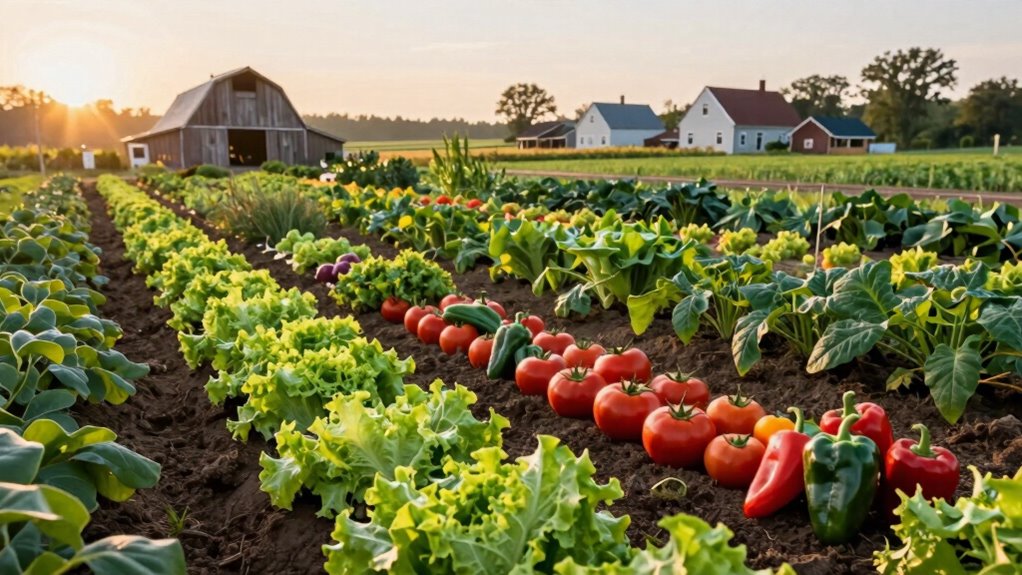
If you’re considering starting a market garden near the Mid-Atlantic region, you’re entering a vibrant and diverse agricultural scene. This area has seen a transformation driven by small-scale growers who prioritize fresh, local produce, reshaping rural life in meaningful ways. Market gardening in this region isn’t just about growing food; it’s about fostering urban sustainability and reconnecting communities to their food sources. Thanks to advances in agricultural technology, you can now cultivate more efficiently, with less waste and greater yields, even in smaller plots. These innovations help you extend your growing season, optimize water use, and monitor soil health remotely, making your farm more sustainable and profitable.
This shift towards market gardening has revitalized rural economies. Instead of relying solely on traditional farming methods or distant markets, small-scale growers sell directly to local consumers, farmers’ markets, and restaurants. This direct-to-consumer approach strengthens community ties and keeps more money circulating locally. As a result, rural residents find new opportunities for income and engagement, which reduces economic dependence on larger industrial farms. The local food movement has gained momentum, emphasizing freshness, quality, and transparency, and you become an essential part of that movement. The increased demand for organic and sustainably grown produce encourages more farmers to adopt environmentally friendly practices, further supporting urban sustainability goals.
You’ll notice that agricultural technology plays a pivotal role in these changes. Modern tools like drip irrigation, soil sensors, and mobile apps allow you to manage your garden more precisely. These technologies help you adapt to the region’s varied climate, ensuring your crops thrive despite unpredictable weather patterns. They also reduce resource consumption—water, fertilizer, energy—making your operation more eco-friendly. This integration of technology not only boosts productivity but also minimizes environmental impact, aligning with broader efforts to promote sustainable farming practices near Mid-Atlantic cities. Additionally, understanding the home design and architecture details like door swings, stair proportions, and planning can help create efficient and welcoming farmstand or community spaces that foster social interaction and community engagement. Incorporating modern agricultural practices can further enhance your farm’s sustainability and productivity. Recognizing the importance of soil health and its impact on crop yields can lead to more targeted and effective management strategies. Furthermore, staying informed about climate adaptation techniques can help you better prepare for the region’s climate variability, ensuring long-term success. Additionally, embracing innovative farming methods can help you stay ahead in this evolving landscape.

CARPATHEN Drip Irrigation System Kit for Garden Watering, Sprinkler, 100 ft
- Complete Drip Irrigation Kit: Includes emitters, tubing, fittings, and guides
- Easy Installation: Connects from water source to garden with ease
- Adjustable Spray Emitters: Customize watering for different plants
As an affiliate, we earn on qualifying purchases.
As an affiliate, we earn on qualifying purchases.
Frequently Asked Questions
How Has Market Gardening Influenced Local Food Diversity?
Market gardening boosts local food diversity by offering a wide range of crops, which in turn reflects diverse consumer preferences. You’ll notice more unique and seasonal vegetables at markets, as farmers grow different crops to meet customer demands. This variety benefits everyone by providing healthier, fresher options and encouraging culinary exploration. Your choices grow, and the local food scene becomes more vibrant and resilient, thanks to the emphasis on crop diversity driven by market gardeners.
What Are the Main Challenges Faced by Market Gardeners?
You face challenges like pest management and maintaining soil fertility, much like tending a delicate garden in unpredictable weather. For instance, a sudden pest outbreak can wipe out weeks of work, highlighting the importance of integrated pest management. Keeping soil healthy requires constant effort, balancing nutrients and preventing erosion. These ongoing struggles test your resilience, but with careful practices, you can sustain your garden’s liveliness and thrive against these obstacles.
How Do Market Gardens Impact Local Economies?
Market gardens boost local economies by providing fresh produce, creating jobs, and supporting sustainable practices. When you engage with these gardens, you help strengthen community ties and encourage local spending. Your support fosters a vibrant local food system, reduces transportation emissions, and promotes eco-friendly methods. By shopping at or working with market gardens, you contribute directly to economic resilience and sustainable growth in your area.
What Training or Skills Are Needed for Successful Market Gardening?
Did you know that successful market gardeners often spend around 60% of their time on crop management? To thrive, you need skills in greenhouse techniques and pest management. You should learn how to optimize growing conditions in controlled environments and identify pests early. Additionally, understanding soil health, irrigation, and sustainable practices helps increase yields. These skills make your market garden more productive, resilient, and profitable over time.
How Has Urban Expansion Affected Market Gardening Opportunities?
Urban sprawl has limited land accessibility, making it harder for you to find suitable plots for market gardening near MidAtlantic cities. As cities expand, agricultural spaces shrink, pushing gardeners to adapt by using smaller plots or innovative techniques like vertical farming. While this creates challenges, it also pushes you to become more resourceful and efficient, ensuring you can still grow fresh produce despite the encroaching urban boundaries.
Conclusion
As you walk through these vibrant fields, you realize how market gardening has woven itself into the fabric of rural life near Mid-Atlantic cities. It’s like a heartbeat pulsing through the land, transforming once quiet farms into bustling hubs of activity and community. This shift isn’t just about growing crops; it’s about cultivating connections, resilience, and hope. In this way, market gardening continues to breathe new life into the rural landscape, shaping a brighter tomorrow.