
To guarantee safety and efficiency, place your pellet stove near an exterior wall for easier venting and sufficient airflow. Keep it on a non-combustible surface like tile or a heat-resistant hearth pad, and maintain clearances from furniture, walls, and combustibles as per the manufacturer’s guidelines. Position the stove centrally for even heat distribution and easy access for maintenance. Proper placement not only enhances performance but also keeps your home safe; discover more tips below.
Key Takeaways
- Position near an exterior wall for straightforward venting and easy installation.
- Ensure the stove is placed on a non-combustible, heat-resistant surface like tile or a hearth pad.
- Maintain proper clearance from walls, furniture, and combustibles as per manufacturer guidelines.
- Place centrally in the room to promote even heat distribution and accessibility for maintenance.
- Ensure a clear, unobstructed vent pathway leading outside to prevent dangerous fumes buildup.
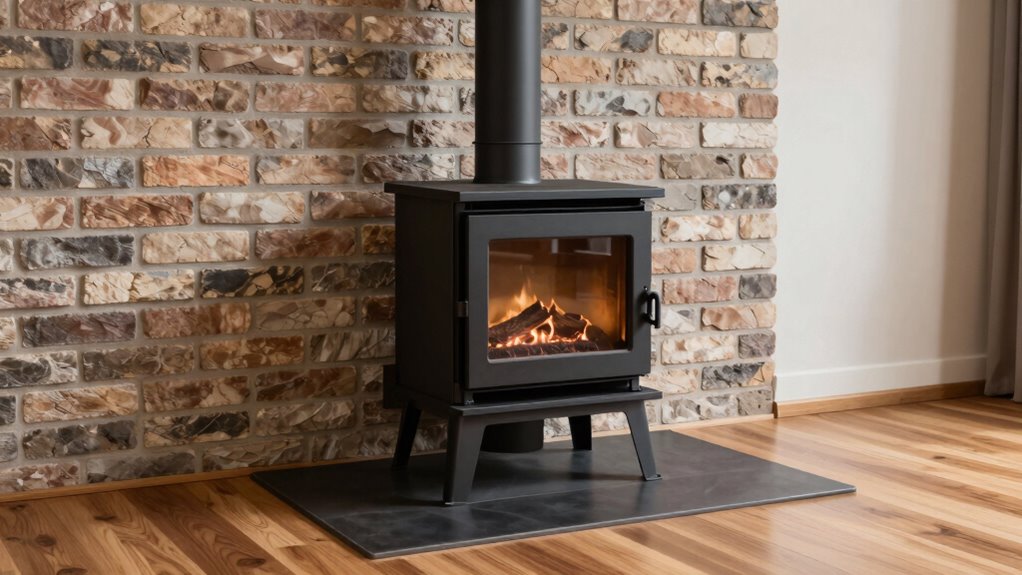
Choosing the right spot for your pellet stove is essential to maximize heat efficiency, safety, and convenience. Proper placement ensures your stove operates effectively while minimizing risks. One of the first considerations is understanding ventilation requirements. Your pellet stove needs proper airflow to function safely and efficiently, so you’ll want to position it where it can vent exhaust gases safely outside. Check your stove’s manufacturer instructions for specific ventilation needs, such as the type and size of vent pipes, and ensure that the location allows for a straightforward, unobstructed venting pathway. Poor ventilation can lead to dangerous buildup of carbon monoxide or other fumes, so it’s critical to avoid placing your stove in enclosed or poorly ventilated spaces.
Proper ventilation is key for safe, efficient pellet stove operation and to prevent dangerous fumes buildup.
Clearance guidelines are equally important. These guidelines specify the minimum distance you should keep between the stove and walls, furniture, or other combustibles. Adhering to these clearance requirements isn’t just about following rules; it’s about preventing fire hazards and guaranteeing safety. Typically, manufacturers recommend a certain amount of space on all sides of the stove. You should place your pellet stove on a non-combustible surface, such as tile or a heat-resistant hearth pad, to safeguard against heat transfer. Avoid placing the stove directly against curtains, furniture, or papered walls, as high temperatures could ignite these materials over time.
When choosing a location, think about convenience and access. You’ll want the stove near an exterior wall for easier vent installation, but also in a spot that’s accessible for maintenance and refilling. Keep in mind that the stove’s door or pellet hopper should be reachable without moving furniture or other obstacles. Also, consider the proximity to power outlets, as most pellet stoves require electricity to operate fans and controls. Ensuring proper electrical access is essential for safe and reliable operation. Additionally, considering space layout can help optimize heat distribution throughout your home and prevent congestion. An optimal layout can also improve ventilation efficiency by reducing the length or complexity of vent runs, which enhances overall safety and performance. Proper planning of space planning is crucial to ensure the stove doesn’t obstruct pathways or create tight spots that could hinder maintenance or venting.
Finally, take into account the layout of your space. Placing the stove centrally can help distribute heat evenly, but ensure that placement doesn’t obstruct pathways or create tight spots that complicate venting or routine maintenance. Remember, your goal is to create a safe, efficient, and comfortable environment. By carefully considering ventilation requirements and following clearance guidelines, you’ll set your pellet stove up for peak performance while maintaining safety in your home. Additionally, understanding market trends and insights can help you choose the optimal placement for maximum heat distribution and efficiency.

Duravent 3 Inch PelletVent Stainless Steel Double Wall Vent Pipe Kit – Pellet Stove Exhaust for Indoor Heater, Horizontal Venting System with Cleanout Tee Cap
- Complete Horizontal Vent Kit: Includes pipes, elbows, caps, and accessories
- Compatible with Pellet and Multi-Fuel Stoves: Designed for 3-inch pellet and multi-fuel heater exhausts
- Stainless Steel Inner Wall: Corrosion-resistant stainless steel liner for durability
As an affiliate, we earn on qualifying purchases.
As an affiliate, we earn on qualifying purchases.
Frequently Asked Questions
Can a Pellet Stove Be Placed on a Carpeted Floor?
Yes, you can place a pellet stove on a carpeted floor, but make certain carpet safety by using a sturdy, non-combustible floor protection pad underneath. This pad prevents heat transfer and protects your carpet from potential sparks or hot surfaces. Always follow the stove manufacturer’s guidelines for safe installation, and consider adding a heat shield if recommended. Proper floor protection keeps your space safe and guarantees the best stove performance.
What Are the Ventilation Requirements for a Pellet Stove?
You need to guarantee proper ventilation standards for your pellet stove, which include adequate airflow requirements to prevent dangerous buildup of fumes. Make sure the stove is vented to the outside with a properly installed vent pipe, maintaining a clear path for exhaust gases. Regularly check for blockages or leaks in the venting system, and follow manufacturer guidelines to keep airflow ideal for safety and efficient operation.
Is It Safe to Install a Pellet Stove in a Basement?
Think of your basement as a hidden sanctuary; installing a pellet stove there can be safe if you follow fire safety guidelines. Guarantee proper ventilation clearance to prevent dangerous buildup of fumes and carbon monoxide. Adequate ventilation keeps the air fresh and safe, while strict adherence to fire safety guidelines minimizes risks. When these conditions are met, your basement can become a cozy, efficient space for warmth without compromising safety.
How Close Can a Pellet Stove Be to Combustible Materials?
You should keep a minimum clearance of at least 36 inches from combustible materials when installing your pellet stove. Always follow the manufacturer’s clearance requirements, as they are designed for safety and ideal performance. Avoid placing the stove too close to walls, furniture, or other combustible items. Proper clearance helps prevent overheating and fire hazards, ensuring your pellet stove operates safely and efficiently.
Do I Need a Professional for Pellet Stove Installation?
Installing a pellet stove is like steering through a maze—you might be tempted to take shortcuts, but a professional guides you safely. While DIY installation can save on costs, it often risks safety and efficiency. Professionals guarantee proper setup, code compliance, and performance. If you’re considering costs versus safety, hiring an expert is a wise investment, preventing future expenses and hazards. Trust a pro to make your warmth reliable and safe.
Conclusion
Remember, proper placement promotes safety, spreads warmth, and spares you from surprises. Position your pellet stove in a spot that’s spacious, stable, and free from flammable fuss. By balancing brilliance with boundaries, you’ll bask in the bliss of better efficiency and easier maintenance. So, select your space wisely, stay safe, and savor the snug comfort that smart setup supplies. Smart placement is the secret to a safe, successful stove!