
Bank barns became popular in states with hilly terrain because their hillside design made storage and farm access efficient and protected crops from weather. They suited small-scale farms that relied on traditional practices. In other areas, modern technology, larger flat fields, and new transportation methods made these barns unnecessary, causing them to disappear. If you’re curious about how these changes shaped farming landscapes, there’s more to discover about their history and decline.
Key Takeaways
- Bank barns suited regions with hilly terrain, facilitating their distinctive hillside design, which was less practical in flat areas.
- They were adopted in areas with traditional small-scale farming that valued efficient, accessible storage and livestock access.
- Modern mechanization and large, flat-field farms reduced the need for hillside structures, leading to their decline.
- Regions with rapid technological change and urbanization favored cost-effective, conventional barns over hillside bank barns.
- Preservation efforts in some areas kept bank barns as historic landmarks, while others transitioned to modern farm buildings.

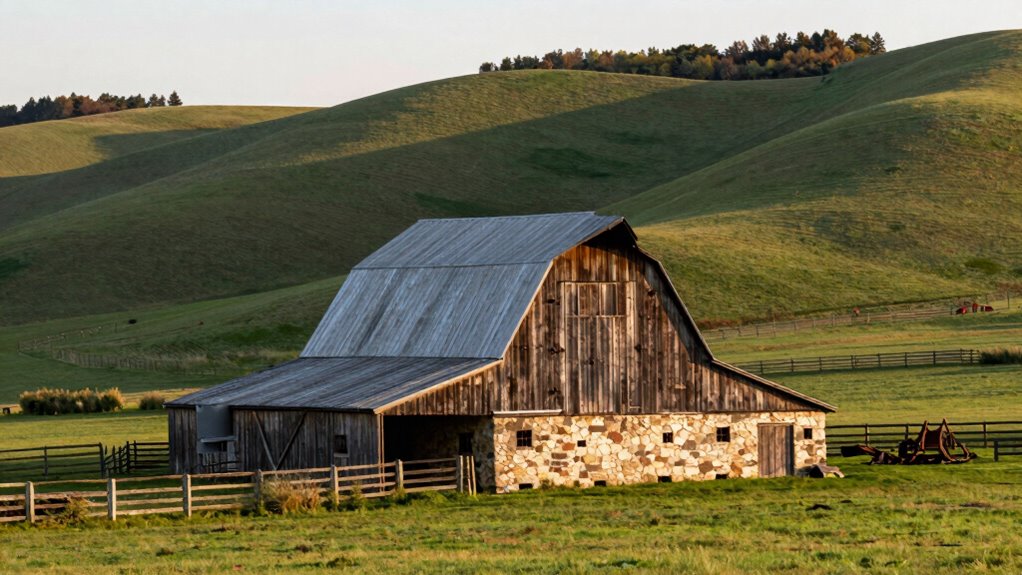
Have you ever wondered why bank barns, with their distinctive sloped design, suddenly appeared in rural landscapes and then vanished? The answer lies in their architectural evolution and the agricultural innovation they represented. These barns emerged as a practical solution to specific farming needs, combining efficiency with convenience. Their unique design, built into a hillside, allows for easy access to both upper and lower levels. This layout reduces the need for ramps or external stairs, streamlining daily farm operations. As farming practices evolved, so did the architectural features of the bank barn, reflecting a response to the changing technological and economic landscape.
Bank barns’ hillside design optimized efficiency, adapting to evolving farming needs and technological changes over time.
In some states, particularly in the northeastern United States, the bank barn took hold because it perfectly suited the local agricultural environment. Farmers faced the challenge of managing livestock and crops on hilly terrain, and the bank barn’s sloped design offered a solution. It allowed farmers to store hay and grain on the upper level, protected from weather, while providing easy access for livestock on the lower level. This innovation improved productivity and minimized labor, making farms more efficient. As a result, the bank barn became a symbol of agricultural ingenuity, embodying how architecture can adapt to environmental conditions.
However, in other regions, the popularity of the bank barn’s design waned. Changes in farming technology, such as mechanization and the advent of modern storage facilities, made the traditional bank barn less essential. Large, flat fields and the development of new transportation methods reduced the need for hillside construction. Additionally, economic shifts and the rise of urbanization led farmers to adopt different building styles that prioritized cost and ease of construction over the hillside design. These factors contributed to the disappearance of the bank barn in many areas, replaced by more straightforward, utilitarian structures. The decline also reflects a shift toward modern agricultural practices, which favored efficiency over traditional architectural features.
The rise and fall of bank barns also reflect broader trends in agricultural innovation. In regions where small-scale, traditional farming persisted longer, the bank barn remained relevant for decades. Where modernization accelerated, its architectural advantages became obsolete. Today, many of these barns stand as historic monuments, testament to a period when farm buildings were carefully designed to meet specific needs. Their disappearance in some areas underscores how technological and economic shifts can influence architectural trends, leaving behind only memories of a once-common sight in rural America.
Ultimately, the story of the bank barn highlights how architectural evolution follows the pulse of agricultural innovation. It’s a reminder that the buildings we see today often embody a specific response to the environmental, technological, and economic needs of their time—needs that, when changed, can render even the most innovative designs obsolete.
As an affiliate, we earn on qualifying purchases.
Frequently Asked Questions
How Do Bank Barns Differ From Traditional Barns?
You’ll notice that bank barns differ from traditional barns through their innovative architecture, with a design built into a hillside that provides easy access to both levels. Cultural influences shape their unique structure, often reflecting regional needs and aesthetics. This integration of form and function makes bank barns more versatile, offering better protection for livestock and crops, and explaining why they became popular in specific areas, yet vanished elsewhere.
What Materials Were Typically Used in Bank Barn Construction?
You’ll be amazed at how bank barns stand the durability of time, thanks to their smart construction techniques and durable materials. Typically, they used locally sourced timber for framing, complemented by stone or brick for foundations and walls. These materials ensured longevity and stability, making bank barns resilient against weather and wear. Their design maximized space and strength, truly a proof to the ingenuity of traditional building practices.
Were Bank Barns Used for Specific Types of Livestock or Crops?
You’ll find that bank barns were designed for specific livestock, mainly cattle and horses, making them a crucial part of farmstead architecture. Their unique structure supported easy access to different levels, benefiting dairy and livestock operations. These barns boosted the rural economy by optimizing space and efficiency. Their specialized design suited the needs of certain regions, explaining why they thrived where farming focused on livestock rather than crops.
How Did Climate Influence the Popularity of Bank Barns?
Imagine a barn that bends with the land—climate deeply shaped their rise. Climate adaptation drove the popularity of bank barns in regions with heavy snow or rain, where their design protected livestock and crops. Regional architecture responded to these needs, making bank barns both practical and resilient. As weather patterns changed or regions adapted, these barns faded in some areas, yet thrived where climate demanded sturdy, innovative shelter solutions.
Are Any Bank Barns Preserved as Historical Landmarks Today?
Yes, some bank barns are preserved as historical landmarks today. You can visit these sites to appreciate their cultural significance and unique architecture. Preservation efforts aim to protect these structures because they represent a crucial part of agricultural history. By maintaining bank barns, communities honor their heritage, educate future generations, and celebrate traditional farming practices. Your support for preservation efforts helps guarantee these historic landmarks remain accessible and meaningful.
Conclusion
So, the idea that bank barns vanished due to changes in farming methods holds some truth. You might find that as agriculture modernized, the need for these traditional structures diminished, especially in states where newer building styles took over. While some believe economic shifts played a role, it’s clear that regional differences in land use and farming practices truly determined their rise and fall. Ultimately, bank barns tell a story of adaptation and change across American farming history.