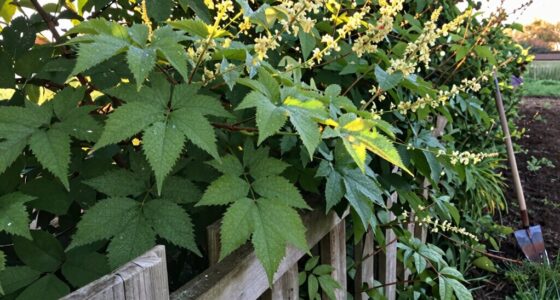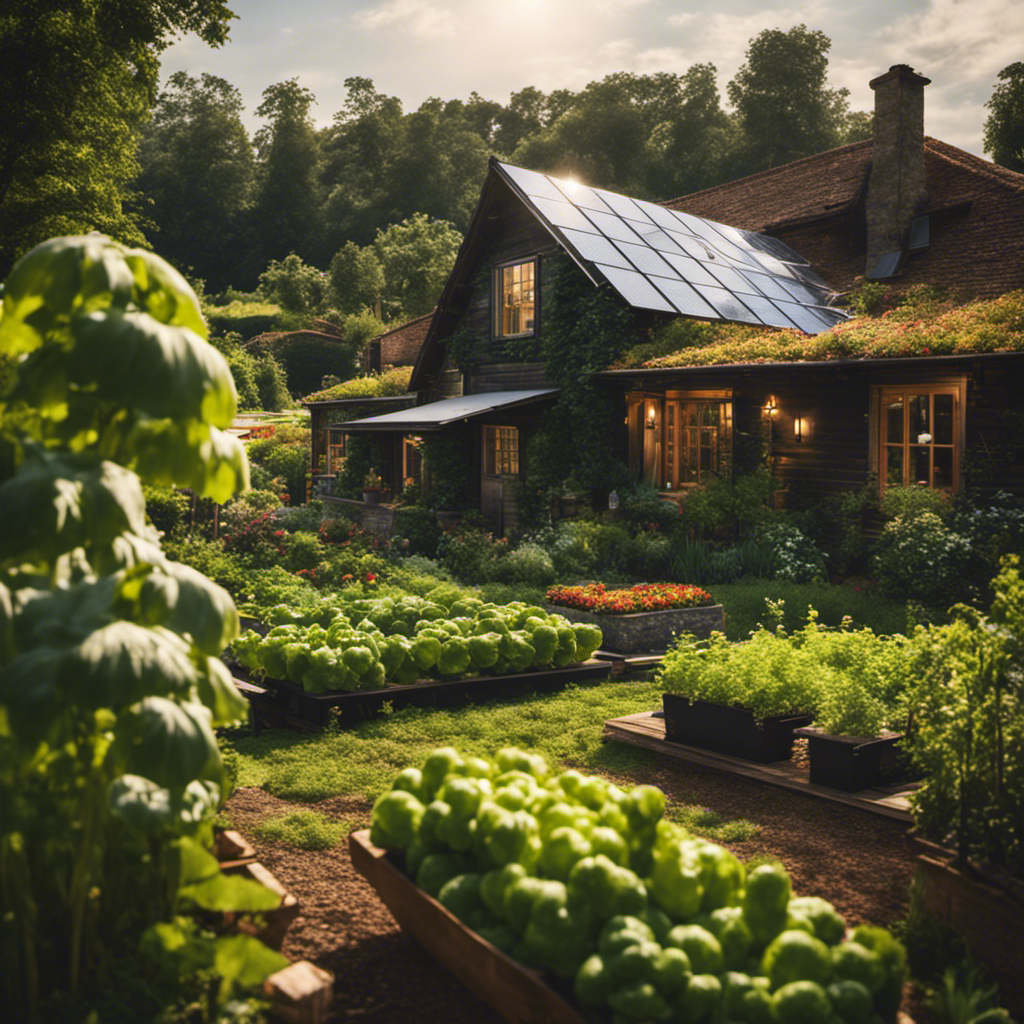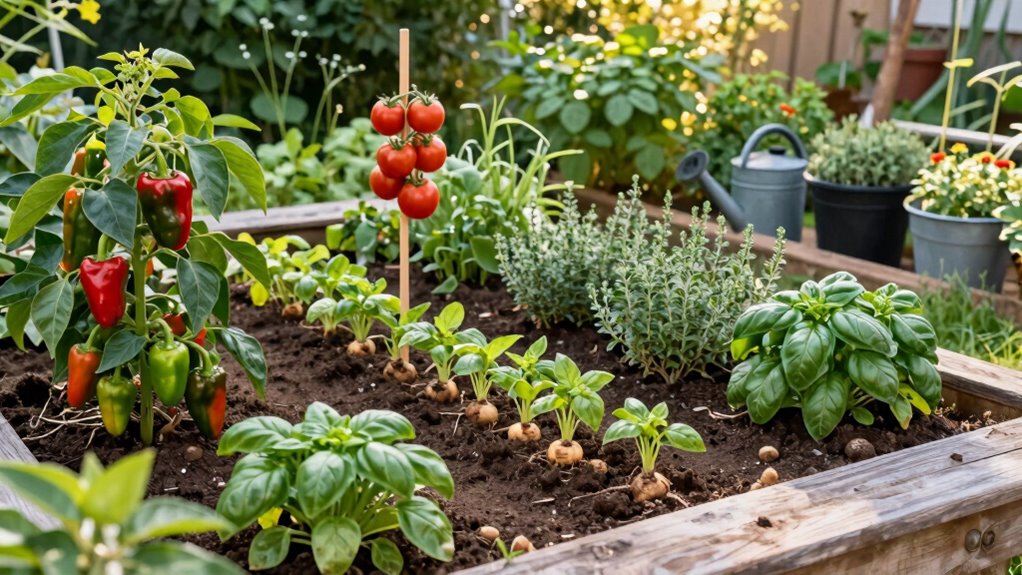

In your first three years, a productive kitchen garden grows from humble beginnings into a resilient, soil-rich space. You focus on developing strong roots, increasing productivity gradually, and mastering composting to boost soil health. By using natural pest control and choosing well-suited plants, you create a balanced, self-sustaining environment. Keep nurturing soil and plants, and you’ll turn your garden into a flourishing oasis—there’s much more to discover as you progress.
Key Takeaways
- The garden shows steady growth with increasingly diverse and healthy plants, establishing strong roots and resilience.
- Composting practices improve soil fertility, supporting vigorous plant development and reducing waste.
- Natural pest management maintains healthy plants through beneficial insects and companion planting, minimizing chemical use.
- Crop rotation and soil enrichment sustain productivity and prevent soil depletion over the years.
- The garden becomes self-sustaining with consistent maintenance, balanced ecosystems, and resilient, thriving plants.
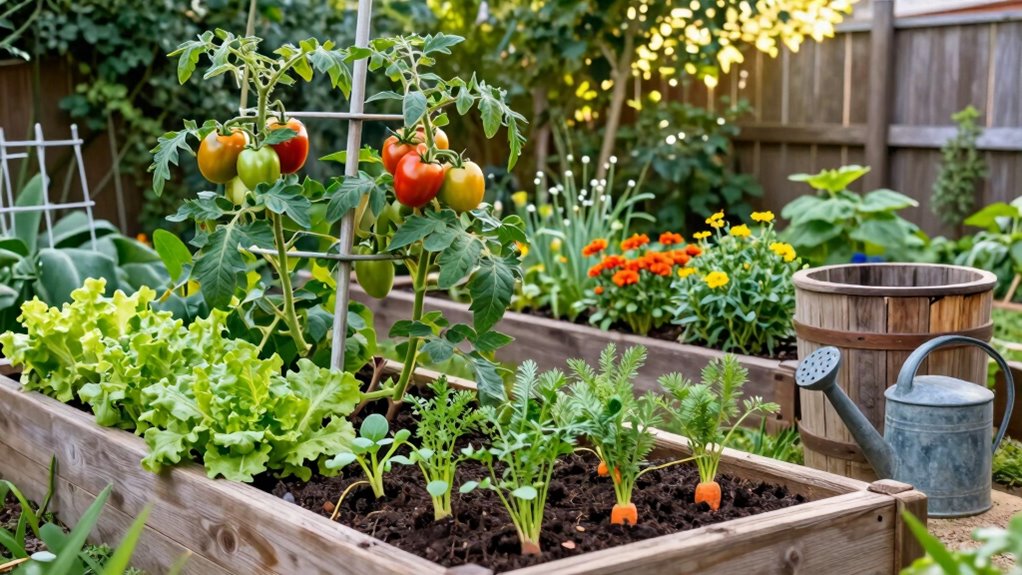
Starting a kitchen garden can be a rewarding experience, especially during the first three years when your plants are establishing themselves. During this period, you’ll notice your garden gradually becoming more productive and resilient. A key aspect of this growth is understanding how to effectively use composting techniques. You want to transform kitchen scraps and garden waste into rich compost that feeds your plants naturally. Composting not only improves soil health but also reduces waste, making your garden eco-friendly. As you develop your composting skills, you’ll find that your plants thrive in nutrient-dense soil, leading to better yields and stronger plants. Keep a regular schedule for turning and moistening your compost to guarantee it decomposes evenly and quickly. Incorporating composting techniques can significantly speed up this process and enhance your soil’s fertility. Learning about soil health can help you create a more balanced environment for your plants to flourish. Additionally, understanding soil aeration can improve the oxygen flow within your compost and soil, accelerating plant growth. You might also consider experimenting with different composting methods, such as vermicomposting, to further boost soil nutrients. Regular monitoring and adjusting your composting process can also help you optimize nutrient availability for your plants.
As your garden matures, pest management becomes essential. During these early years, you might encounter pests that threaten your crops, but with mindful strategies, you can keep them under control without resorting to harsh chemicals. Focus on natural pest management techniques like introducing beneficial insects, such as ladybugs and predatory beetles, which help keep pest populations in check. Companion planting is another effective method—planting herbs like basil, marigolds, or nasturtiums nearby can repel common pests and attract helpful insects. Regularly inspecting your plants allows you to spot pest issues early, preventing them from spreading. Keep your garden clean and remove any diseased or infested leaves promptly to reduce pest habitats. Additionally, maintaining healthy soil through proper composting can naturally strengthen your plants’ resistance to pests and diseases. Implementing integrated pest management strategies can further support a balanced and healthy garden ecosystem.
A productive garden also depends on your ability to select resilient, well-suited plants that can adapt to your local climate and soil conditions. During the first three years, focus on building your knowledge of crop rotation and soil enrichment practices. Rotate crops to prevent soil depletion and reduce pest buildup. Incorporate organic matter into your soil, using compost to enhance fertility and structure. This approach guarantees your garden remains healthy and productive year after year. As you gain experience, you’ll learn which plants grow best in your environment, making your efforts more efficient. Exploring plant selection that thrives in your specific climate can lead to more successful yields.
Over time, your garden will become a thriving, self-sustaining space. Consistent composting techniques and proactive pest management are the foundation of this success. Your plants will become stronger, more resistant to pests and diseases, and your harvests more abundant. Remember, patience and attentiveness are essential during these formative years. With each passing season, you’ll refine your methods, gradually turning your kitchen garden into a productive, lush oasis that provides fresh vegetables and herbs for your table.

Utopia Kitchen Countertop Compost Bin 1.3 Gallon, Stainless Steel, Silver
- Capacity: 1.3 Gallon stainless steel bin
- Durable Material: Stainless steel resists scratches and chipping
- Odor Control: Includes charcoal filters for natural smell management
As an affiliate, we earn on qualifying purchases.
As an affiliate, we earn on qualifying purchases.
Frequently Asked Questions
How Do I Choose the Best Plants for My Climate?
You should consider your climate first by researching plants suited for your USDA hardiness zone. Use companion planting to boost growth and ward off pests, and think about vertical gardening to maximize space for plants that thrive in your conditions. Choose drought-tolerant varieties if you’re in a dry area, or select cool-season crops for colder climates. This tailored approach helps you pick the best plants for your specific environment.
What Soil Amendments Are Essential in the First Year?
Did you know healthy soil boosts plant yields by up to 30%? In your first year, essential soil amendments include organic fertilizers to enrich nutrients naturally, and soil testing to identify deficiencies. This helps you tailor amendments precisely, ensuring ideal growth. Incorporate compost or manure regularly, and use soil test results to adjust pH and nutrient levels. These steps set a strong foundation for a thriving, productive kitchen garden.
How Often Should I Water Different Types of Vegetables?
You should water your vegetables based on their specific needs, typically maintaining a consistent watering schedule to guarantee proper vegetable hydration. Leafy greens may need daily watering, while deeper-rooted vegetables like tomatoes and peppers might require watering every 2-3 days. Keep the soil moist but not soggy, and check regularly for drought stress. Adjust your watering schedule as weather changes to keep your garden healthy and thriving.
When Is the Optimal Time to Start Composting?
Think of composting as planting a seed—you start when organic waste piles up and your compost bin is ready. The ideal time is when you have a steady flow of kitchen scraps and yard waste, usually year-round. Establish a composting schedule that matches your garden’s needs, turning organic waste into rich soil. Begin as soon as you can, and you’ll nurture your garden with the best natural fertilizer.
How Can I Prevent Pests Naturally Without Chemicals?
To prevent pests naturally, you should focus on natural pest control methods like encouraging beneficial insects and using companion planting. Plant pest-repellent herbs such as basil, marigolds, and nasturtiums alongside your vegetables. These plants deter pests and attract helpful insects, reducing the need for chemicals. Regularly inspect your garden, remove pests manually, and keep your garden clean to create an environment that naturally discourages pests from settling.
Conclusion
By the end of those first three years, your kitchen garden becomes a thriving symphony, each plant playing its part in creating a lush, productive oasis. With patience and care, you’ve cultivated more than just vegetables—you’ve nurtured a resilient, self-sustaining ecosystem. Keep tending to it, and your garden will continue to grow stronger, like a well-loved melody that only gets better with time. Soon, it’ll be your favorite tune to enjoy every day.