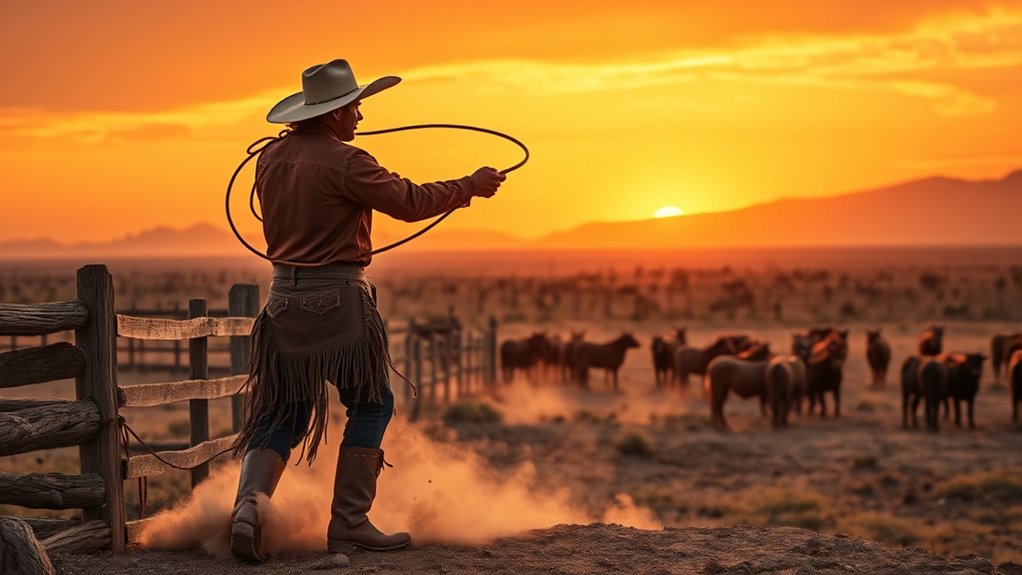

Borderland ranches showcase a rich cowboy heritage rooted in vaquero skills that have been passed down through generations. You’ll learn techniques in land and livestock management, horsemanship, and traditional ranch practices that require patience, precision, and deep connection to the land. These skills embody resilience and independence, blending old methods with modern innovation. Continuing to explore this world reveals how heritage shapes daily routines and community bonds that last for centuries.
Key Takeaways
- Borderland ranches preserve and showcase traditional vaquero skills like roping, herding, and horsemanship, reflecting rich cultural heritage.
- Vaquero techniques are passed down through hands-on practice, oral stories, and mentorship within ranch communities.
- Ranching practices blend centuries-old methods with modern sustainable technologies to maintain land health and livestock productivity.
- Skills such as branding, fencing, and cattle movement require deep land and animal understanding, emphasizing patience and precision.
- The lifestyle of borderland ranches embodies resilience, independence, and respect for the land, shaping vaquero legacy across generations.

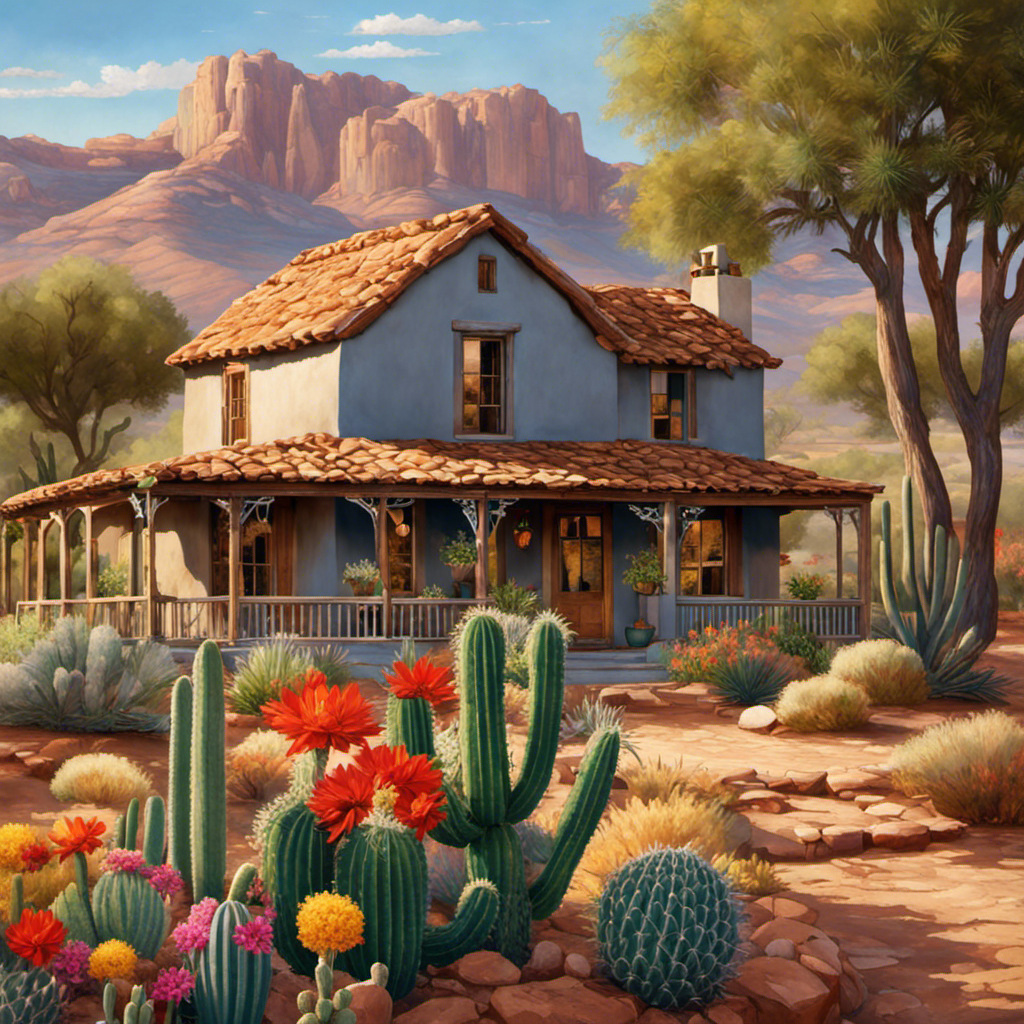
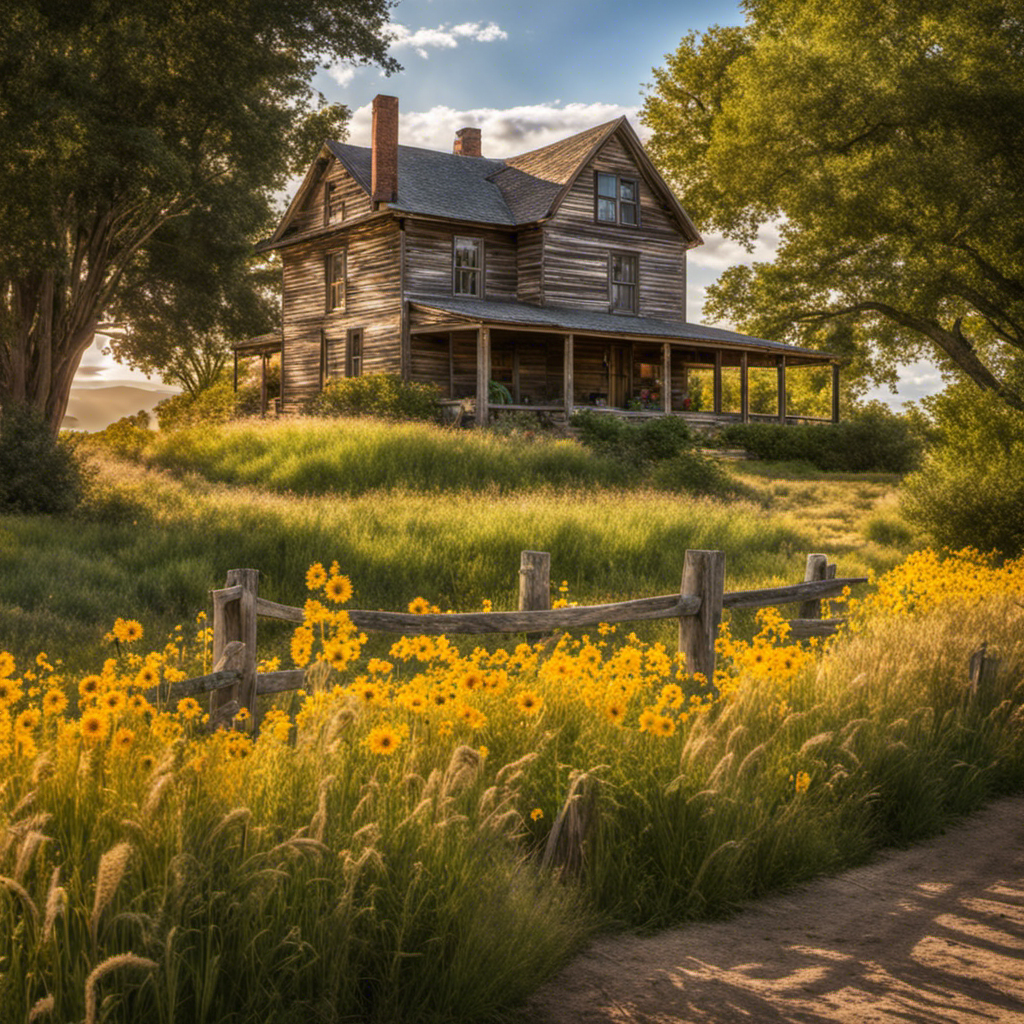
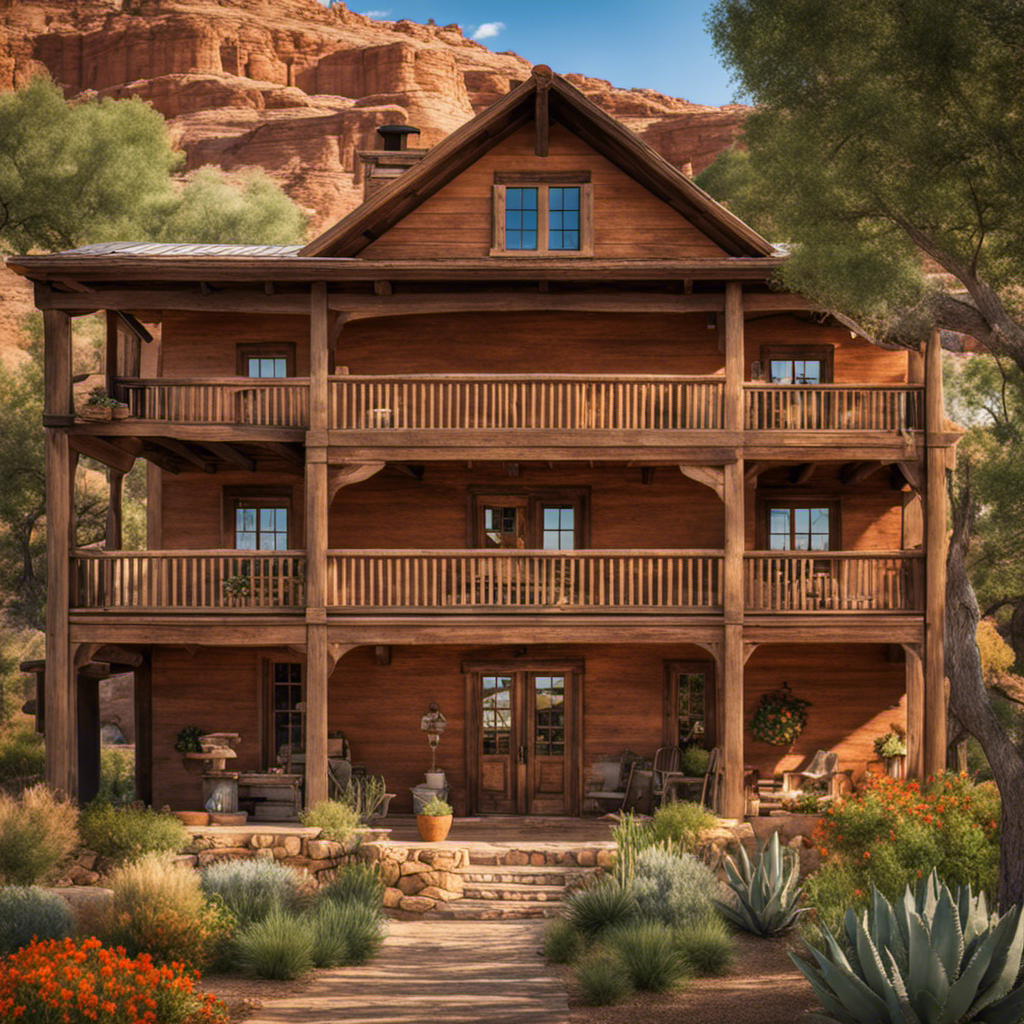
Borderland ranches have long been the heart of a unique cowboy culture rooted in tradition and skill. As you step onto these sprawling lands, you’re immediately immersed in a way of life that has been passed down through generations. Your connection to cowboy heritage runs deep here, where every fence line, herd, and sunrise echoes stories of resilience, independence, and mastery. These ranches are more than just places to raise cattle; they’re living museums of ranching traditions that shape your identity and daily routines.
Borderland ranches embody timeless cowboy traditions passed down through generations.
In this environment, you quickly learn that ranching isn’t just about managing livestock; it’s about understanding the land and animals intimately. Your skills are honed through hands-on experience, whether you’re branding calves, repairing fences, or moving cattle across rugged terrain. Every task demands precision, patience, and an understanding of the natural landscape—skills that are central to cowboy heritage. The techniques you employ are often centuries old, yet they remain relevant because they’re built on a foundation of tested ranching traditions. These traditions aren’t merely relics of the past; they’re essential, living practices that keep the ranch thriving. Additionally, modern technology such as efficient geothermal heat pumps can enhance sustainability and reduce environmental impact on the land, complementing traditional ranching practices.
Ranching traditions also extend to your approach to horsemanship. You develop a bond with your horses, training them with methods that have been refined over generations. Your horse isn’t just a tool; it’s a partner in the work, embodying the spirit of the cowboy heritage. The skills you acquire—roping, herding, and riding—are passed down through stories, mentorship, and hands-on practice. This oral tradition keeps the cowboy culture alive, ensuring that each generation respects and continues these time-honored techniques.
Living and working on borderland ranches means embracing a lifestyle that values self-sufficiency, community, and respect for the land. Your understanding of ranching traditions helps you adapt to the unpredictable demands of the environment while preserving a way of life that’s deeply rooted in history. Every sunrise and sunset is a reminder of your role in a larger story—a story that connects you to the roots of cowboy heritage. As you carry forward these ranching traditions, you become part of a legacy that’s shaped by skill, grit, and a profound respect for the land and animals that define this borderland culture.
vaquero roping training kit
As an affiliate, we earn on qualifying purchases.
As an affiliate, we earn on qualifying purchases.
Frequently Asked Questions
What Are the Origins of Vaquero Traditions?
You might not realize it, but the vaquero traditions stem from Spanish influence brought to the Americas during colonization. These skilled cattle herders developed techniques for cattle herding, roping, and horsemanship that became central to cowboy culture. As you explore their history, you’ll see how their methods and tools evolved, shaping the cattle industry and the rugged cowboy lifestyle we celebrate today.
How Do Ranches Preserve Vaquero Skills Today?
Today, ranches preserve vaquero skills through hands-on training in horse riding and cattle herding, ensuring these traditions stay alive. You can participate in rodeos, workshops, or mentorship programs that focus on mastering lassoing, roping, and horsemanship. Ranchers also pass down techniques through daily work, keeping the authentic methods of cattle herding and horse riding essential for maintaining vaquero heritage and skills.
What Equipment Is Essential for Vaquero Work?
You need essential equipment like a well-maintained saddle, which requires regular saddle maintenance to guarantee safety and comfort. A sturdy rope for handling cattle is also vital; mastering rope handling is a core vaquero skill. Additionally, a lariat, halter, and sturdy boots help you work efficiently. Always keep your gear in good condition and practice proper techniques to preserve traditional vaquero methods.
Are Vaquero Skills Applicable to Modern Ranching?
Think of vaquero skills as a timeless thread weaving through the fabric of ranching today. Yes, they’re highly applicable; you can use them for cattle branding, horse grooming, and herding. These skills teach you patience and precision, which are essential even now. Modern ranching benefits from this knowledge, helping you work efficiently and respectfully with animals, just like vaqueros did generations ago.
How Can Beginners Learn Vaquero Techniques?
You can learn vaquero techniques by starting with horse handling and rope work, which are essential skills. Take beginner riding lessons to build confidence and understand horse behavior. Practice basic rope skills like lassoing, and seek out workshops or online tutorials focused on vaquero traditions. Consistent practice and patience help you develop a strong foundation, making it easier to progress in these traditional skills.
cowboy horsemanship training gloves
As an affiliate, we earn on qualifying purchases.
As an affiliate, we earn on qualifying purchases.
Conclusion
As you saddle up and embrace the rugged spirit of borderland ranches, you’ll find vaquero skills still alive and thriving. These timeless techniques, like roping and horsemanship, connect you to a rich heritage—think of it as your own modern-day cowboy adventure. Just remember, whether you’re riding under a neon sunset or a starry sky, the heart of the vaquero remains unchanged—brave, skilled, and free, like a true pioneer of the plains.
fencing tools for ranching
As an affiliate, we earn on qualifying purchases.
As an affiliate, we earn on qualifying purchases.
cattle herding livestock management equipment
As an affiliate, we earn on qualifying purchases.
As an affiliate, we earn on qualifying purchases.