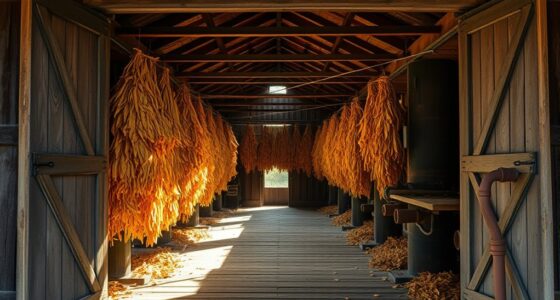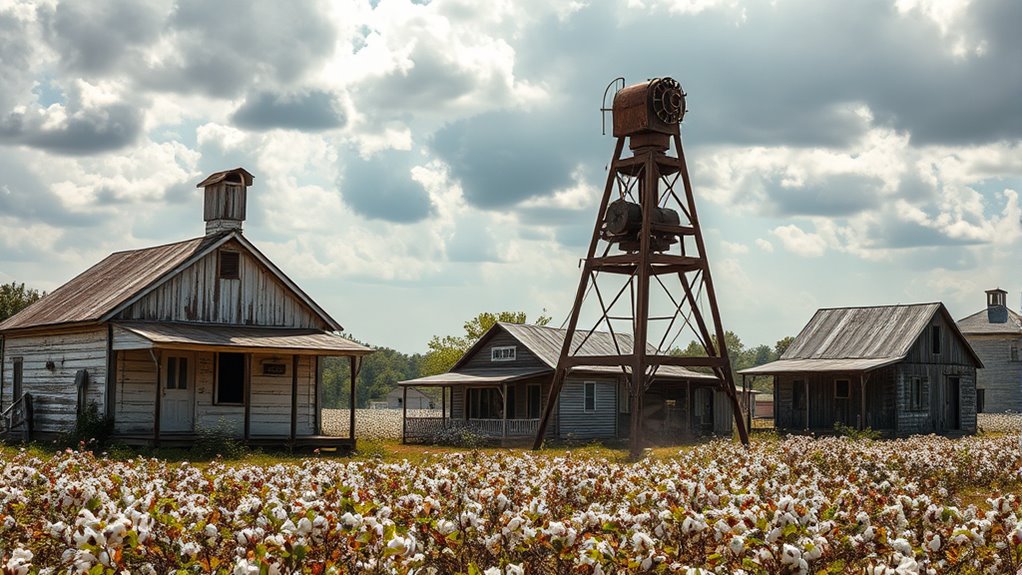

Cotton gins and sharecropper cabins played essential roles in rural Southern communities. The cabins provided simple, durable shelter for farmworkers close to the cotton gins where the crop was processed. These modest structures were built from local materials, emphasizing practicality and resilience, often with small fireplaces for warmth and basic furniture. If you keep exploring, you’ll uncover more about how these structures symbolize endurance and the history of rural life.
Key Takeaways
- Cotton gins revolutionized cotton processing, increasing efficiency for sharecroppers’ crops, and supporting rural economies.
- Sharecropper cabins served as simple, durable housing for land workers, often located near cotton fields.
- Both cotton gins and cabins used locally sourced, inexpensive materials, reflecting resourcefulness and rural architectural styles.
- The proximity of cabins to cotton gins facilitated easier transport and processing of cotton harvests.
- These structures symbolize rural resilience, agricultural labor, and the historic relationship between cotton production and sharecropping.
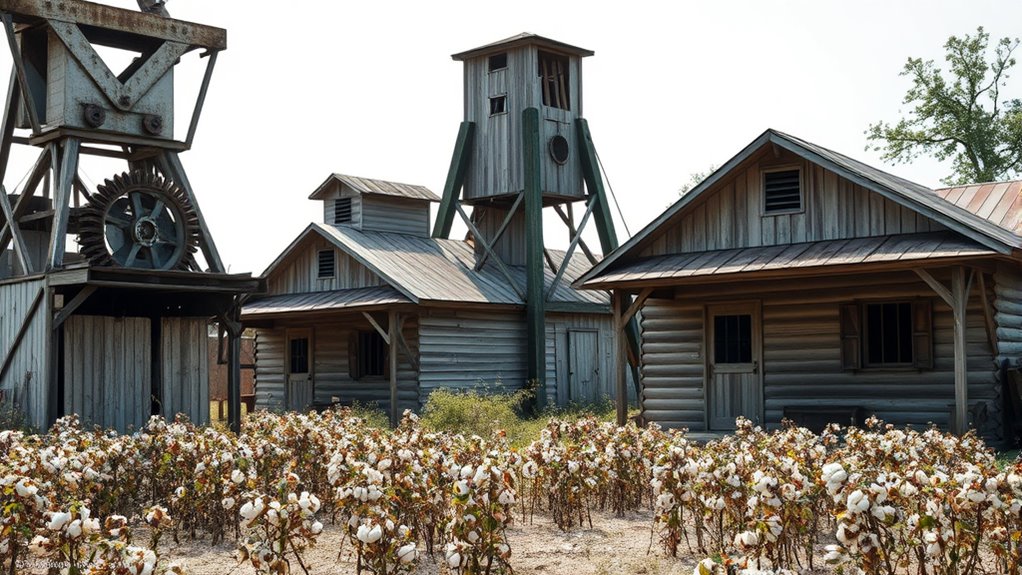
Have you ever wondered what life was like for sharecroppers living in their cabins? These humble structures served as tenant housing, offering a simple, often rough-hewn refuge for those working the land. Nestled in rural landscapes, these cabins reflected the region’s rural architecture—practical, straightforward, and built to withstand the elements. You might picture weathered wooden walls, a tin roof that squeaks in the wind, and a small porch where residents gathered during quiet evenings. The design prioritized function over form, providing basic shelter without the extra comforts of modern homes.
Living in these cabins, you’d quickly realize that their construction was shaped by necessity. Most cabins were small, often just one or two rooms, with dirt or wooden floors and minimal insulation. Walls were typically handmade, using rough-cut lumber or scraps from nearby sawmills. The rural architecture of these structures emphasized durability and ease of assembly, allowing sharecroppers to settle in quickly and, if needed, move or rebuild as circumstances changed. These homes weren’t meant to be luxurious; they were built to support the hard labor of farming and tenant life.
Most cabins were small, with dirt floors and rough-cut lumber, built for durability and quick assembly.
Inside, life was simple. You’d find a small fireplace or stove for cooking and heating, a few basic pieces of furniture, and perhaps a hand-woven rug or a patched quilt. Windows were small, often just openings covered with glass or cloth to keep out drafts. Despite their modesty, these cabins represented a vital part of the agricultural economy, providing a modest livelihood for sharecroppers who often had little else. Many cabins sat close together, forming tight-knit communities, yet each one bore the marks of resilience and resourcefulness. Materials used in construction were often sourced locally, reflecting the resourcefulness required to sustain these homes.
The rural architecture of sharecropper cabins also speaks to the social and economic realities of the time. These structures were affordable and accessible, built with local materials, and adapted to the rural environment. They often lacked modern amenities like running water or electricity, further emphasizing their simplicity. Yet, within their walls, families created a sense of home, community, and survival. The cabins served as both shelter and symbol—marking a way of life rooted in hard work, dependence on the land, and a deep connection to rural traditions. In their modest way, these cabins tell stories of endurance and the enduring human spirit amidst difficult circumstances.
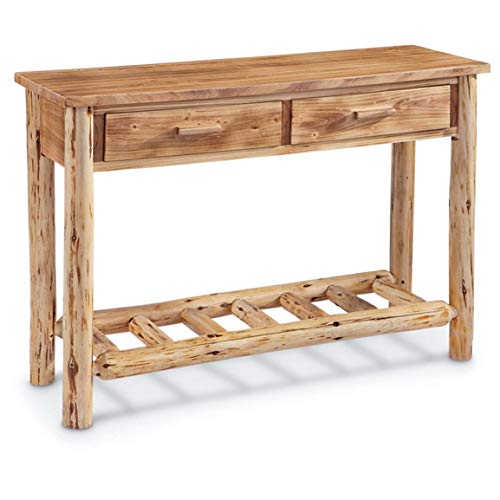
CASTLECREEK Log Sofa Table, Console Tables for Entryway, TV Stand, Rustic, Cabin Decor
- Unique Log Design: Made from peeled fir logs with bark
- Durable Solid Wood: Constructed from strong, lacquer-finished wood
- Rustic Farmhouse Style: Features a weathered, natural pine appearance
As an affiliate, we earn on qualifying purchases.
As an affiliate, we earn on qualifying purchases.
Frequently Asked Questions
How Did Cotton Gins Impact Sharecropper Communities Economically?
You see, cotton gins increased economic dependence on cotton farming, which often limited sharecropper communities’ growth. While gins boosted cotton production, they also made sharecroppers reliant on a single crop, restricting community development. This dependence kept many in poverty, as profits flowed to landowners and industry, not sharecroppers. Consequently, the local economy became fragile, making it harder for these communities to build sustainable futures beyond their reliance on cotton.
What Materials Were Commonly Used to Build Sharecropper Cabins?
You can’t judge a book by its cover, but sharecropper cabins were often built with simple, readily available materials. Typically, folks used wood for the walls, sometimes with scrap or rough-cut boards, and tin or thatch for roofing. The structural design was basic, emphasizing practicality over style. These cabins served as humble homes, reflecting the limited resources and the resilience of sharecropper communities.
Were Sharecropper Cabins Standardized in Design or Varied Regionally?
You’ll find that sharecropper cabins weren’t standardized; instead, they varied regionally based on local architectural styles. Some cabins featured simple, rectangular designs, while others included unique customizations reflecting cultural influences or available materials. This regional variation allowed tenants to adapt their homes to climate, resources, and personal preferences, creating a diverse array of cabins rather than a uniform design across different areas.
How Did Access to Cotton Gins Influence Sharecropper Productivity?
Access to cotton gins drastically improved your productivity; for instance, they could process up to 50 pounds of cotton per hour. Cotton gin innovations made sharecropper labor efficiency soar, reducing time spent on processing and allowing you to focus on planting and harvesting. This advancement meant you could handle larger fields, increase your earnings, and lessen physical strain, transforming your workday and boosting overall crop yields.
What Are the Preservation Efforts for Historic Sharecropper Cabins Today?
You can participate in preservation efforts for historic sharecropper cabins through restoration projects and community initiatives. Local organizations often lead these efforts, securing funding and raising awareness to protect these important landmarks. By volunteering, donating, or spreading the word, you help guarantee these cabins are maintained for future generations, honoring the history and resilience of sharecroppers. Your involvement makes a meaningful difference in preserving this essential part of history.
Conclusion
As you walk through these cabins, imagine them as tiny ships anchored in a vast sea of history. Each one holds stories of resilience and hope, guiding you through the storms faced by those who lived there. Just like sailors steering through rough waters, sharecroppers weathered hardships, yet their spirit kept them afloat. Remember, these cabins are more than wood and nails—they’re beacons illuminating a journey of perseverance and strength that still echoes today.