
Riverboats played a vital role in South’s farm trade by transporting crops like cotton, tobacco, and sugar efficiently along waterways. You’ll see how steamboats and flatboats connected farms to port cities, lowering transportation costs and expanding markets. These riverboats enabled farmers to send larger harvests both downstream and upriver, boosting regional trade and economic growth. If you keep exploring, you’ll discover how these waterways transformed the South’s economy and society.
Key Takeaways
- Riverboats facilitated efficient transport of crops like cotton, tobacco, and sugar from farms to markets and ports.
- Steamboats allowed upstream travel, connecting rural farms with regional trade centers and boosting commerce.
- Waterways lowered transportation costs, enabling farmers to access broader markets and export their harvests easily.
- Riverboats supported the growth of regional trade hubs, boosting local economies and town development.
- Overall, riverboats transformed isolated farms into integral parts of South’s thriving agricultural economy.

Riverboats played a pivotal role in shaping trade along the South’s waterways, making it easier for farmers to transport their crops to markets. As you explore the region’s history, you’ll see how river transportation became the backbone of agricultural commerce. Before the advent of railroads and highways, waterways provided the most efficient means for moving large quantities of crops like cotton, tobacco, and sugar. Farmers relied on riverboats to carry their harvests downstream, connecting rural farms with bustling port cities where goods could be shipped further afield. You might imagine the scenes of boat crews steering winding rivers, loaded with bales of cotton or sacks of grain, heading toward trading hubs. This system lowered transportation costs and expanded markets, enabling farmers to sell more produce and increase their income.
The importance of river transportation in the South’s agricultural economy can’t be overstated. It allowed farmers to reach distant customers without the high expenses of land routes. As crops were collected, they were loaded onto flatboats, keelboats, or steamboats, which could carry large loads over long distances. The steamboat, in particular, revolutionized the scene. Its ability to travel upstream against currents meant farmers weren’t limited to downstream markets. Instead, they could send their harvests to upriver towns that served as regional trade centers. This connectivity boosted agricultural commerce by creating a steady flow of goods, which in turn supported local economies and helped towns grow into commercial hubs.
Moreover, riverboats didn’t just move crops; they also facilitated the exchange of goods and ideas across communities. Farmers could access supplies, equipment, and even news from other regions via river routes. This interconnected network strengthened the South’s agricultural sector, making it more resilient and productive. As you consider how essential riverboats were, it’s clear they shaped more than just trade—they shaped the social and economic fabric of the region. The accessibility and efficiency of river transportation meant that the South’s farmers could participate in broader markets, boosting their prosperity and reinforcing the importance of waterways in the region’s development. Overall, riverboats became indispensable to maintaining the South’s agricultural commerce, transforming isolated farms into integral parts of a thriving economic system.
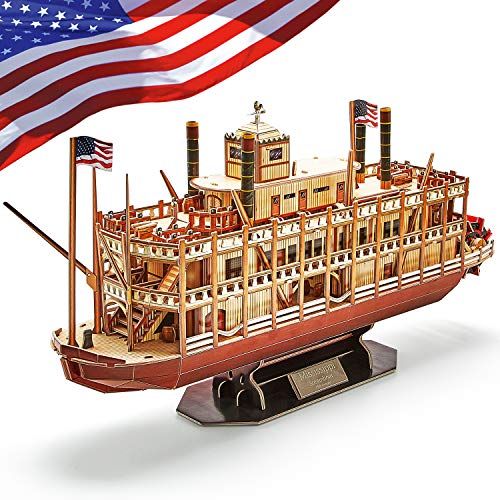
CubicFun 3D Puzzle Mississippi Steamboat Model Kit Gift for Kids and Adults, 142 Pieces
Build Your Own Mississippi Steamship: Experience the charm of the Mississippi River by assembling your very own steamship…
As an affiliate, we earn on qualifying purchases.
As an affiliate, we earn on qualifying purchases.
Frequently Asked Questions
How Did Riverboats Influence Southern Cultural Development?
Riverboats shaped your southern cultural development by fostering riverboat culture, which became central to social life and commerce. As you traveled along the waterways, you experienced the blending of diverse influences, giving rise to unique Southern music styles like blues and jazz. This vibrant culture encouraged community, storytelling, and musical expression, enriching your southern identity and leaving a lasting impact on the region’s traditions and artistic heritage.
What Crops Were Most Commonly Traded via River Routes?
You see vast fields of cotton ready for harvest, the fluffy bolls bursting with promise, as riverboats carry cotton exports downstream. Alongside, grain transportation plays a crucial role, with wheat and corn flowing smoothly on the river’s gentle current. These crops, essential to the economy, rely on the waterways to reach markets efficiently, shaping the South’s trade and fueling its growth with each passing tide.
How Did Farm Trade Impact Southern Economy During This Period?
Farm trade boosted southern economy by fueling agricultural prosperity and driving market expansion. You see, as farmers produced more crops like cotton and tobacco, they sold them via river routes, increasing trade volume. This growth created jobs, enhanced wealth, and connected local farmers to national markets. The more trade expanded, the stronger the economy became, making the South a essential hub for agricultural goods and economic activity during this period.
Were There Any Notable Conflicts Related to River Transportation?
Think of the river as a crucial artery, but it faced threats like a lurking serpent. You’d see conflicts like river piracy and steamboat accidents, which symbolized the danger and chaos underneath. These incidents disrupted trade, threatened lives, and highlighted the fragile trust in river transportation. Such conflicts remind you that progress often carries risks, and even the safest routes can harbor hidden dangers that challenge economic stability and safety.
How Did Technology Change Riverboat Navigation in the South?
Technology changed riverboat navigation in the South by introducing steam power and improved navigation technology. You benefit from steam engines that made boats faster, more reliable, and less dependent on wind or currents. Enhanced navigation tools, like charts and compasses, help you steer accurately through tricky waters. These advancements allowed you to travel longer distances more efficiently, boosting trade and connecting communities better than ever before.

New Orleans Natchez Steamboat Christmas Ornament, Mississippi River Boat Replica, Holiday Tree Decoration, White and Red Riverboat Design
CLASSIC STYLING: Traditional Mississippi River steamboat design captures the romance and history of New Orleans river culture
As an affiliate, we earn on qualifying purchases.
As an affiliate, we earn on qualifying purchases.
Conclusion
You see, riverboats truly transformed Southern trade, connecting farms to markets faster and more efficiently. Imagine a small farmer in Mississippi, now able to send his cotton to New Orleans quickly, increasing his income. Without these waterways, his crops might stay unsold longer. Riverboats didn’t just move goods; they boosted the entire Southern economy. Embracing this change meant growth and opportunity, proving how essential transportation routes are for prosperity and progress in the region.

Complete Wooden Model Boat Building Kit – Made in USA – Includes Tools, Glue & Paint – Beginner DIY Dinghy Kit – 1:12 Scale
PERFECT STARTER KIT: Want to learn wood model ship building? This is it. No previous knowledge is necessary….
As an affiliate, we earn on qualifying purchases.
As an affiliate, we earn on qualifying purchases.

Glider Flying Handbook (Federal Aviation Administration): FAA-H-8083-13A
Spiral bound!
As an affiliate, we earn on qualifying purchases.
As an affiliate, we earn on qualifying purchases.