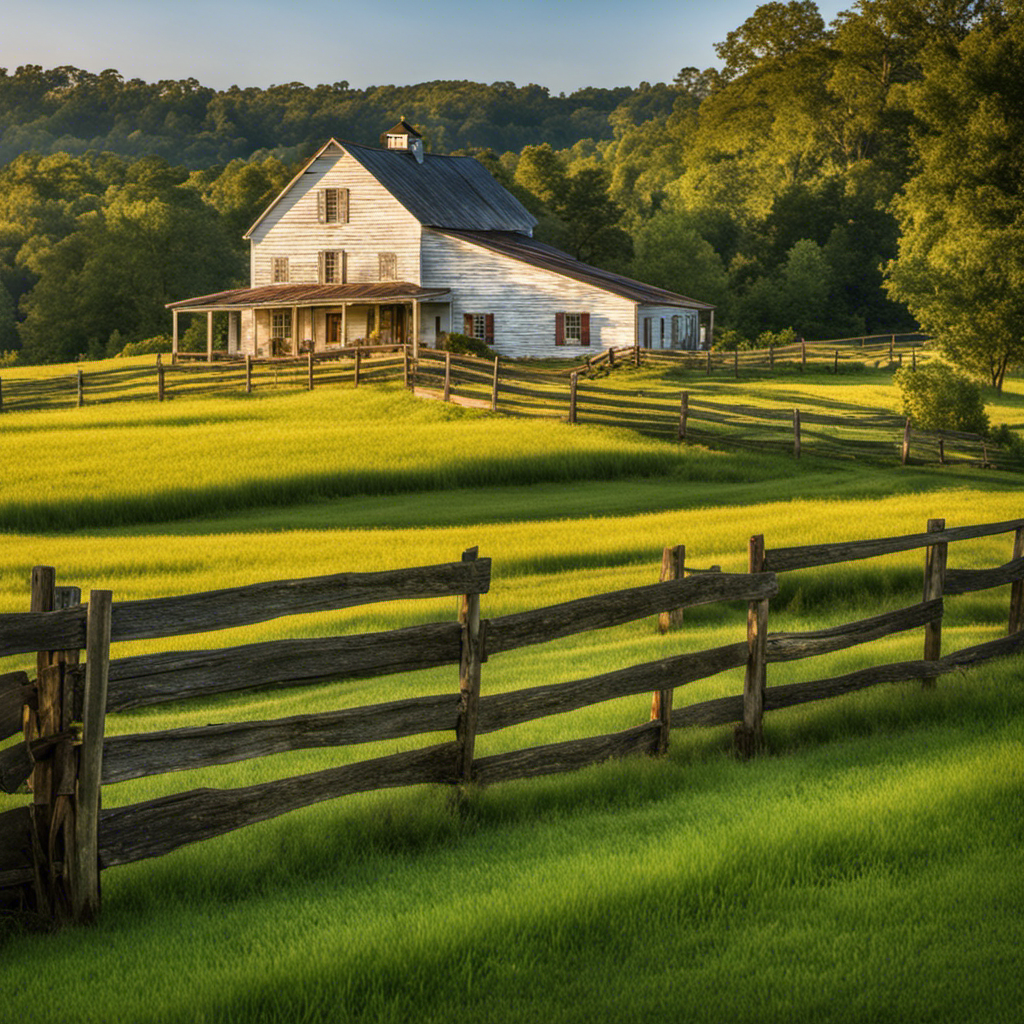
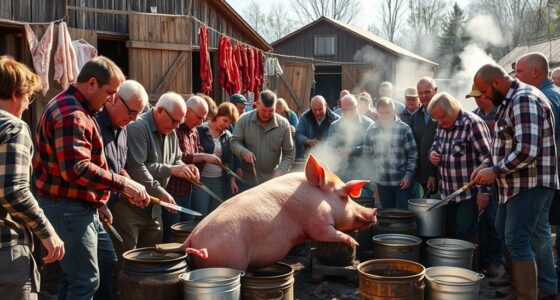
Pine plantations and turpentine camps transformed the landscape and economy of the American South, where you can still see remnants of this history. Workers tapped longleaf pine trees for resin, which was used to produce turpentine, rosin, and other products that supported local jobs and growth. These practices changed natural forests into managed plantations, with ongoing efforts to restore ecosystems. If you keep exploring, you’ll discover how these historical industries continue to shape the region today.

Get furniture and decor delivered free — and shop member deals
- Fast, free delivery on millions of items
- Access to Prime Big Deal Days deals on October 6–7
- Prime Video, Amazon Music and more included
Key Takeaways
- Pine plantations and turpentine camps played a central role in shaping the economy and landscape of the American South.
- Workers tapped longleaf pine resin by cutting into bark, facilitating resin collection for turpentine and rosin production.
- Intensive logging and land clearing transformed natural forests into managed plantations, impacting ecosystems.
- Modern forestry emphasizes sustainable practices like selective harvesting and habitat restoration to balance industry and ecology.
- Remnants of turpentine camps and pine plantations serve as historical sites highlighting regional industrial heritage.

Have you ever wondered how pine plantations and turpentine camps shaped the landscape of the American South? These sites are more than just remnants of the past; they tell a story about a significant chapter in the region’s history. Back in the day, the industry was driven by a need to harvest and process longleaf pine resin, which was used to produce turpentine, rosin, and other products. This industry was a cornerstone of the local economy, providing jobs and fueling growth across southern states. However, it also had profound environmental impacts, transforming vast forests into managed plantations. Today, understanding this history helps you appreciate the balance between economic development and sustainable forestry. While the industry played a crucial role historically, modern practices aim to restore and conserve these ecosystems, emphasizing sustainable forestry principles to guarantee future generations can benefit from healthy forests.
In the heyday of turpentine camps, workers would tap pine trees for resin, a process that involved cutting into the bark and collecting the sap that oozed out. These camps were often located in dense pine forests, where the trees were tapped repeatedly over years. The industry’s growth prompted large-scale logging, which substantially altered the natural landscape. Many forests were cleared and replaced with pine plantations, which aimed to maximize resin production. These plantations were carefully managed to assure a steady supply of timber and resin, but this intensive management sometimes compromised the ecological health of the land. Today, many of those industrial sites have become part of efforts to promote sustainable forestry, where logging is done responsibly, and the health of the forest and its biodiversity are prioritized. Sustainable forestry practices are now implemented to mitigate past environmental impacts and promote ecosystem health.
Pine plantations, which replaced some of the original longleaf pine forests, serve as a reminder of the historical industry’s footprint. They are cultivated with specific tree species to maximize productivity but often lack the diversity and age variety of natural forests. Efforts now focus on restoring native ecosystems by implementing sustainable forestry practices—such as selective harvesting, replanting native species, and preserving important habitats. This approach guarantees that the economic benefits from timber and resin production continue without depleting resources or damaging the environment. As you explore the landscape shaped by this industry, you’ll notice how these plantations and remnants of turpentine camps reflect both the resilience and the challenges faced by the region. They stand as monuments to a pivotal period in southern history—one that continues to influence forest management today, blending economic needs with ecological responsibility.
As an affiliate, we earn on qualifying purchases.
Frequently Asked Questions
What Environmental Impacts Did Turpentine Camps Have on Local Ecosystems?
You might notice that turpentine camps caused significant environmental impacts on local ecosystems. They often led to soil erosion because of deforestation and heavy machinery use. Water pollution was also a concern, as chemicals from processing plants contaminated nearby water sources. These activities disrupted habitats, harmed aquatic life, and degraded water quality, making it difficult for plants and animals to thrive in the affected areas.
How Did Workers’ Lives Differ Between Plantation Owners and Camp Laborers?
You’d notice that plantation owners controlled the labor conditions, enjoying better pay and stability. In contrast, camp laborers faced harsh labor conditions, low wages, and little job security. The economic disparities were stark, with owners accumulating wealth while workers struggled to survive. As a worker, you’d experience a tough, unstable environment, often under harsh treatment, highlighting the significant social and economic divide between the two groups.
Were There Any Health Risks Associated With Working in Turpentine Camps?
You face serious health risks working in turpentine camps, where occupational hazards lurk like shadows. The fumes from boiling resin can eat away at your lungs, while skin irritations become constant companions. Prolonged exposure heightens health concerns, risking blindness and severe respiratory issues. These dangers make every day a gamble, turning hard labor into a perilous journey where your well-being is always at the mercy of unseen threats.
How Did Turpentine Camp Practices Vary Regionally Across the South?
You’ll notice that regional labor practices and camp infrastructure variations shaped turpentine camps across the South. In some areas, camps prioritized worker safety with better facilities, while others focused on maximizing production, often neglecting safety. Infrastructure like housing, sanitation, and workspaces differed, reflecting local resources and economic priorities. These regional differences impacted workers’ health, safety, and overall working conditions, highlighting how practices adapted to local circumstances.
What Modern Conservation Efforts Relate to Former Pine Plantations?
You can see modern conservation efforts in former pine plantations through reforestation initiatives that restore native ecosystems. These programs focus on biodiversity restoration by planting diverse tree species and protecting wildlife habitats. By supporting these efforts, you help promote healthier forests, prevent erosion, and improve air quality. Engaging in or funding reforestation projects guarantees that these lands shift from monoculture plantations to vibrant, resilient ecosystems benefiting both nature and communities.
Conclusion
So, next time you pass a pine plantation, remember you’re strolling through a giant, fragrant factory of forced labor and greed. Those charming turpentine camps? Just charming enough to make you forget the history of sweat and smoke behind that sweet scent. But hey, who needs fairness or history when you can enjoy the picturesque scenery, right? Cheers to the beautiful illusion of progress—built on pine needles and broken lives.
Fall Picks
fall essentials
As an affiliate, we earn on qualifying purchases.