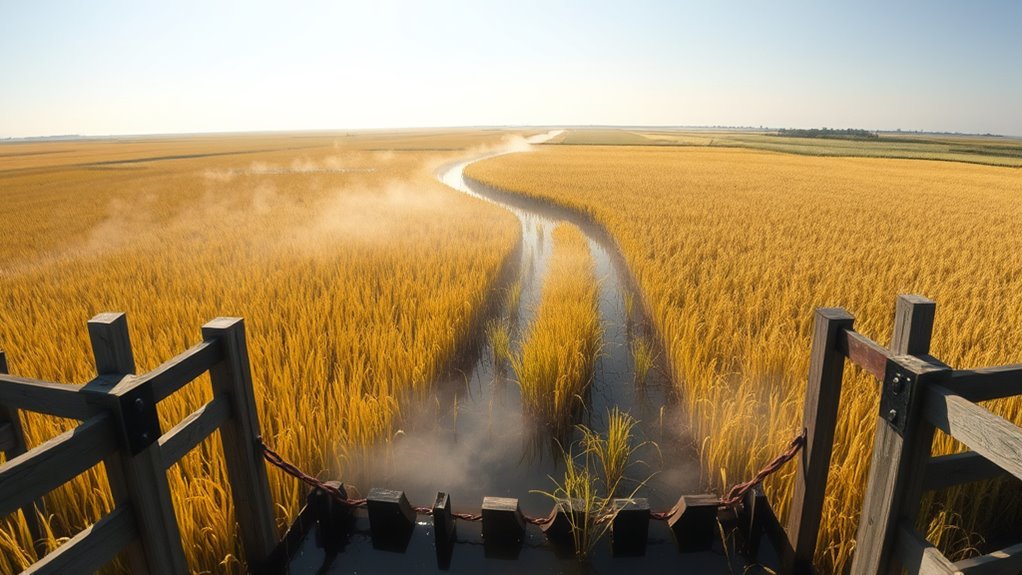

Lowcountry rice fields and tidal gates show how early settlers mastered water control to cultivate rice in coastal marshes. These sophisticated systems used tidal gates to regulate water levels, flooding fields during growth and draining them for harvest. This altered natural hydrology, creating a unique habitat and shaping the region’s ecology. Their construction reflects ingenuity and cultural heritage that still influence conservation efforts today—discover how these systems transformed the landscape and its ecosystems.

Get furniture and decor delivered free with Prime
- Fast, free delivery on millions of items
- Prime Video, Amazon Music and more included
- Member-only deals all year
Key Takeaways
- Lowcountry rice fields were historically cultivated using complex irrigation systems with tidal gates to control water flow.
- Tidal gates regulated flooding and draining of rice fields, supporting efficient rice cultivation and harvest.
- These systems significantly altered natural marsh hydrology, impacting local ecosystems and promoting biodiversity.
- Tidal gates and rice fields are important cultural heritage, reflecting early human ingenuity in land and water management.
- Modern restoration efforts aim to preserve this legacy while balancing ecological health and regional sustainability.
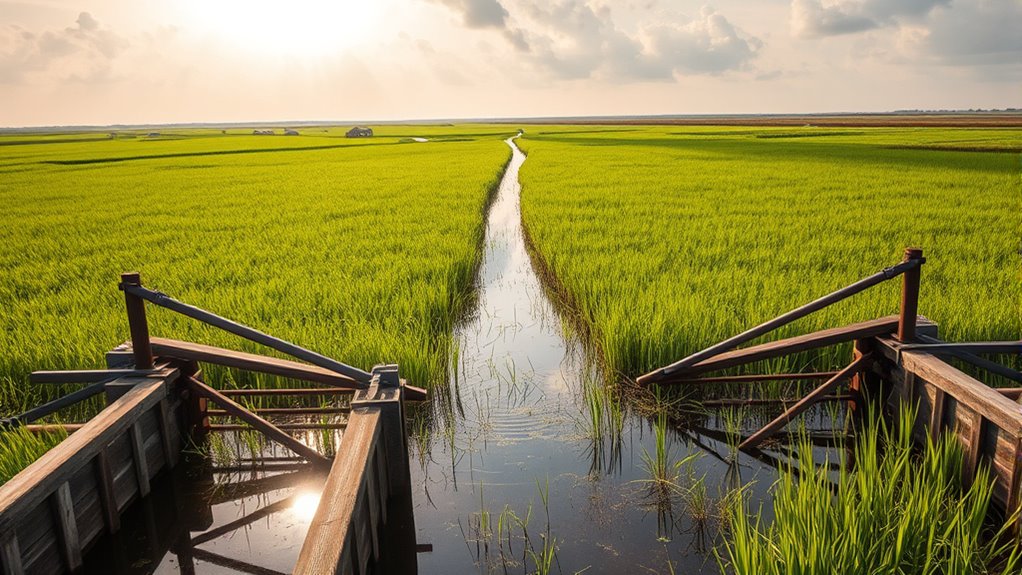
The Lowcountry rice fields and tidal gates form an essential system that has shaped the region’s landscape and ecology for centuries. When you explore this area, you’ll notice how the historical cultivation of rice transformed the land, creating vast, intricate fields that are both a testament to early ingenuity and a crucial part of the local environment today. Historically, settlers in the Lowcountry developed complex irrigation systems using tidal gates to control water flow, which allowed them to cultivate rice efficiently in the marshes. This early form of agriculture wasn’t just about growing crops; it also altered the natural hydrology of the region. By constructing these tidal gates, early farmers could regulate water levels, flooding fields during the growing season and draining them afterward to harvest the rice. This manipulation of water created a landscape uniquely suited for rice cultivation but also profoundly impacted the region’s ecology.
As you walk through the remnants of these historic fields, it’s clear that the ecological impact of this cultivation was significant. The rice plantations changed the marshes’ natural flow, leading to the development of a rich, biodiverse environment that supported countless species. The tidal gates, which once served a practical purpose, now represent a complex relationship between human activity and nature. They helped sustain the rice economy but also resulted in habitat modifications, affecting water quality, salinity, and sediment distribution. Over time, these alterations created a distinctive coastal ecosystem that, while shaped by human hands, has become a critical habitat for migratory birds, fish, and other wildlife. The ecological impact was not solely negative; it introduced new niches and promoted biodiversity that wouldn’t have existed otherwise.
Furthermore, these historic water management practices have become an important cultural heritage that continues to influence contemporary conservation and restoration efforts. Today, these historic cultivation practices and the tidal gate systems continue to influence the landscape. Restoration efforts aim to balance preserving this cultural heritage with protecting the fragile ecology that depends on these historic modifications. When you observe the low-lying fields and water management structures, you recognize how intertwined human history and natural processes truly are in the Lowcountry. The legacy of rice cultivation, with its ecological footprints and innovations, remains an enduring part of the region’s identity. Understanding this history allows you to appreciate the delicate balance between exploiting nature for economic gain and maintaining the ecological health of this unique coastal environment. The story of the Lowcountry rice fields and tidal gates is a powerful example of how human ingenuity can shape, and sometimes challenge, natural ecosystems over centuries.
As an affiliate, we earn on qualifying purchases.
Frequently Asked Questions
How Do Tidal Gates Impact Local Freshwater Ecosystems?
Tidal gates impact your freshwater habitat by controlling water flow, which can help maintain water quality and prevent saltwater intrusion. However, they may also hinder the movement of native species, disrupting ecosystems. This can create opportunities for invasive species to establish themselves, further threatening the balance of your freshwater ecosystem. Proper management of tidal gates is essential to protect native habitats and prevent invasive species from taking over.
What Is the History Behind Rice Cultivation in Lowcountry?
You discover that rice cultivation in the Lowcountry has deep historical significance, dating back to the 18th century when enslaved Africans brought rice farming techniques from West Africa. This practice shaped the region’s cultural heritage, influencing local traditions and economy. As you explore, you realize that rice fields became essential to the area’s identity, reflecting a legacy of resilience and innovation that still echoes today.
Are Tidal Gates Effective in Flood Prevention?
Tidal gates act like vigilant gatekeepers, shielding your land from overwhelming floodwaters. They’re effective tools for flood control, helping to keep waters at bay and protect homes and habitats. Additionally, they prevent erosion by controlling water flow and reducing the force of incoming tides. While not perfect, these gates are a crucial line of defense, turning the tide in your favor and safeguarding your community’s future against rising waters.
How Do Tidal Gates Influence Saltwater Intrusion?
Tidal gates influence saltwater intrusion by controlling the flow of seawater into freshwater areas, aiding in salinity regulation. When you operate these gates, you help maintain ecosystem balance, preventing excessive salt from harming plant and animal life. This regulation supports healthier habitats, preserves biodiversity, and guarantees that freshwater resources remain suitable for agricultural and ecological needs. Proper management of tidal gates is vital for sustaining the delicate balance between saltwater and freshwater environments.
Can Tidal Gates Be Automated or Remotely Controlled?
Yes, tidal gates can be automated and remotely controlled, turning them into sentinels that respond to nature’s rhythm. With advanced automation technology, you can manage these gates from afar, like conducting an orchestra with a click. Remote operation allows for precise timing, reducing manual effort and improving efficiency. This seamless control helps protect ecosystems and manage water levels, giving you peace of mind knowing you’re harnessing modern tech to guard essential waterways.
Conclusion
As you explore the lowcountry rice fields and tidal gates, remember that “a rising tide lifts all boats.” These ancient systems show how nature and human ingenuity work together to sustain this unique landscape. By understanding and preserving these tidal gates, you help keep this vibrant ecosystem alive for generations to come. So, step softly and respect the delicate balance—because when the tides turn, they remind us of nature’s power and grace.
Halloween Picks
halloween
As an affiliate, we earn on qualifying purchases.