
Spring is the perfect time to combine sheep dips and shearing, as it helps keep your flock healthy and boosts wool quality. Dipping sheep before or after shearing effectively controls parasites like lice, worms, and blowflies, reducing the risk of infestations during warmer months. Shearing provides a chance to inspect your sheep for skin issues and parasites early on. Implementing both practices now sets your flock up for a healthy, productive year—discover how to do it right.
Key Takeaways
- Spring shearing provides an ideal opportunity to inspect sheep for parasites and skin issues.
- Using dips before parasite infestations worsen helps protect sheep health and wool quality.
- Combining spring shearing with parasite dips reduces pest loads and prevents skin irritation.
- Proper timing of dips during shearing ensures effective parasite control and promotes wool growth.
- Integrated shearing and dipping practices improve flock health, wool quality, and farm profitability.
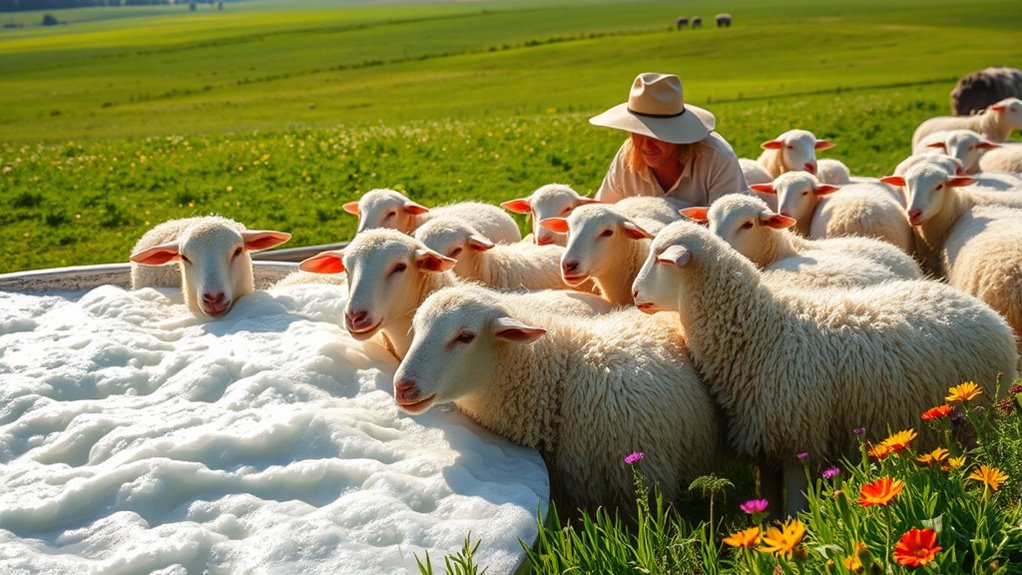
Spring is the busiest time of year for sheep farmers, as they prepare their flocks for the warmer months ahead. During this period, one of your top priorities is guaranteeing the sheep’s wool quality remains high. After winter, wool can become dirty, greasy, and prone to damage if not properly managed. Shearing helps remove the worn-out fleece, allowing new, soft wool to grow in its place. Not only does this improve wool quality, but it also helps prevent heat stress and makes handling your sheep easier in the hot months. As you plan your spring shearing, it’s important to contemplate how the process affects your flock’s health and productivity.
Alongside shearing, parasite control is vital for maintaining a healthy flock. Spring provides an ideal opportunity to implement effective parasite management strategies. Sheep are especially vulnerable to parasites like blowflies, lice, and intestinal worms after winter, when their immune defenses might be weaker. Using sheep dips or pour-on treatments during this time helps eliminate these pests and prevents infestations from escalating. A well-timed dip not only reduces the parasite load but also promotes better wool growth and overall animal health. Keep in mind that some parasites can cause skin irritation, anemia, and weight loss, which directly impacts wool quality and farm profitability. Hence, integrated parasite control—combining dips with pasture management—is essential to keep your flock thriving.
During spring shearing, you also have the chance to inspect each sheep thoroughly. Look for signs of parasites or skin issues that might not be apparent during other times of the year. Treat any problems promptly to prevent them from spreading or worsening. Proper handling during shearing minimizes stress and injury, which further supports the sheep’s overall wellbeing and wool production. Remember, clean and healthy sheep produce the best wool, and controlling parasites is a key part of that. Using sheep dips at the right time—before infestations take hold—ensures your flock remains healthy and productive throughout the season. Additionally, mindfulness of common pitfalls can help you avoid setbacks and ensure a smooth shearing process.
As you prepare your sheep for spring, combine shearing with effective parasite control to optimize wool quality and safeguard your flock’s health. This strategic approach guarantees your sheep stay comfortable, free of pests, and able to produce high-quality fleece. Spring might be busy, but with careful planning and timely treatments, you set your flock up for a successful year ahead. Your efforts will pay off in the form of better wool, healthier animals, and a more profitable farm.

DURVMED Ivermectin Liquid Dewormer for Cattle & Sheep, Livestock Parasite Control, Cattle Dewormer, Sheep Dewormer, Mite, Nematode, Roundworm & Lungworm Support 8 fl oz
- Targeted for Cattle & Sheep: Supports livestock parasite control
- Controls Mites & Parasites: Manages mites, worms, lungworms
- Supports Deworming Programs: Targets internal parasites for herd health
As an affiliate, we earn on qualifying purchases.
As an affiliate, we earn on qualifying purchases.
Frequently Asked Questions
What Are the Environmental Impacts of Sheep Dips?
Sheep dips can cause significant environmental impacts, especially through chemical contamination and water pollution. When dips are not managed properly, harmful chemicals may seep into soil and water sources, contaminating local ecosystems. You should be cautious, ensuring proper disposal and handling of dips to prevent these chemicals from polluting rivers, lakes, and groundwater. Taking responsible steps helps protect wildlife and preserves water quality in your area.
How Often Should Sheep Be Dipped During the Season?
If you’re managing sheep, you should dip them about every 4 to 6 weeks during the season, depending on factors like local parasites and environmental conditions. For example, a farm in a humid area might need more frequent dipping, say every 4 weeks, while a drier region might only require every 6 weeks. Adjust your dipping frequency based on seasonal timing and specific farm needs to protect your flock effectively.
Are There Natural Alternatives to Chemical Sheep Dips?
Yes, there are natural alternatives to chemical sheep dips. You can use organic treatments and herbal dips, which help protect your sheep from pests and parasites without harsh chemicals. These options are gentle, environmentally friendly, and often effective if applied correctly. Regular use of herbal dips, made from ingredients like neem, tea tree oil, or eucalyptus, can keep your flock healthy while avoiding synthetic substances.
What Equipment Is Needed for Effective Spring Shearing?
Imagine you’re preparing for spring shearing; you’ll need essential shearing tools like electric clippers and hand shears for efficiency. Protective gear, such as gloves, goggles, and aprons, safeguards you during the process. For example, a farmer in Vermont successfully streamlined her shearing by investing in high-quality tools and proper gear, ensuring safety and a clean cut. With these, you’ll achieve effective, safe shearing every time.
How Does Weather Affect Sheep Shearing Schedules?
Weather substantially influences your sheep shearing schedule through climate influence and seasonal timing. Mild temperatures and dry conditions are ideal because they reduce stress on the sheep and prevent skin issues. If the weather turns cold or wet, it’s best to delay shearing to avoid health risks. Planning your schedule around favorable seasonal timing ensures smoother shearing, helps maintain sheep health, and improves wool quality.
Conclusion
Just like the shepherd tending his flock, your careful attention to sheep dips and spring shearing guarantees healthy, happy sheep. As the seasons turn, remember that each step you take echoes the timeless rhythm of tending to your flock—akin to the gentle patience of Thomas the Tank Engine or the watchful eye of a guardian. Keep nurturing your sheep with care and dedication, and they’ll reward you with woolly abundance, standing strong through seasons just as the steady river carves its path.