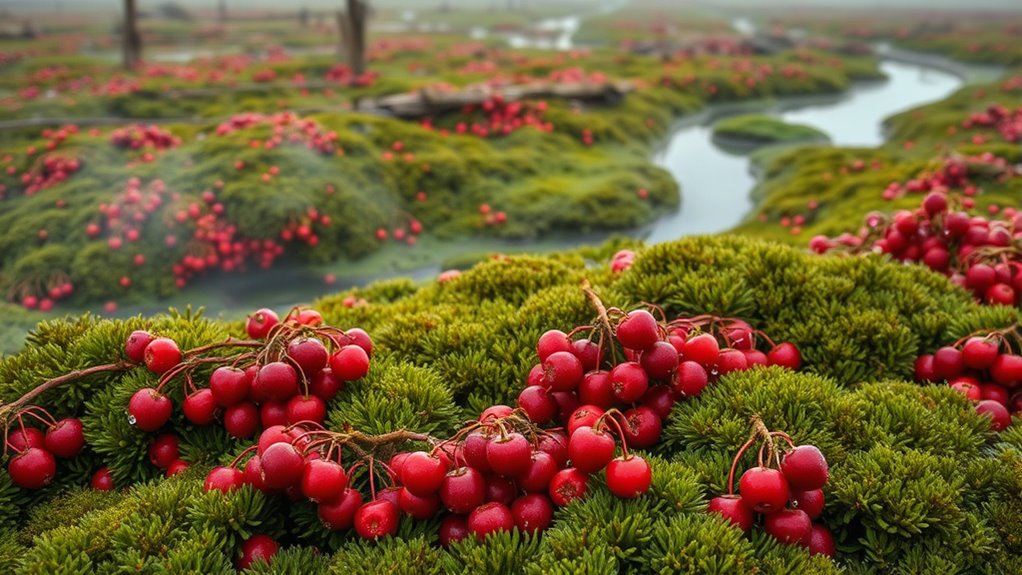

Discover the vibrant world of Cape Cod’s cranberry bogs, where you can see traditional harvesting methods like flooding, which helps gather the bright red berries while protecting the delicate ecosystem. These bogs aren’t just farms—they’re essential habitats for animals, supporting biodiversity and water filtration. The area showcases a blend of sustainable practices and cultural heritage that has lasted generations. If you want to explore how these wetlands thrive as both farms and ecosystems, there’s plenty more to uncover.
Key Takeaways
- Cranberry bogs in Cape Cod are vital ecosystems supporting agriculture, wildlife, and local cultural traditions.
- The harvesting process involves flooding, which allows berries to float for easy collection, minimizing plant damage.
- Bogs sustain diverse wildlife, including birds and amphibians, through careful water level management and ecological preservation.
- The Cape Cod cranberry industry emphasizes sustainable practices that respect the bog’s ecological balance and historical methods.
- These landscapes serve as scenic, functional ecosystems that support biodiversity, water filtration, and regional heritage.
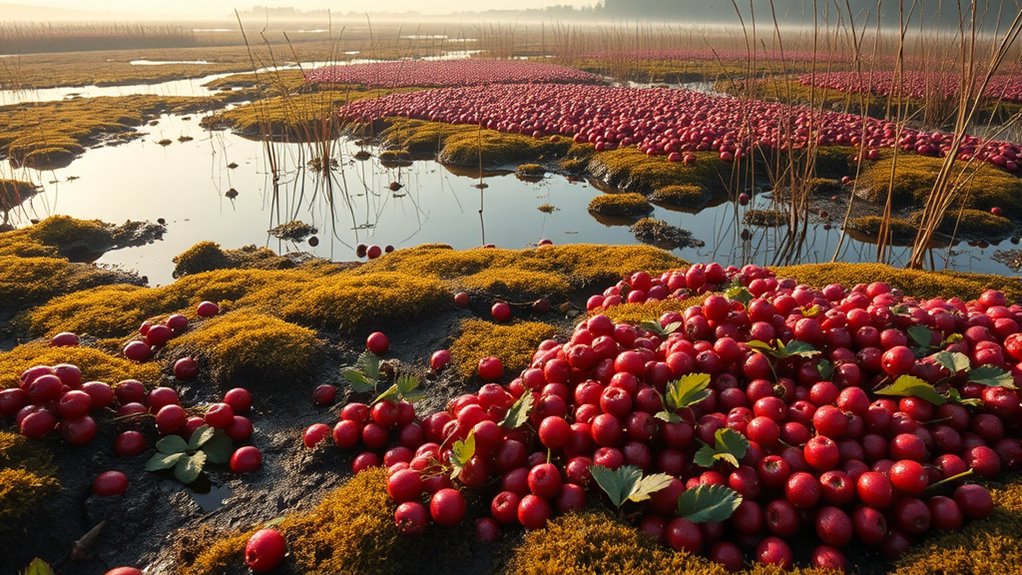
Nestled in the heart of Cape Cod, cranberry bogs are more than just scenic landscapes—they’re essential ecosystems and a key part of local tradition. When you visit during harvest season, you get to witness firsthand how these vibrant red berries are carefully gathered, a process known as cranberry harvesting. Unlike typical farming, cranberry harvesting involves flooding the bogs with water, which causes the berries to float to the surface for easy collection. This method not only makes the harvest efficient but also minimizes damage to the plants, ensuring that the bogs remain productive year after year. As you observe this process, you’ll notice that it’s deeply intertwined with the bog ecology, which is a delicate balance of water, plants, and wildlife. The cranberry plants thrive in the acidic, sandy soils of the bogs, which are naturally suited for their growth. These soils are low in nutrients, making the bog ecology unique and perfectly adapted to support cranberry cultivation while also providing habitat for various birds, insects, and amphibians.
Understanding bog ecology helps you appreciate the importance of these wetlands beyond just their agricultural value. The cranberry bogs serve as crucial ecosystems that support biodiversity and water filtration, maintaining the health of the surrounding environment. During your visit, you might see herons wading in the flooded areas or ducks nesting nearby, illustrating how the bog provides sanctuary for local wildlife. Maintaining these ecosystems requires careful management, ensuring that water levels are controlled to sustain both the plants and the animals that depend on this habitat. You’ll also learn that the cranberry industry on Cape Cod has been sustainable for generations, rooted in a tradition of respecting and preserving the bog ecology. Additionally, the use of natural materials in the construction of tools and infrastructure reflects the region’s commitment to ecological balance and sustainability.
As you walk along the edges of a cranberry bog, you’ll notice the intricate network of ditches and sluice gates that regulate water flow—tools that farmers use to nurture the bog’s delicate balance. This ongoing stewardship demonstrates how crucial it is to keep the bog healthy for future harvests and ecological stability. Fundamentally, the process of cranberry harvesting is more than just an economic activity; it’s a celebration of a unique landscape carefully managed to sustain both the crop and the environment. When you leave, you’ll carry a greater appreciation for how these vibrant red berries are harvested in harmony with the natural bog ecology, preserving a cherished Cape Cod tradition for generations to come.

Ech.Apr Effortless Berry Picker Scoop – Blueberry Harvesting Rake with Wide Metal Comb & Ergonomic Handle, Faster Fruit Picking Tool for Blueberry, Huckleberry, Cranberry (Black Handle)
This durable berry picker has dimensions of 9.05×5.3×4.7 inchs and weighs 0.72lb.
As an affiliate, we earn on qualifying purchases.
As an affiliate, we earn on qualifying purchases.
Frequently Asked Questions
How Do Cranberries Grow Underwater in Bogs?
You might wonder how cranberries grow underwater in bogs. During cranberry cultivation, the plants send their roots underwater where they anchor in the sandy, peat-rich soil. The underwater roots absorb nutrients and water needed for growth, while the cranberry vines float on the surface or are partially submerged. This unique adaptation helps cranberries thrive in their wet, boggy environment, ensuring healthy growth and abundant harvests.
What Wildlife Relies on Cranberry Bog Ecosystems?
Imagine a vibrant sanctuary where countless creatures find refuge—that’s what cranberry bog ecosystems offer. You’ll see bird habitats bustling with songbirds and insects, crucial for pollination and maintaining ecological balance. These wetlands serve as essential nesting sites, providing shelter and sustenance. When you visit, remember that your presence helps protect this delicate habitat, ensuring the survival of diverse wildlife that depends on these unique ecosystems for their very existence.
How Are Cranberries Harvested Without Damaging the Bog?
During cranberry harvesting, you use specialized equipment that gently rakes or vacuums the berries, minimizing damage to the bog. These methods allow you to collect cranberries efficiently while preserving the delicate ecosystem. By employing careful harvesting techniques, you maintain bog preservation, ensuring the environment stays healthy and productive for wildlife and future harvests. This sustainable approach balances human needs with ecological integrity, so the bog remains vibrant and thriving.
What Environmental Challenges Do Cranberry Bogs Face?
You face environmental challenges like water management issues and bog conservation needs. Excessive water use can harm local ecosystems, while droughts threaten cranberry production. Pollution runoff risks contaminating nearby waterways, and habitat loss from development pressures disrupts bog ecosystems. To protect these areas, you must implement sustainable water practices, promote bog conservation efforts, and balance agricultural needs with environmental health. This way, you guarantee the bogs remain vibrant and productive for future generations.
Can Visitors Pick Their Own Cranberries in Bogs?
Yes, visitors can enjoy cranberry picking through designated visitor participation programs. Many cranberry bogs welcome you to join in the fun, offering guided tours and hands-on experiences. During these opportunities, you get to pick your own cranberries, making it a memorable part of your visit. Just check with the specific bog beforehand, as some may have seasonal or reservation requirements to guarantee a smooth, enjoyable experience.

Vintage Marsh Bird Patrol Wetland Wildlife Observer T-Shirt
Vintage marsh birdwatching artwork featuring binoculars, heron, marsh birds, and wetland scenery for bird lovers, wildlife observers, and…
As an affiliate, we earn on qualifying purchases.
As an affiliate, we earn on qualifying purchases.
Conclusion
Now that you’ve learned about Cape Cod’s cranberry bogs, you can see how essential they are to local life and traditions. These wetlands are more than just fields; they’re a living reminder of nature’s resilience. As you explore, remember that appreciating these unique ecosystems helps keep them thriving. So, take the time to enjoy and protect this treasure — after all, it’s worth its weight in gold to the community and the environment alike.
sustainable cranberry bog tours
As an affiliate, we earn on qualifying purchases.
As an affiliate, we earn on qualifying purchases.

Mayes 10309 Water Level Tool, Made in USA, Accurate Yard Grading and Construction Leveling, Attaches to Standard Hose
Proudly Made in USA: This water level measuring tool is built in the United States, delivering consistent performance…
As an affiliate, we earn on qualifying purchases.
As an affiliate, we earn on qualifying purchases.