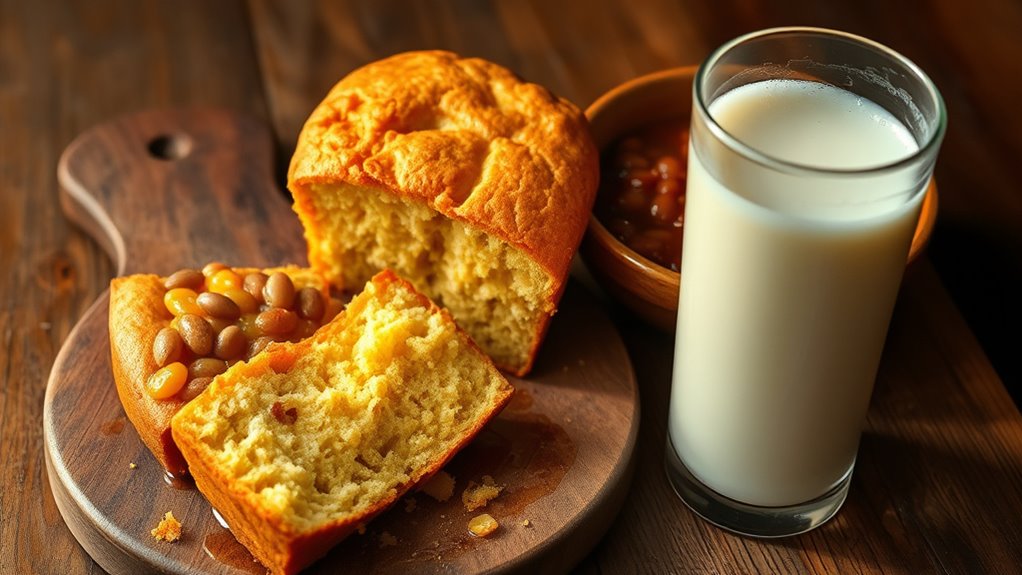
You’ll find that cornbread, beans, and buttermilk reflect Southern hospitality and timeless traditions. The cornbread’s golden crust and tender crumb, made moist by buttermilk, bring warmth and comfort. Slow-cooked beans with smoky ham or spices deepen their flavor and create a hearty, satisfying meal. This combination isn’t just food—it’s a celebration of community, resourcefulness, and shared history. Stick around, and you’ll discover more about the rich cultural roots behind this classic dish.
Key Takeaways
- The meal highlights Southern hospitality, emphasizing comfort, tradition, and community bonding through cornbread, beans, and buttermilk.
- Buttermilk enriches cornbread’s moistness and tang, while slow-cooked beans deepen in flavor, creating a hearty, balanced dish.
- Cornbread’s golden crust and tender crumb symbolize warmth and resourcefulness rooted in Southern culinary heritage.
- The combination evokes emotional comfort, resembling a warm hug from grandmother’s kitchen, emphasizing family and shared tradition.
- Incorporating these ingredients preserves cultural identity and fosters social bonds through time-honored, resourceful recipes.

Have you ever wondered why cornbread, beans, and buttermilk are such a classic Southern pairing? It’s more than just taste; it’s a reflection of Southern hospitality and a nod to traditional recipes that have been passed down through generations. These dishes come together in a way that embodies warmth, comfort, and community, creating a meal that feels like a hug from your grandmother’s kitchen. When you sit down to enjoy this trio, you’re participating in a culinary culture rooted in simplicity, resourcefulness, and a deep sense of belonging.
Southern hospitality is all about making guests feel welcome, and nothing does that better than serving hearty, flavorful food that’s been crafted with love. Traditional recipes for cornbread, beans, and buttermilk are staples in Southern homes because they’re easy to prepare, affordable, and endlessly adaptable. Cornbread, with its golden crust and tender crumb, often acts as the centerpiece of the meal. It’s made from simple ingredients—cornmeal, buttermilk, eggs, and a touch of sugar or honey—and baked to perfection. Its slightly sweet flavor pairs beautifully with the savory beans, creating a balanced and satisfying plate. The beans, whether seasoned with smoky ham, spices, or just a pinch of salt, serve as a hearty base that fills you up and provides nourishment. Cooking beans slowly over low heat allows their flavors to deepen, a process that’s been refined over generations to maximize taste and tenderness. Incorporating sound design techniques such as layering and manipulation can enhance the sensory experience of traditional cooking sounds, making the meal even more immersive.
Buttermilk plays an essential role beyond just the ingredients; it’s a symbol of traditional Southern recipes. It tenderizes the cornbread, giving it that moist, fluffy texture, and adds a tang that complements the richness of the beans. Drinking buttermilk alongside this meal isn’t just about hydration; it’s about savoring a taste that’s uniquely Southern—rich, tangy, and comforting. When you incorporate buttermilk into your cooking, you’re embracing a time-honored practice that connects you to the culinary history of the South. It’s about more than recipes; it’s about preserving a way of life that values hospitality, family, and tradition.
In the end, cornbread, beans, and buttermilk aren’t just food—they’re a cultural experience. They remind you that sharing a meal is a way to show kindness and build community. By preparing and enjoying these dishes, you honor the legacy of Southern hospitality and keep alive the traditional recipes that continue to bring people together around the table.
Frequently Asked Questions
What Are the Origins of Cornbread, Beans, and Buttermilk?
You’re curious about the origins of cornbread, beans, and buttermilk. These dishes have deep Southern roots, shaped by Native influences and African traditions. Native peoples first cultivated corn, which became the foundation for cornbread. Beans were a staple protein, and buttermilk was a common leftover from dairy processes. Together, they reflect a rich culinary history that blends indigenous ingredients with African and European cooking techniques.
Are There Regional Variations in Preparing These Dishes?
You’ll notice regional flavor influences how you prepare these dishes, with distinct cooking techniques shaping their character. In the South, cornbread is often sweet and fluffy, while in the North, it’s denser and savory. Beans might be slow-cooked with smoky spices in the Southwest, but boiled with herbs in the Northeast. Buttermilk’s tang varies too, adapting to local tastes and ingredients, creating a vivid tapestry of regional culinary traditions.
How Do Dietary Restrictions Affect Traditional Recipes?
Dietary restrictions considerably influence traditional recipes by encouraging you to explore gluten alternatives and incorporate plant-based proteins. You might swap wheat flour with gluten-free options or add legumes and tofu to boost protein content. These adjustments help you enjoy classic flavors while respecting your dietary needs. By being creative and open to substitutions, you preserve the essence of traditional dishes while making them suitable for various dietary restrictions.
Can These Dishes Be Made Vegan or Gluten-Free?
Yes, you can make these dishes vegan or gluten-free, turning them into modern classics. Think of plant-based substitutions like almond milk or flax eggs for buttermilk and eggs, and use gluten-free flour for cornbread. With a little creativity, you’ll create delicious versions that honor tradition while accommodating dietary restrictions. Embrace these gluten-free alternatives and plant-based swaps, and you’ll enjoy hearty, flavorful dishes without compromising your values or health.
What Are Some Suggested Side Dishes to Serve With Them?
You should consider serving fresh fruit salads or tangy pickled vegetables as side dishes. Fruit salads add a sweet, revitalizing contrast, while pickled vegetables provide a zesty, crunchy element. Both options complement hearty dishes well and are easy to prepare. These sides also add vibrant colors and flavors, making your meal more balanced and appealing. They’re versatile choices that suit various dietary preferences, ensuring everyone leaves satisfied.
Conclusion
Just like Huck Finn around the campfire, you’re now part of a simple, soulful tradition. Cornbread, beans, and buttermilk remind us that sometimes, the best moments are found in humble, honest food shared with loved ones. So, embrace these flavors and let them carry you home, where stories are told and memories are made. After all, isn’t life just a good meal, seasoned with love and a little bit of nostalgia?