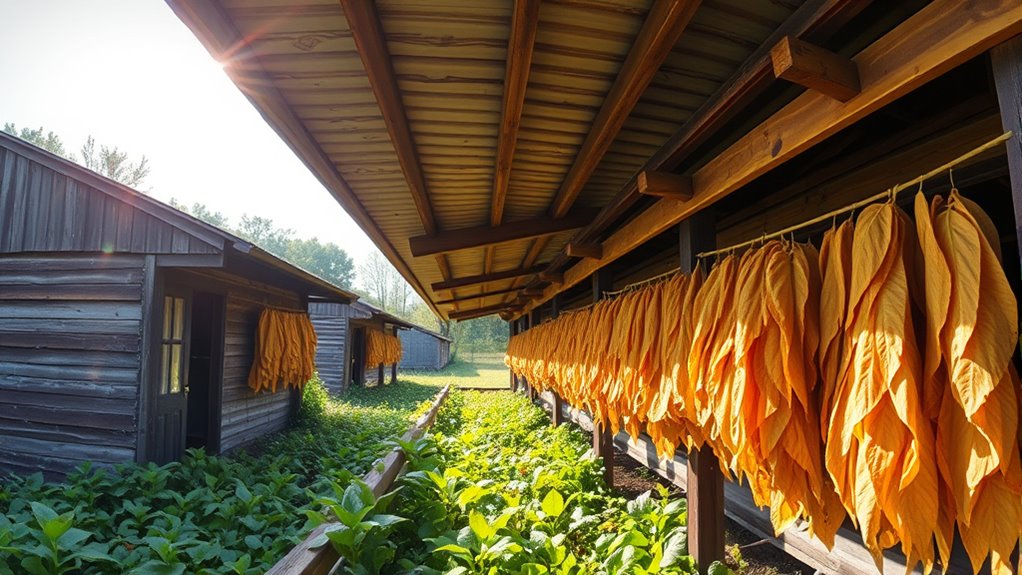

Kentucky tobacco sheds and curing methods are designed to create a controlled environment that guarantees high-quality tobacco. You’ll find traditional wooden structures with ventilation features like windows and louvers, helping regulate airflow and humidity. Modern innovations, such as automated systems and energy-efficient equipment, further improve curing consistency and reduce costs. If you want to learn how these techniques and structures impact tobacco quality and how advances are shaping the future, there’s more to explore.

Get furniture and decor delivered free with Prime
- Fast, free delivery on millions of items
- Prime Video, Amazon Music and more included
- Member-only deals all year
Key Takeaways
- Kentucky tobacco sheds are traditionally constructed with wood for breathability and ease of modification.
- Proper layout includes vents, windows, and louvers to ensure effective air circulation during curing.
- Modern sheds incorporate automated systems for temperature and humidity control, improving curing consistency.
- Insulation and reflective roofing help maintain stable conditions against weather fluctuations.
- Innovations like sensors and energy-efficient ventilation enhance tobacco quality and reduce operational costs.
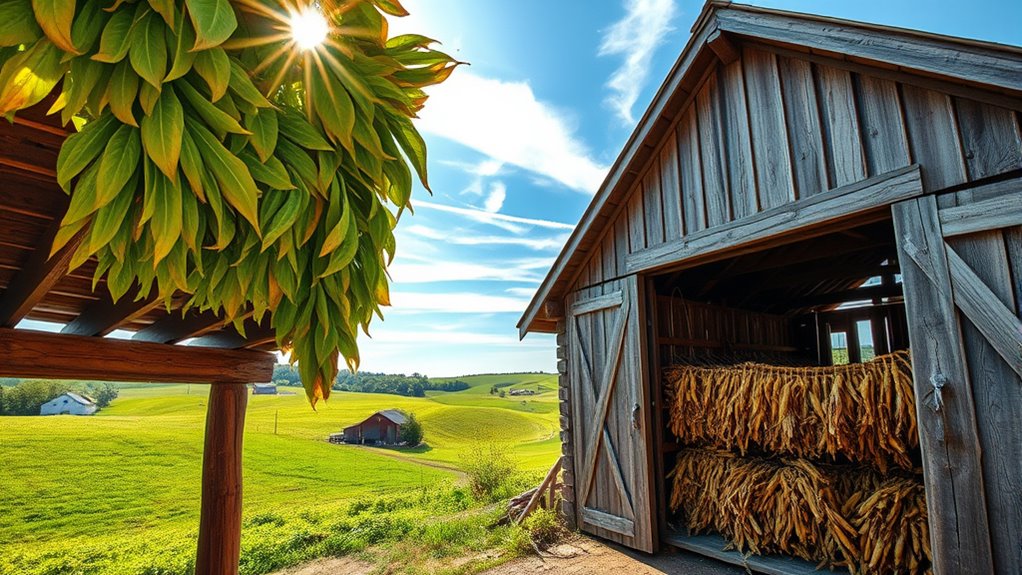
In Kentucky, tobacco sheds and curing methods play a pivotal role in producing high-quality tobacco. When you’re involved in tobacco farming, understanding the significance of proper tobacco shed construction can make all the difference. A well-built shed provides the right environment for curing tobacco leaves, guaranteeing they develop the desired flavor and texture. Modern curing barn innovations have transformed traditional practices, allowing you to control temperature, humidity, and airflow more precisely. This control helps prevent mold, over-drying, or uneven curing, which can diminish the crop’s quality. Additionally, embracing modern curing techniques can further optimize the process, ensuring consistent results and improved crop value.
As you explore tobacco shed construction, you’ll find that choosing the right materials and design features is essential. Wood remains popular because it’s breathable and easy to modify, but some farmers incorporate metal or composite materials for durability and fire resistance. You should also consider the layout—ventilation is critical, so designing windows, vents, or louvers that can be opened and closed helps regulate air circulation. Proper placement of these features ensures consistent curing conditions, which is indispensable for producing premium tobacco. You might also invest in insulation or reflective roofing to maintain stable temperatures during colder months or extreme weather, further enhancing the quality of your cured tobacco.
Innovations in curing barns have made it easier to achieve uniform curing, especially as weather unpredictability increases. Modern curing barn innovations include automated systems that monitor and adjust temperature and humidity levels in real time. These systems often use sensors and thermostats linked to ventilation fans, heaters, or misting devices, giving you greater control without constant manual adjustments. This technological edge reduces labor and minimizes errors, leading to more consistent results. Some curing barns also incorporate energy-efficient solutions, like solar-powered fans or insulated walls, reducing operational costs and environmental impact.
As an affiliate, we earn on qualifying purchases.
Frequently Asked Questions
How Do Climate Conditions Affect Tobacco Curing in Kentucky?
Climate conditions directly impact tobacco curing by influencing humidity levels and temperature control. If the humidity is too high, your tobacco may develop mold or dry unevenly, while low humidity can cause excessive drying and loss of flavor. Temperature fluctuations can lead to inconsistent curing, affecting quality. To guarantee ideal curing, you need to carefully monitor and adjust humidity levels and maintain steady temperatures throughout the process, keeping the tobacco in perfect conditions.
What Are the Differences Between Traditional and Modern Tobacco Sheds?
You notice that traditional tobacco sheds often feature open sides and rely on natural airflow, while modern sheds use advanced insulation and climate control for precise curing. For example, a farm upgrading to a modern shed improves curing consistency and reduces curing time. The design of the shed directly influences curing techniques, with modern structures allowing better temperature and humidity regulation, leading to higher-quality tobacco compared to traditional, open-sided designs.
How Long Does the Curing Process Typically Take in Kentucky?
The curing process in Kentucky typically takes about 7 to 14 days. During this time, you’ll notice the tobacco leaf color changing from green to yellow, then brown as it develops flavor. You should maintain a consistent curing temperature, usually around 70-90°F, to guarantee even curing. Proper airflow is essential, so you can prevent mold and achieve the desired leaf quality for a smooth, flavorful tobacco product.
What Are Common Pests or Issues During Tobacco Curing?
During tobacco curing, pests like insects and rodents can be a problem. You should regularly check for signs of pest activity and practice pest control measures to keep them at bay. Proper shed maintenance is also essential; make sure vents are clean and sealed, and keep the environment dry to prevent infestations. Staying vigilant helps protect your crop and ensures a successful curing process.
How Does Curing Influence the Flavor Profile of Kentucky Tobacco?
You influence the flavor profile of Kentucky tobacco through your curing techniques, which play a vital role in flavor development. As you carefully control temperature, humidity, and airflow, you allow the tobacco to undergo chemical changes, enhancing its richness and smoothness. Proper curing brings out unique flavors, making the tobacco more aromatic and enjoyable. Your attention to detail guarantees a high-quality product with a distinctive, well-rounded taste.
Conclusion
As you walk through Kentucky’s tobacco sheds, it’s no coincidence how the air’s rich aroma and the mellow glow of curing leaves seem perfectly timed. These sheds aren’t just buildings—they’re the heart of a tradition that’s been shaping your favorite cigars and cigarettes for generations. Every turn, every leaf, reminds you that history and passion curiously blend here, making each puff you enjoy a little more special. Sometimes, the most memorable moments happen where you least expect them.
Halloween Picks
halloween
As an affiliate, we earn on qualifying purchases.