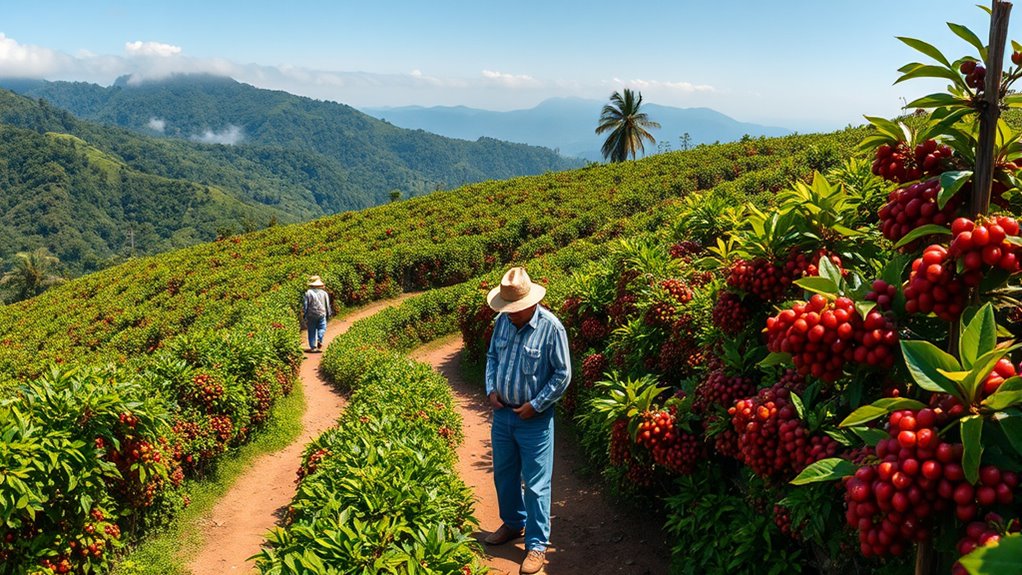

In Kona, smallholder farmers grow some of the world’s most prized coffee by blending traditional methods with organic practices. They rely on volcanic soil and favorable microclimates to develop rich flavors while avoiding synthetic pesticides, using natural pest management instead. Certification agencies help guarantee strict standards are met, promoting sustainable land use and environmental health. If you keep exploring, you’ll discover more about how these dedicated farmers maintain such high-quality, eco-friendly coffee.
Key Takeaways
- Smallholder farmers in Kona cultivate premium organic coffee using sustainable, chemical-free practices rooted in volcanic soil and microclimate advantages.
- Cooperative organizations assist farmers with certification, record-keeping, and maintaining high standards for organic Kona coffee.
- Organic farming methods rely on natural pest control, crop rotation, and soil health to ensure bean quality and environmental sustainability.
- Certification agencies verify compliance, enhancing consumer trust and reinforcing Kona coffee’s reputation for purity and high quality.
- Farming stories highlight dedication, community efforts, and the importance of preserving Kona’s unique terroir for future generations.
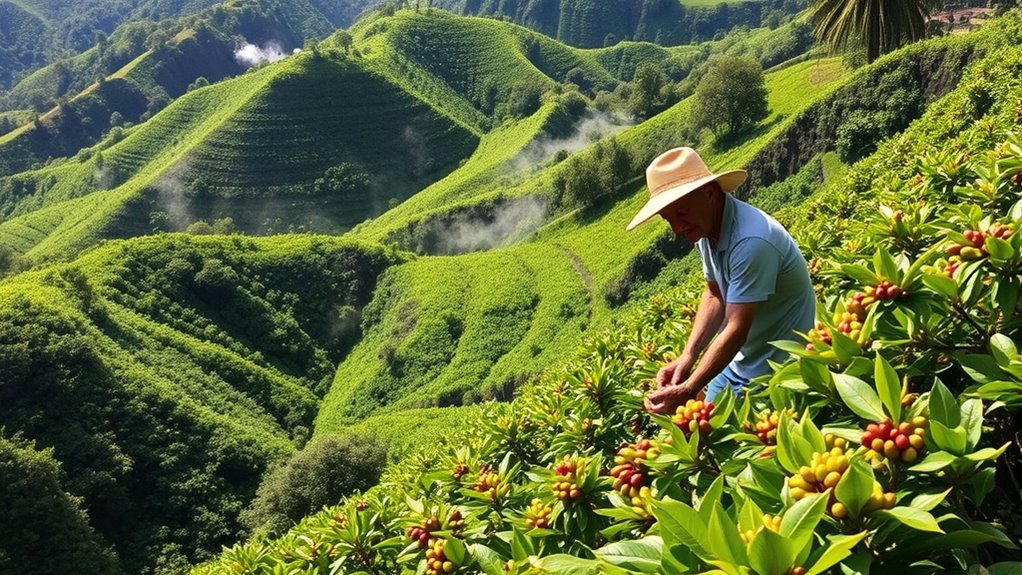
Have you ever wondered what makes Kona coffee so special? It’s more than just its rich flavor and smooth finish. A big part of what sets Kona coffee apart is the dedication smallholder farmers put into their craft, especially when it comes to maintaining the quality and integrity of their beans. One key aspect is the pursuit of organic certification, which guarantees that the coffee is grown without synthetic chemicals, pesticides, or fertilizers. Achieving this certification isn’t easy, but it’s a critical step for farmers who want to produce a truly pure product. It involves rigorous inspections and adherence to strict standards that prioritize environmental health and sustainable farming practices. This commitment not only benefits the land and the local ecosystem but also appeals to consumers who value organic products and are willing to pay a premium for them. For smallholders in Kona, organic certification also means they need to be vigilant about pest management. Traditional chemical pesticides are avoided, so farmers rely on natural methods to protect their coffee plants from pests and diseases. They might introduce beneficial insects like ladybugs or use organic-approved sprays derived from botanical extracts. Crop rotation and maintaining healthy soil are also part of their pest control strategies, helping to strengthen the plants and reduce vulnerability to pests naturally. These practices require careful planning and continuous effort, but they’re essential for maintaining the high standards expected of Kona coffee. Since the region’s unique volcanic soil and microclimate already give the coffee a distinctive flavor, combining this with organic and pest management practices enhances the overall quality. Smallholders often work closely with local cooperatives and certification agencies, which guide them through the complex process of obtaining organic status. This not only involves meeting the standards but also keeping detailed records of their farming practices. Such transparency reassures buyers and consumers that the coffee they’re purchasing truly adheres to organic principles. Furthermore, these practices help farmers reduce their environmental footprint, preserve biodiversity, and promote sustainable farming for future generations. Additionally, emerging beauty and grooming trends like eco-friendly practices inspire some farmers to adopt more sustainable methods in their cultivation and processing. It’s a labor-intensive process, but smallholders see it as an essential way to protect their land and their livelihoods while offering a premium product that reflects their dedication and respect for nature. So, when you sip Kona coffee, you’re tasting the result of careful organic certification and a commitment to natural pest management, which together uphold the region’s reputation for excellence.

Blue Horse 100% Kona Coffee, Medium Roast, Arabica Whole Beans, 1 lb (16 oz) Bag, Farm Fresh, Authentic Hawaiian Coffee beans from Hawaii’s Big Island
OUR BRAND STORY: Monumental volcanoes and lush, verdant steep slopes make Kona, Hawaii a special place on earth….
As an affiliate, we earn on qualifying purchases.
As an affiliate, we earn on qualifying purchases.
Frequently Asked Questions
What Are the Biggest Challenges Faced by Kona Coffee Smallholders?
You face several challenges as a Kona coffee smallholder, including coffee export hurdles that delay getting your beans to market and limited market access, which reduces your sales potential. These obstacles make it harder to earn a steady income and sustain your farm. You need support to improve export processes and expand your market reach, ensuring your coffee can thrive both locally and internationally.
How Do Smallholders Maintain Soil Health and Sustainability?
You maintain soil health and sustainability by practicing organic composting, which enriches the soil naturally and reduces chemical use. You also use cover cropping, planting specific crops to protect and nourish the soil during off-season times. These methods help prevent erosion, improve soil structure, and promote healthy coffee growth. By adopting these sustainable practices, you guarantee your land remains productive and resilient for future harvests.
What Traditional Methods Do Farmers Use for Pest Control?
You might be surprised to learn that farmers often rely on natural predators to control pests, creating a balanced ecosystem on their farms. They also use organic sprays made from local plants, avoiding harmful chemicals. This traditional approach keeps pests in check while protecting the environment. By embracing these methods, you’ll discover how smallholders maintain healthy coffee crops naturally, ensuring sustainability and high-quality beans for years to come.
How Do Climate Changes Impact Kona Coffee Production?
Climate change impacts Kona coffee production by increasing weather variability and challenging traditional farming practices. You might face unpredictable rainfall and higher temperatures, which can stress coffee plants, reduce yields, and affect flavor quality. To adapt, you should consider climate adaptation strategies like diversifying crops, improving water management, and selecting resilient coffee varieties. Staying flexible and proactive helps you protect your coffee farm against these changing climate conditions.
What Support Systems Are Available for Small-Scale Kona Coffee Farmers?
You can access support systems like cooperative networks, which provide resources, training, and collective marketing opportunities to boost your Kona coffee farm. Additionally, government grants are available to help with sustainable practices, equipment upgrades, and climate resilience efforts. These programs aim to strengthen small-scale farmers like you, ensuring you stay competitive and adapt to changing climate conditions. Reach out to local agricultural agencies to learn more and get started today.

Nunulu Coffee That Sings – 100% Kona Whole Bean Coffee – Medium Roast – 100 Percent Pure Hawaiian Kona Beans – 7 Oz
PURE 100% KONA COFFEE: Experience the true taste of Hawaii, unblended and straight from the lush, verdant slopes…
As an affiliate, we earn on qualifying purchases.
As an affiliate, we earn on qualifying purchases.
Conclusion
As you walk through Kona’s coffee farms, you’re reminded that these smallholders are the heartbeat of this vibrant landscape. Their dedication nurtures each bean, turning rocky soil into liquid gold. Like a delicate dance with nature, their passion cultivates more than coffee — it creates a legacy rooted deep in the earth. Remember, every sip tells a story of resilience and hope, woven into Kona’s rich, fragrant tapestry.

Manual Coffee Grinder with Ceramic Burrs and Lengthen Stainless Steel Handle, Hand Coffee Mill with 2 Glass Jars(11oz each), Brush and Tablespoon Scoop, Coffee Bean Grinder for Home, Camping, Black
【Ceramic Burrs for Flavor Preservation】Durable ceramic conical burrs deliver uniform grinding without generating heat, protecting delicate coffee oils…
As an affiliate, we earn on qualifying purchases.
As an affiliate, we earn on qualifying purchases.

Libbey Kona Glass Coffee Mugs Set of 6, Elegant 16 Ounce Clear Tea Cup Set , Dishwasher Safe Glass Mugs with Handles for Tea, Coffee,and Espresso
Coffee Mugs Set: You know as well as any host, the meal isn't over until it's over, sometimes,…
As an affiliate, we earn on qualifying purchases.
As an affiliate, we earn on qualifying purchases.