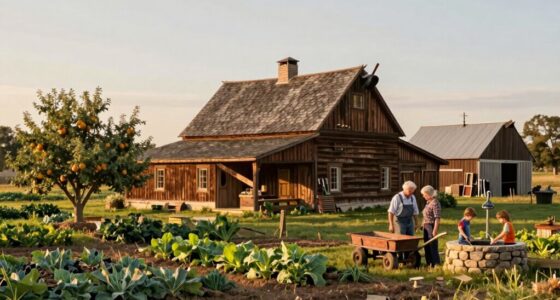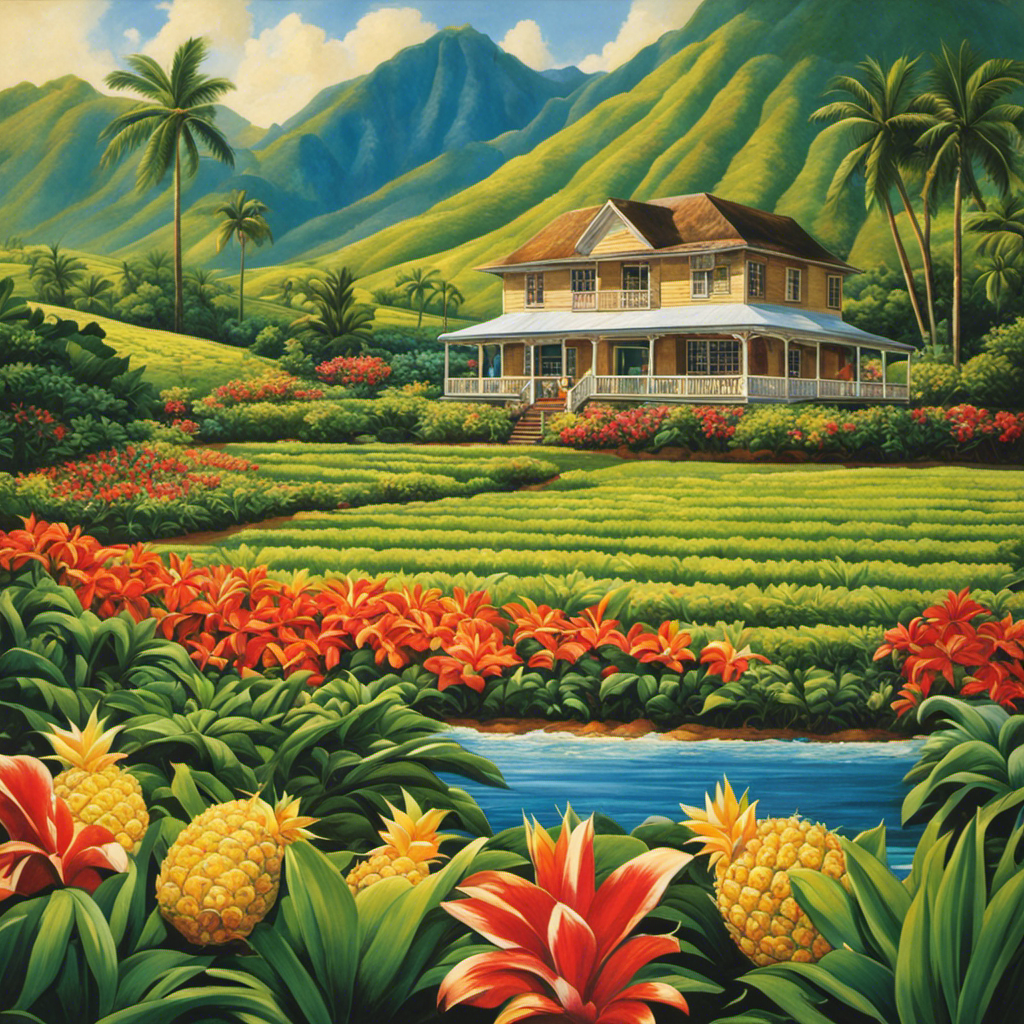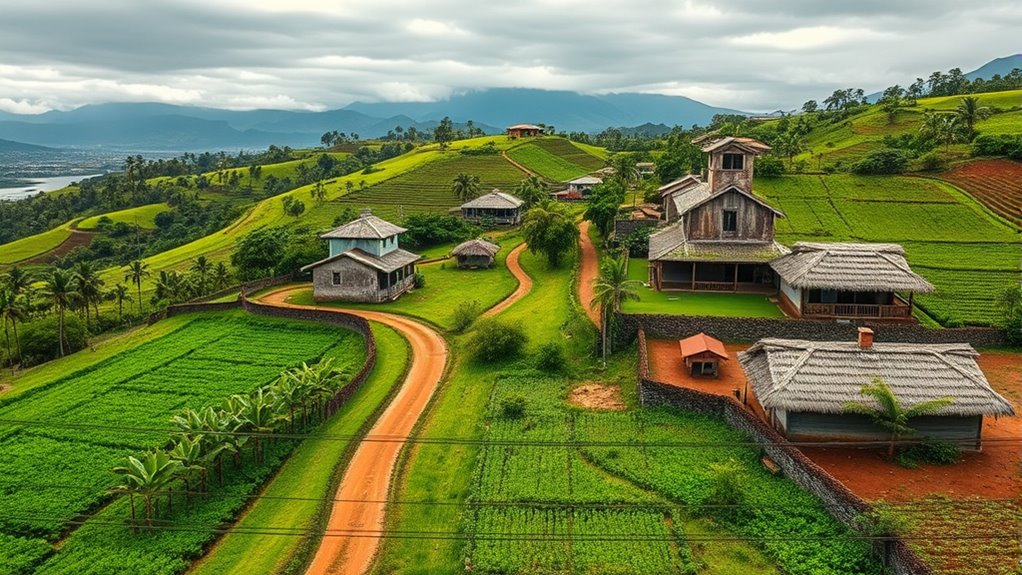

Lahaina’s agricultural past is deeply woven into its identity, from traditional taro farming and the construction of lo’i kalo terraces to the plantation era fueled by sugarcane and diverse immigrant labor. You can still see remnants of these historic practices and hear stories of resilience in the community’s festivals, cultural sites, and preserved landscapes. To truly appreciate Lahaina’s roots, exploring its rich history offers a window into the legacy that continues to shape the island today.

Get furniture and decor delivered free with Prime
- Fast, free delivery on millions of items
- Prime Video, Amazon Music and more included
- Member-only deals all year
Key Takeaways
- Lahaina’s history as an agricultural hub rooted in traditional taro farming and water management practices.
- Preservation of ancient lo’i kalo terraces highlights Hawaiian ingenuity and cultural significance.
- The plantation economy and Asian immigrant labor shaped Lahaina’s economic and social identity.
- Historic sites and cultural programs honor Lahaina’s farming and labor heritage.
- The community actively maintains and celebrates its agricultural traditions to preserve its legacy.
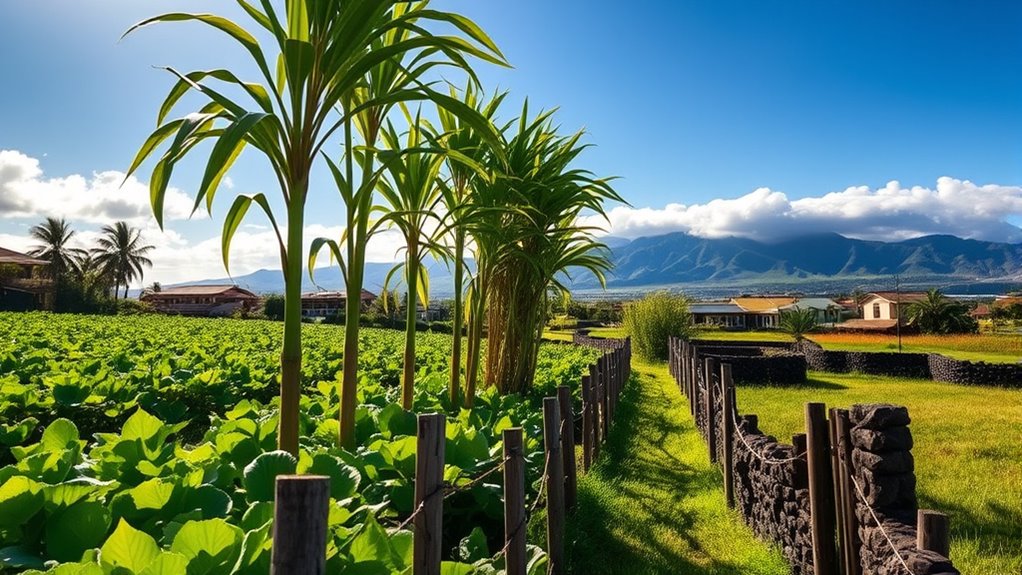
Lahaina’s history as an agricultural hub dates back centuries, shaping its economy and culture long before it became a popular tourist destination. You might not realize it, but the roots of Lahaina stretch deep into traditional Hawaiian practices like taro farming, which played a essential role in the island’s sustenance and social structure. Hawaiian taro farming isn’t just about cultivating a crop; it’s a spiritual and cultural cornerstone. The lo’i kalo, or taro terraces, were carefully constructed to catch water and create ideal growing conditions, reflecting the ingenuity of early Hawaiian farmers. You can still see remnants of these terraces today, standing as a proof to the skill and patience of those who cultivated the land generations ago.
As you walk through Lahaina, it’s easy to imagine the scene of bustling plantations and laborers working tirelessly under the tropical sun. During the 19th century, the area saw an influx of workers—many brought in from other parts of Asia—who performed what is now known as historical plantation labor. These workers labored long hours, often in difficult conditions, to harvest sugarcane and other crops that fueled Lahaina’s economy. Their efforts laid the foundation for the thriving plantation economy that once dominated the region. You might find it striking how these labor practices shaped the community’s diverse cultural makeup, blending Hawaiian traditions with those of immigrant workers. This mix of cultures created a unique local identity that persists today in Lahaina’s food, festivals, and everyday life.
The legacy of this history is still visible in Lahaina’s landscape and cultural fabric. You might notice old plantation buildings, cannery ruins, and historic sites that tell stories of hard work and resilience. These sites serve as reminders of how the land and its people were intertwined, with Hawaiian taro farming and plantation labor forming the backbone of Lahaina’s economic past. Understanding this history helps you appreciate the deep roots of the community and the sacrifices made by those who came before. It’s not just a story of crops and labor but a narrative of survival, adaptation, and cultural fusion. Today, Lahaina’s agricultural history is preserved through museums, cultural programs, and ongoing efforts to honor the traditions that once sustained the island’s people, making it an essential part of its identity and legacy.
As an affiliate, we earn on qualifying purchases.
Frequently Asked Questions
What Crops Were Most Commonly Grown in Lahaina Historically?
You’ll find that historically, Lahaina’s most common crops included taro and pineapples. During the past, taro cultivation thrived in the region’s fertile soil, becoming a staple food. Pineapple farming also became prominent, especially in later years, contributing considerably to the local economy. These crops shaped Lahaina’s agricultural landscape and continue to reflect its rich farming heritage today.
How Did Agriculture Influence Lahaina’s Local Economy?
You might think agriculture was just a tradition, but it truly shaped Lahaina’s economy. Sustainable farming practices and crop diversification boosted local income, creating jobs and fostering community growth. This approach helped farmers adapt to changing markets and environmental conditions, ensuring long-term prosperity. By focusing on diverse crops like taro, sugarcane, and coffee, Lahaina’s agriculture became a crucial economic engine, supporting both the community and its cultural heritage.
Are There Any Remnants of Old Farms Still Visible Today?
Yes, you can still see remnants of old farms today. The historic farm markers guide you through the area, highlighting sites where farms once thrived. You’ll also notice ancient irrigation systems, like traditional loko iʻa fishponds and water channels, that showcase the ingenuity of past farmers. These features give you a glimpse into Lahaina’s rich agricultural history and its lasting legacy in the landscape.
What Indigenous Practices Supported Lahaina’s Agriculture?
You can see that indigenous practices like traditional farming techniques and indigenous irrigation supported Lahaina’s agriculture. These methods involved careful water management, such as using loko i’a (fishponds) and taro terraces, which helped sustain crops. You might notice remnants of these techniques today, like ancient irrigation channels or terraced fields, illustrating how native Hawaiians worked harmoniously with the land to guarantee plentiful harvests and preserve their agricultural traditions.
How Has Modern Development Impacted Lahaina’s Agricultural Landscape?
You see that modern development has markedly impacted Lahaina’s agricultural landscape through urban sprawl and tourism expansion. As more land gets converted into hotels, resorts, and infrastructure, agricultural areas shrink. This shift reduces local food production, disrupts traditional practices, and puts pressure on remaining farming spaces. While tourism boosts the economy, it often comes at the expense of Lahaina’s rich agricultural heritage and sustainable land use practices.
Conclusion
As you walk through Lahaina’s streets, let its rich agricultural history be your guiding star. Just like a hidden treasure buried beneath the surface, its past still blossoms beneath the modern world. Remember, this land’s roots run deep, feeding the vibrant tapestry of today’s community. By honoring its farming legacy, you keep the spirit alive—watering the seeds of tomorrow’s memories. Lahaina’s history isn’t just a story; it’s the heartbeat that keeps this island alive.
Fall Picks
fall essentials
As an affiliate, we earn on qualifying purchases.