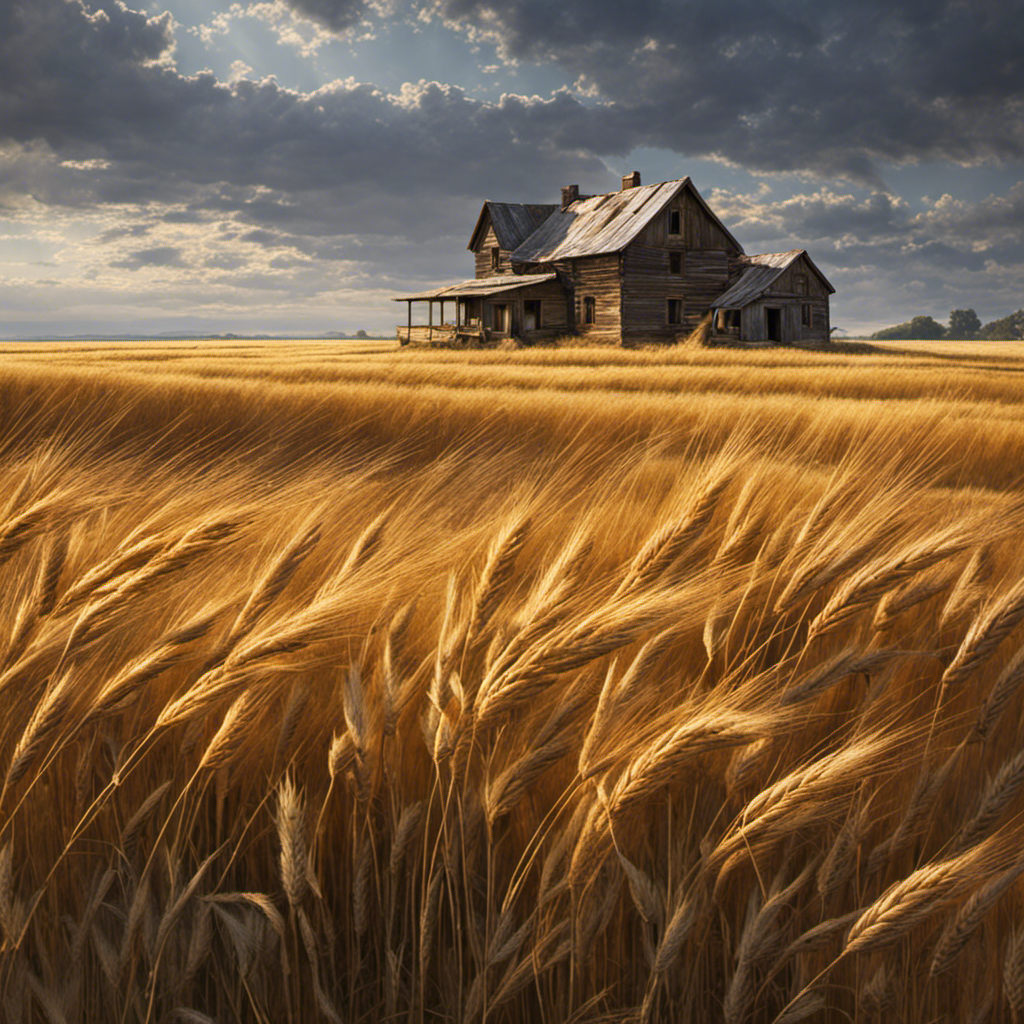
Windmills played a crucial role in transforming the prairie by harnessing wind energy to pump water from underground sources. This reliable water supply helped settlers survive in a harsh, dry environment where natural water was scarce. Windmills allowed for irrigation, supporting larger farms and communities to thrive. Their design became more efficient over time, symbolizing ingenuity and resilience. If you want to learn more about how windmills shaped prairie life, keep exploring this fascinating history.

Get furniture and decor delivered free — and shop member deals
- Fast, free delivery on millions of items
- Access to Prime Big Deal Days deals on October 6–7
- Prime Video, Amazon Music and more included
Key Takeaways
- Windmills harness wind energy to power water pumps, providing access to underground water sources in the prairie.
- They enabled early settlers to create reliable water supplies, vital for irrigation, livestock, and daily use.
- Windmill blades turn mechanical systems that lift water from deep aquifers for agricultural and community needs.
- The technology transformed arid prairie landscapes into sustainable environments for farming and settlement.
- Windmills remain a symbol of ingenuity, showcasing resourcefulness in overcoming water scarcity on the prairie.
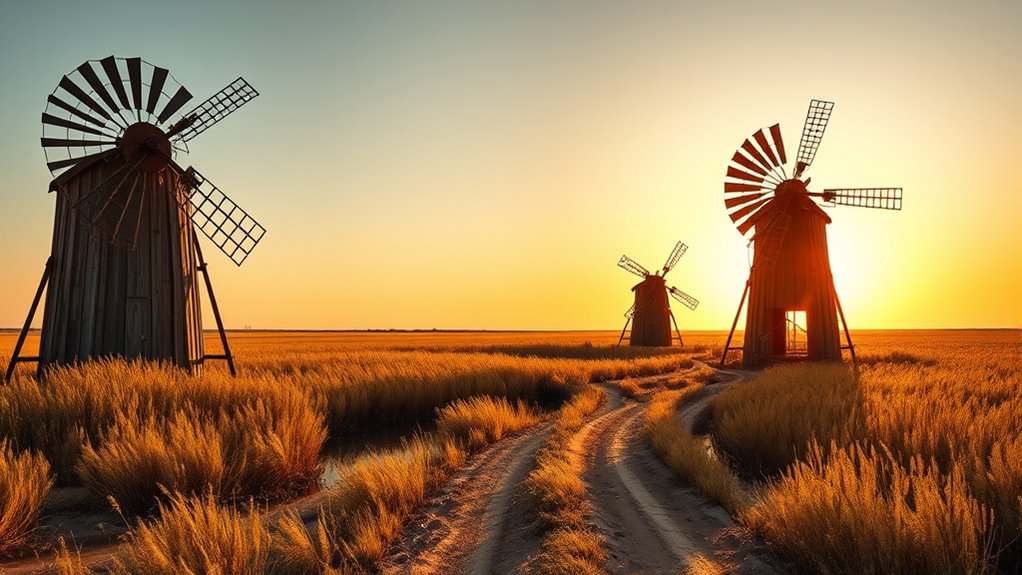
Have you ever wondered how early settlers on the prairie managed to survive in such a harsh, dry environment? The secret largely lay in their innovative use of windmill technology. These towering structures transformed the way settlers accessed water, turning the vast, open plains into more livable land. Windmills harnessed the strong, consistent prairie winds to power mechanical systems that lifted groundwater from underground aquifers. This process, known as prairie irrigation, was essential for farming and daily life. Without windmill technology, surviving on the prairie would have been nearly impossible, as natural water sources were often scarce or inaccessible.
Early prairie settlers relied on windmill technology to access vital groundwater and transform the harsh environment into livable land.
When settlers first arrived, they faced the challenge of arid conditions that made traditional farming difficult. They quickly realized that relying solely on rainfall wasn’t enough. By installing windmills, they created a reliable source of water for both crops and livestock, notably improving their chances of survival. The design of these windmills was simple yet effective. Large blades captured wind energy, turning a central shaft connected to a pump that drew water from deep underground. This water was then stored in cisterns or used directly for irrigation. Over time, windmill technology evolved, becoming more durable and efficient, which allowed settlers to irrigate larger areas and sustain more substantial farms.
Prairie irrigation through windmills didn’t just support individual farms; it transformed the entire landscape. Fields that would’ve otherwise remained barren could now produce crops, and communities grew around these water sources. Farmers learned to position their windmills in areas with steady wind, maximizing efficiency and ensuring continuous water supply. The ability to irrigate also meant they could grow a variety of crops, diversify their agriculture, and create more stable food sources. This innovation was indispensable during drought years when natural water sources dried up, giving settlers a fighting chance to persist despite the tough environment.
The importance of windmill technology extends beyond just water access; it became a symbol of ingenuity and resilience on the prairie. By converting wind energy into usable water, settlers turned a seemingly inhospitable landscape into a place where they could carve out a life. Today, these historic windmills stand as symbols of early prairie ingenuity, reminding us how resourcefulness and technology combined to conquer the challenges of the prairie environment. Their legacy continues to inspire modern sustainable practices, showing how harnessing natural forces can make a difference in even the harshest conditions.
As an affiliate, we earn on qualifying purchases.
Frequently Asked Questions
How Do Windmills Impact Local Wildlife on the Prairie?
You might notice that windmills can cause wildlife disruption on the prairie, especially for birds. They often collide with the blades, leading to bird collisions that threaten local bird populations. While windmills generate clean energy, it’s important to be aware of their impact on wildlife and consider measures like better blade design or siting strategies to minimize harm. Balancing renewable energy with conservation helps protect prairie ecosystems.
What Are the Maintenance Challenges of Prairie Water Systems?
You’ll face several maintenance challenges with prairie water systems, especially regarding pump maintenance and corrosion control. You need to regularly inspect and service pumps to prevent breakdowns, which can be tricky in remote areas. Corrosion control is vital, so you should apply protective coatings and monitor for rust, especially in harsh weather. Staying proactive helps make certain the system stays functional and reliable, minimizing costly repairs and water shortages.
How Do Windmills Influence Local Agriculture Productivity?
Harnessing the gentle power of windmills, you enhance local agriculture productivity by providing sustainable energy for crop irrigation. This eco-friendly approach reduces reliance on fossil fuels, ensuring a more resilient farming environment. Windmills efficiently draw water from underground sources, extending growing seasons and boosting yields. Their presence fosters a harmonious balance between energy use and agricultural needs, allowing you to cultivate the land more sustainably and secure a thriving, productive future.
Are There Modern Alternatives to Traditional Prairie Windmills?
Yes, modern alternatives like solar panels and electric pumps have replaced traditional prairie windmills. You can install solar panels to harness sunlight and power electric pumps, which are more efficient and reliable for water supply. These options require less maintenance, work silently, and adapt better to changing weather conditions. By choosing solar technology, you guarantee a sustainable, eco-friendly water source that supports your agricultural needs effectively.
What Historical Events Shaped Water Management on the Prairie?
You’re standing in a landscape that’s been shaped by history’s most intense droughts, which forced communities to innovate or fade away. These events pushed people to develop irrigation innovations, transforming the prairie from a water-starved wasteland into a fertile expanse. The struggle against nature’s fury led to water management techniques that are still essential today, ensuring survival amid harsh conditions and shaping the resilient spirit of prairie life.
Conclusion
As you explore the prairie’s persistent pulse, you’ll realize windmills and water work wonders together. They turn toil into tranquility, transforming tough terrain into thriving territory. With wind’s whisper and water’s welcome, you witness a wondrous winter of water and wind working in perfect harmony. So, savor the seamless synergy, and see how these simple systems sustain and strengthen the sprawling, spirited prairie landscape. Nature’s nurturing nature never neglects to nurture your curiosity.
Halloween Picks
halloween
As an affiliate, we earn on qualifying purchases.