Building with cob and straw bale offers eco-friendly benefits like natural insulation and thermal mass, which keep your home comfortable year-round while reducing energy use. These materials are renewable, biodegradable, and safe, making your project healthier and more sustainable. However, you’ll need to plan carefully for moisture, climate, and construction effort, as it can be labor-intensive. Want to discover how to maximize these advantages and address challenges? Keep exploring to learn more.
Key Takeaways
- Eco-friendly and renewable, straw bale and cob materials reduce environmental impact and promote sustainable construction.
- Excellent thermal insulation and mass properties improve indoor comfort and energy efficiency year-round.
- Natural, non-toxic, fire-resistant qualities enhance safety and healthier indoor environments.
- Construction is DIY-friendly and allows for creative, natural architectural designs.
- Challenges include moisture management, labor intensity, and ensuring compliance with local building codes.
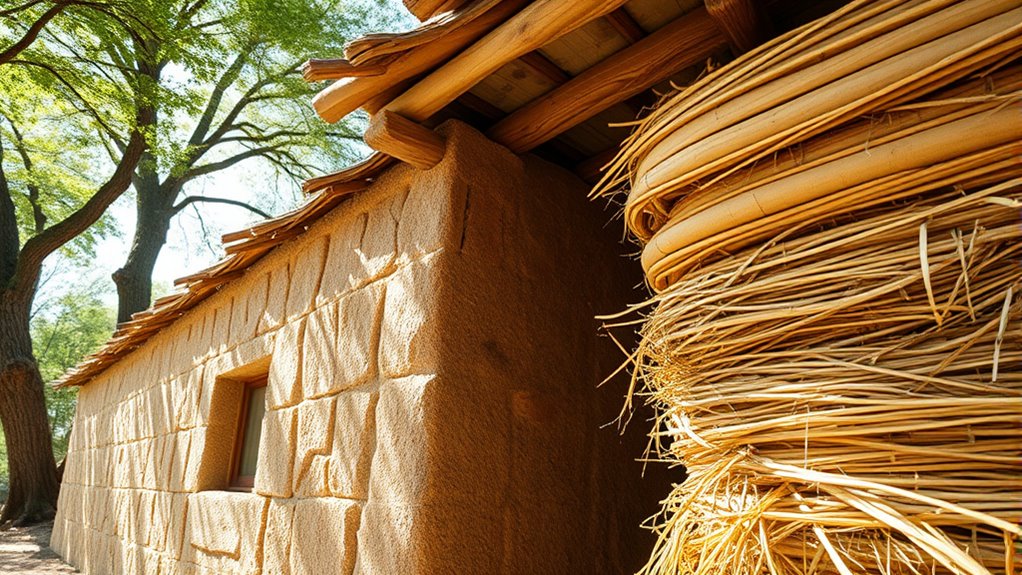
Have you ever wondered how to create a sustainable and energy-efficient home using natural materials? Building with cob and straw bale offers an appealing solution, blending eco-friendly practices with practical benefits. One of the key advantages is eco friendly insulation. Straw bales are excellent insulators, trapping air inside and preventing heat transfer. This means your home stays warmer in winter and cooler in summer without relying heavily on artificial heating or cooling systems. Plus, straw is a renewable resource, so you’re reducing your environmental footprint. Additionally, straw has a natural fire resistance, making it a safer choice for insulation. Cob, made from clay, sand, straw, and water, acts as a natural thermal mass, which helps regulate indoor temperatures by absorbing heat during the day and releasing it at night. This thermal mass benefit contributes to a more stable indoor climate, reducing energy consumption and making your home more comfortable year-round.
When you choose to build with cob and straw bale, you’re also embracing a design that’s inherently sustainable. The materials are locally sourced, biodegradable, and non-toxic, making your home healthier and safer for occupants. The combination of straw bale insulation and cob’s thermal mass creates a natural, energy-efficient shell that minimizes reliance on external energy sources. It’s a smart way to cut down on energy bills while lowering your carbon footprint. Additionally, these materials are easy to work with, even if you’re a DIY enthusiast, allowing for creative architectural designs that blend seamlessly with natural surroundings.
However, there are some challenges to contemplate. Building with cob and straw bale requires proper planning and understanding of local climate and building codes. Straw must be kept dry, as moisture can lead to mold or decay, so you’ll need to ensure good roof overhangs and proper site drainage. The construction process can be labor-intensive, requiring patience and skill to ensure that insulation and structural elements are correctly applied. While the thermal mass benefits are significant, they also mean that your home may take longer to heat up or cool down compared to conventional structures. This can be beneficial in moderate climates but might require additional insulation or design adjustments in colder or hotter environments.

Essential Prefab Straw Bale Construction: The Complete Step-by-Step Guide (Sustainable Building Essentials Series, 2)
As an affiliate, we earn on qualifying purchases.
As an affiliate, we earn on qualifying purchases.
Frequently Asked Questions
How Does Insulation Compare Between Cob and Straw Bale Walls?
You’ll find that straw bale walls generally offer superior insulation because of their high R-value, especially with interior insulation added. Cob walls, on the other hand, have natural insulating properties but typically require exterior insulation to improve thermal performance. If you want better insulation, straw bale walls are ideal for interior insulation, while cob benefits from exterior insulation to enhance energy efficiency and comfort.
Are There Specific Climate Zones Best Suited for Each Material?
You’ll find straw bale works best in temperate to cold climates due to its excellent insulation and climate adaptability, helping you stay warm in winter. Cob, on the other hand, suits more arid or humid regions, thanks to its regional suitability for managing moisture and temperature fluctuations. Consider your specific climate zone to choose the material that offers ideal durability, energy efficiency, and comfort for your building project.
What Maintenance Is Required for Cob and Straw Bale Structures?
You’ll need to regularly inspect your cob and straw bale structures for cracks, pests, and moisture damage. DIY repairs involve sealing cracks, reapplying plaster, and replacing damaged straw bales. Pest prevention is vital; install barriers and keep the structure dry. You should also maintain proper drainage and ventilation. By staying proactive, you preserve your home’s integrity, ensuring it remains strong, safe, and beautiful for years to come.
Can These Materials Be Combined in the Same Building?
Yes, you can combine cob and straw bale in the same building, but you need to take into account material compatibility and construction challenges. These materials have different properties, so you’ll want to ensure proper insulation, moisture control, and structural support. You might face challenges like integrating different wall systems, but with careful planning and skilled craftsmanship, blending cob and straw bale can create a sustainable, energy-efficient structure.
What Are the Initial Costs Versus Long-Term Savings?
Imagine you build a straw bale and cob home, and initially, it costs more due to materials and labor. Over time, you save on energy bills because of their excellent insulation, boosting economic benefits. The cost comparison shows higher upfront costs but significant long-term savings through lower heating and cooling expenses, making these sustainable choices financially smart. You’ll find that investing now pays off in the long run.
Conclusion
Ultimately, choosing to build with cob and straw bale invites you into a world of gentle sustainability and timeless charm. While it may require patience and care, the rewards unfold quietly, embracing a harmony with nature that’s hard to match. With mindful effort, you’ll nurture a space that whispers stories of eco-conscious living and craftsmanship, offering a subtle elegance that resonates far beyond mere walls. In this artful journey, every brick and bale becomes a affirmation to your thoughtful touch.