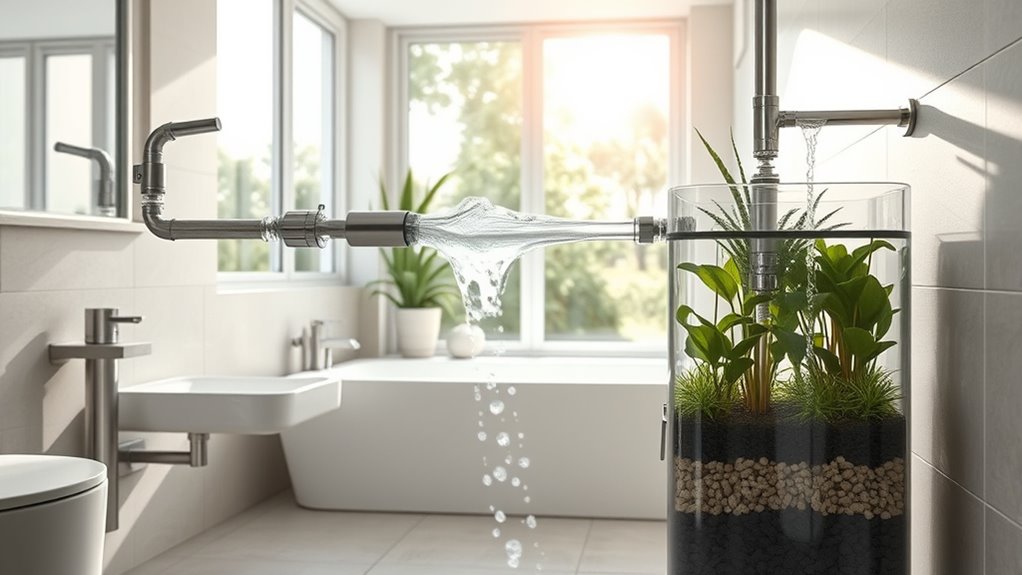

To implement greywater reuse safely, you need to follow local codes that specify system components like filters, tanks, and disinfection methods. Practical systems often involve installing gutters, first-flush diversions, and treatment units such as UV sterilizers or chlorination. Proper piping and labeling prevent cross-contamination, ensuring health safety. Understanding these guidelines and system setup will help you design effective, compliant water reuse solutions—more details will guide you toward successful implementation.
Key Takeaways
- Ensure greywater systems comply with local building codes and health regulations for safe reuse.
- Install filtration and disinfection components like screens, filters, and UV sterilizers to meet safety standards.
- Properly label and separate greywater piping to prevent cross-contamination with potable water systems.
- Use approved materials and system configurations designed for non-potable applications such as irrigation and toilet flushing.
- Regularly monitor and maintain greywater systems to ensure ongoing compliance and safety.
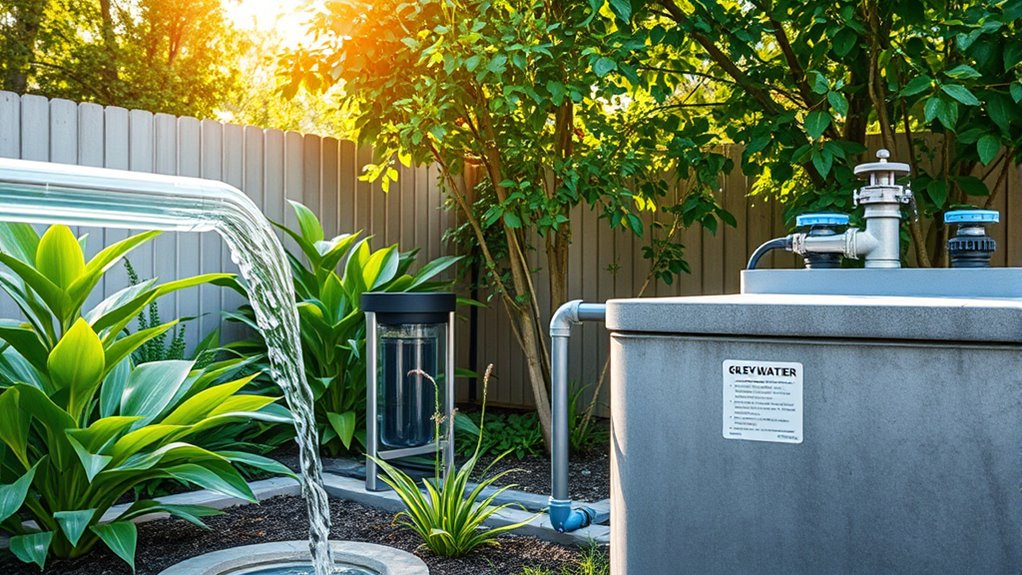
Greywater reuse involves recycling wastewater from sinks, showers, and washing machines for non-potable purposes like irrigation and toilet flushing. By doing so, you reduce the demand on your main water supply and promote sustainable water management. To maximize the benefits, you can incorporate rainwater harvesting systems alongside greywater reuse practices. Rainwater harvesting involves collecting rainwater from rooftops and other surfaces, storing it in tanks, and using it for various household needs. When combined with greywater systems, it creates a comprehensive approach to water conservation, helping you cut down your reliance on municipal water sources.
Implementing rainwater harvesting is relatively straightforward. You install gutters and downspouts to direct rainwater into storage tanks, which are often equipped with first-flush devices that divert the initial dirty flow of water, preventing debris and contaminants from entering your storage. From there, you can filter and treat the rainwater as needed for specific uses, like garden irrigation or even toilet flushing, depending on local codes and water quality standards. Proper water purification methods are essential here, especially if you’re considering using harvested rainwater for indoor applications. Techniques such as sediment filtration, UV sterilization, or chlorination can remove pathogens and impurities, making the water safe for non-potable purposes. Additionally, understanding water chemistry and proper treatment methods helps ensure the safety and effectiveness of your reuse system.
When it comes to greywater, following local codes and regulations is crucial. Many jurisdictions specify how greywater can be collected, treated, and reused, often requiring certain water purification methods to prevent health hazards. You might install a simple filtration system or a more advanced treatment unit to guarantee the water is free of contaminants before reuse. These systems typically include screens or filters to trap debris, biological treatment components to break down organic matter, and disinfection methods like chlorination or UV treatment to eliminate bacteria and viruses. Proper piping and labeling are also essential to prevent cross-contamination, especially if you’re using greywater for irrigation or toilet flushing.

iSpring RCC7, NSF Certified, High Capacity Under Sink 5-Stage Reverse Osmosis Water Filter, RO Drinking System, 75 GPD, Brushed Nickel Faucet, Patented Top-Mounted Faucet Design for Easy Installation
EFFECTIVELY REDUCES CONTAMINANTS – The iSpring RO system delivers clean, pure, and great-tasting drinking water by removing up…
As an affiliate, we earn on qualifying purchases.
As an affiliate, we earn on qualifying purchases.
Frequently Asked Questions
How Does Greywater Reuse Impact Local Water Tables?
Greywater reuse can positively impact your local water tables by aiding groundwater recharge, especially if the soil has good permeability. When you direct greywater into permeable soils, it filters and slowly infiltrates, replenishing underground aquifers. However, if the soil is less permeable, the water may not effectively reach the groundwater, potentially causing surface pooling or runoff. Proper planning guarantees greywater helps sustain your local water table sustainably.
Are There Specific Plants That Thrive With Greywater Irrigation?
You should choose plants with specific traits for greywater irrigation, focusing on plant selection and soil compatibility. Hardy, drought-tolerant plants like ferns, certain grasses, and some ornamental shrubs thrive with greywater, which often contains nutrients. Guarantee your soil can handle the moisture and nutrients from greywater to prevent issues like root rot. By selecting suitable plants and maintaining proper soil conditions, you’ll create a sustainable, healthy landscape that benefits from greywater reuse.
What Are the Long-Term Maintenance Costs for Greywater Systems?
Greywater systems are like a garden that needs regular tending. Long-term maintenance costs depend on system durability and maintenance frequency. If you choose durable materials and schedule routine checks, costs stay manageable. You might spend more initially, but with proper upkeep, your system can last years without major repairs. Expect occasional cleaning filters or inspecting pipes, which keeps things running smoothly and prevents costly repairs down the line.
Can Greywater Reuse Reduce Overall Household Water Bills Significantly?
Yes, greywater reuse can considerably reduce your household water bills. By implementing greywater systems, you benefit from economic advantages and promote water conservation. You’ll use less freshwater for activities like watering plants or flushing toilets, which cuts your utility costs over time. Although there may be initial setup costs, the long-term savings on water bills make greywater reuse a smart, eco-friendly choice for sustainable living.
Are There Any Legal Restrictions on Greywater Reuse in Residential Areas?
Think of greywater reuse as sailing through waters with hidden reefs. You should know that legal restrictions and residential regulations act like buoys, guiding where you can and can’t go. Many areas have strict rules to ensure safety and sanitation, so you must verify local laws before installing greywater systems. Ignoring these restrictions risks fines or system removal, so always stay informed and follow the regulations to navigate safely.

JJ CARE UV Sterilizer 8 Liter Capacity, UV Light 99% Sterilization Killing Efficiency, LED Timer UV Sterilizer Cabinet for Salon, Spa, Office and At Home Use, Professional Tabletop UV Sterilizer,
99% KILLING EFFICIENCY- A third party examined the performance of our UV sterilizers against common pathogens such as…
As an affiliate, we earn on qualifying purchases.
As an affiliate, we earn on qualifying purchases.
Conclusion
By embracing greywater reuse, you open the door to a sustainable future where every drop counts. Imagine lush gardens thriving with recycled water, and homes humming with eco-conscious ingenuity. As you implement practical systems and follow codes, you’re sculpting a world where water flows responsibly, nourishing life without waste. Together, your efforts create a resilient landscape—vivid, vibrant, and deeply rooted in mindful stewardship of our precious resources.

Rain Harvesting First Flush with Catch-All Tee – First Flush Diverter Kit, Suits 4" Round Pipes
FIRST FLUSH: Protect the integrity of your rainwater by diverting initial runoff through the first flush diverter, equipped…
As an affiliate, we earn on qualifying purchases.
As an affiliate, we earn on qualifying purchases.
greywater piping labels and markers
As an affiliate, we earn on qualifying purchases.
As an affiliate, we earn on qualifying purchases.