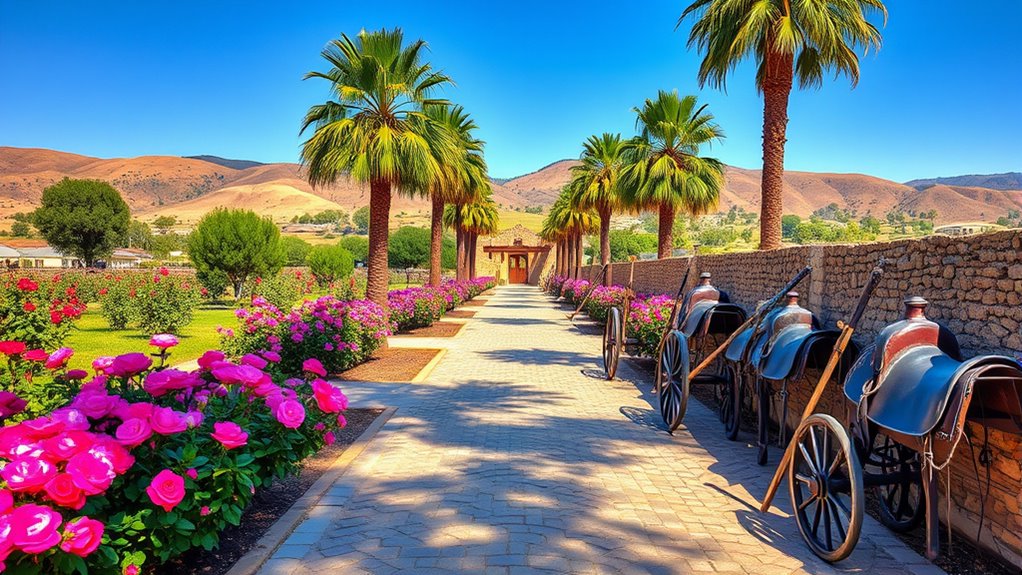

California mission gardens and early ranching showcase how settlers creatively used irrigation, native plants, and sustainable methods to build resilient landscapes. They managed water through systems like acequias and gravity-fed channels, enabling successful agriculture in arid areas. Native plants were carefully selected to match California’s climate, ensuring eco-friendly and low-maintenance gardens. These practices reflect a strong harmony between humans and the environment. If you explore further, you’ll discover even more about these innovative, eco-conscious settlements.
Key Takeaways
- California mission gardens integrated native plants and traditional irrigation techniques to sustain agriculture in an arid climate.
- Early ranching practices relied on sophisticated water management systems like acequias for irrigation.
- Mission communities showcased resourcefulness by combining indigenous practices with European horticultural methods.
- Native plant restoration in gardens demonstrated sustainable, resource-efficient landscaping aligned with ecological balance.
- These historic gardens reflect cultural heritage, land resilience, and early Californians’ ingenuity in adapting to local environments.

Have you ever wondered how California’s historic mission gardens reflect a blend of cultural heritage and agricultural innovation? These gardens weren’t just beautiful landscapes; they represented the ingenuity of early settlers who combined traditional practices with local resources. Native plant restoration plays a essential role in understanding this history. By reintroducing indigenous plants, you see how mission farmers preserved native species, guaranteeing the land’s resilience and maintaining ecological balance. Restoring native plants isn’t just about aesthetics; it highlights the sustainable practices of those early Californians, who knew how to work with the land rather than against it.
In these gardens, historical irrigation techniques demonstrate the resourcefulness of mission communities. You’ll find evidence of sophisticated water management systems, such as acequias and gravity-fed channels, which allowed irrigation in an arid climate. These methods were indispensable to the success of mission agriculture, enabling crops to thrive without modern technology. When you walk through the gardens, you can imagine the meticulous planning that went into diverting water from rivers and streams to sustain orchards, vegetable plots, and ornamental plants. These techniques reflected a deep understanding of the land’s natural flow and a sustainable approach to farming that prioritized water conservation. Incorporating traditional water management techniques further illustrates how early Californians harmonized their agricultural needs with the environment.
The use of native plants in these gardens wasn’t accidental. Mission residents intentionally cultivated and integrated local species into their landscapes, which helped adapt European-style gardens to California’s climate. This practice of native plant restoration ensured that the gardens could flourish with minimal water and maintenance, making them more resilient over time. You can see how the plants were selected not only for their beauty but also for their ability to thrive with the available resources, embodying a harmony between human needs and the environment.
native plant restoration garden kit
As an affiliate, we earn on qualifying purchases.
As an affiliate, we earn on qualifying purchases.
Frequently Asked Questions
How Did Indigenous Peoples Influence Early Ranching Practices?
You see, indigenous peoples substantially influenced early ranching practices by sharing their indigenous agricultural techniques and native plant cultivation methods. They taught you how to manage land sustainably, use irrigation efficiently, and select native plants for grazing and food. This knowledge helped shape ranching in a way that respected the environment and preserved local ecosystems, ultimately enriching your understanding of sustainable agriculture and land management practices rooted in indigenous wisdom.
What Rare Plant Species Are Found in California Mission Gardens?
You’ll find rare plant species like the California poppy, especially in mission gardens, showcasing native flora. These gardens often preserve unique plants such as the island nightshade and certain native succulents. By exploring these gardens, you can see how indigenous knowledge helped protect and cultivate rare plant species, maintaining California’s diverse native flora. It’s a special way to connect with the region’s botanical history and appreciate its ecological richness.
How Have Climate Changes Affected Historic Mission Gardens?
You see the once lush gardens struggle as droughts parch the soil and unpredictable storms flood the paths. Climate impact has forced you to adapt, introducing drought-resistant plants and new irrigation methods. These garden adaptations help preserve the historic beauty and biodiversity, but the changing weather still challenges your efforts. Despite these hurdles, your resilience keeps the gardens alive, a living affirmation to California’s shifting climate.
Were Any Specific Crops Unique to California Missions?
You’ll find that some crops, like olives and grapes, were unique to California missions, reflected in mission garden artifacts. These crops thrived due to specific crop cultivation techniques adapted to the local climate. By studying these artifacts, you can see how mission residents cultivated and preserved plants suited to their environment, creating a legacy of agricultural innovation. This uniqueness highlights California’s distinct agricultural history during the mission era.
What Tools Were Used in Early Ranching Operations?
Your early ranching operations relied on tools that were essential as the air you breathe. You used ranching equipment like branding irons, plows, and shears for livestock management and land cultivation. Hand tools such as lassos, pitchforks, and spades helped manage animals and crops. These tools, though simple, were powerful in shaping the successful ranching enterprise, making your work more efficient and effective in taming the rugged California landscape.
Conclusion
You see how California mission gardens and early ranching shaped the land, how they preserved traditions and cultivated new beginnings. You recognize their role in sustaining communities, inspiring future generations, and maintaining cultural heritage. You understand that these gardens and ranches are more than history—they’re the roots of California’s identity, the spirit of resilience, the legacy of growth. Embrace their story, honor their contribution, and carry their lessons into tomorrow.