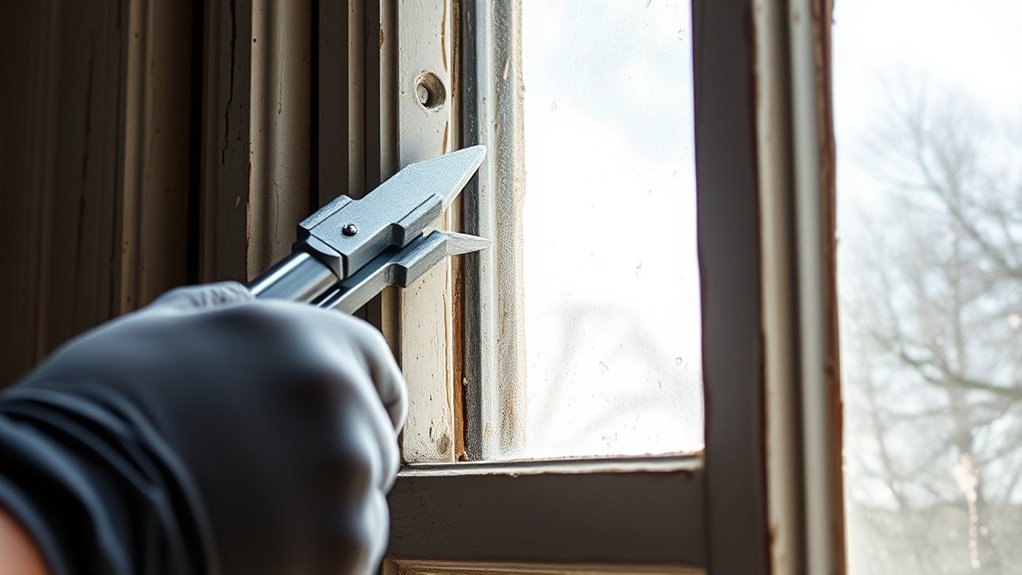

To unstick old sash windows safely, start by inspecting the window components for damage or corrosion. Apply a penetrating lubricant like WD-40 around the sash edges and in the tracks. Gently wiggle and lift the sash, gradually increasing pressure without forcing it. Keep tools gentle and work patiently to avoid chipping paint or breaking glass. If resistance persists, consider seeking professional help—more tips are coming up to help you master the process safely.
Key Takeaways
- Wear protective gloves and glasses to prevent injury from splinters, paint, or debris during the process.
- Apply warm water or penetrating lubricant to loosen grime and paint around the sash edges before opening.
- Gently wiggle and lift the sash with even pressure, avoiding force to prevent glass or frame damage.
- Clean tracks and channels thoroughly with a brush or vacuum, then lubricate to improve window movement.
- Move the sash slowly and cautiously; seek professional help if resistance persists to ensure safety.

Old sash windows can become stubborn and difficult to open over time, but with the right approach, you can restore their smooth operation. When you tackle unstick old sash windows, the goal is to perform window restoration safely and effectively. Before you start, it’s vital to understand safety precautions to prevent injury and avoid damaging the window or surrounding frame. Wear protective gloves and safety glasses to shield your hands and eyes from splinters, broken glass, or debris. If the window is painted shut, be cautious with tools to avoid chipping paint or causing splinters that could harm you. Using a putty knife or a thin pry bar carefully can help loosen the sash without applying excessive force, which might break the glass or damage the frame.
Next, check the condition of the window cords, weights, and pulleys. Over time, these components can become tangled, corroded, or broken, making the window difficult to open. During your window restoration process, take the time to inspect these parts thoroughly. If any are damaged, replacing them might be necessary before you can fully unstick the window. When working on the sash, gently wiggle and lift it, applying even pressure to avoid putting stress on the glass or frame. Applying a little warm water or a penetrating lubricant like WD-40 around the edges can help loosen paint or grime that may be holding the sash tight. Be patient and avoid forcing the window open, as this can cause more damage. Additionally, ensuring the window track and channels are clean can significantly improve operation.
It’s also sensible to confirm the window track and channels are clean. Dirt, dust, and old paint can create resistance and prevent smooth operation. Use a small brush or vacuum to clear out debris, and then apply a lubricant suitable for window parts. Remember, safety precautions extend to working in a stable position—use a sturdy ladder if needed, and make sure your workspace is clear and secure. When you’re ready to move the sash, do it slowly and steadily, feeling for resistance. If it still feels stuck after cleaning and lubrication, reconsider applying more force and seek professional help to avoid accidental breakage.
Frequently Asked Questions
Can I Unstuck Sash Windows Without Professional Help?
Yes, you can unstuck sash windows yourself using DIY techniques, but proceed cautiously. Start by applying gentle heat or a penetrating lubricant like WD-40 to free the stuck parts. Be mindful of cost considerations—these methods are budget-friendly compared to professional repairs. However, if the window remains stubborn or you’re unsure, it’s safer to consult a professional to avoid damage or injury.
What Tools Are Safest for Unstick Old Sash Windows?
You should use safety equipment like gloves and goggles to protect yourself while un-sticking old sash windows. For lubricant options, consider a silicone spray or graphite powder—they’re effective and safe for old wood. Apply the lubricant carefully along the sash channels, and gently work the window open. Always handle tools with care, and keep your safety gear on throughout the process to prevent injuries.
How Often Should I Inspect My Sash Windows for Sticking?
You should inspect your sash windows at least twice a year, ideally during seasonal checks in spring and fall. Early detection of sticking helps prevent damage and ensures smooth operation. By regularly examining your windows, you catch minor issues before they become major problems. This routine keeps your windows functional and preserves their charm, reminding you that attention to small details often reveals the bigger picture of maintenance and care.
Are There Eco-Friendly Methods to Unstick Sash Windows?
Yes, you can unstick sash windows using eco-friendly methods. Apply sustainable lubricants like beeswax or plant-based oils to the sash cords and tracks to reduce sticking. Additionally, use natural cleaning methods such as vinegar and water to remove dirt and grime that might hinder movement. These eco-friendly techniques help keep your windows operating smoothly without harming the environment, ensuring your repairs are both effective and sustainable.
Will Unstickings Affect the Window’s Original Charm?
Like a splash of vintage charm in a modern world, unstickings won’t ruin your window’s original allure. When you carefully preserve the window’s mechanisms, you maintain its authentic aesthetic impact, ensuring its historic character stays intact. Proper techniques focus on window preservation, so you keep the charm while making it functional again. Restoring with care means your sash window remains a beautiful, timeless feature, not a compromised relic.
Conclusion
Now that you’ve learned how to unstick your old sash windows safely, you’re ready to bring back their former charm. With patience and care, you can restore their smooth glide and classic beauty, turning a stubborn problem into a satisfying victory. Think of your windows as silent witnesses to history—worthy of your gentle touch. So go ahead, release their potential, and let fresh air and sunlight dance through once more. Your home’s character will thank you.