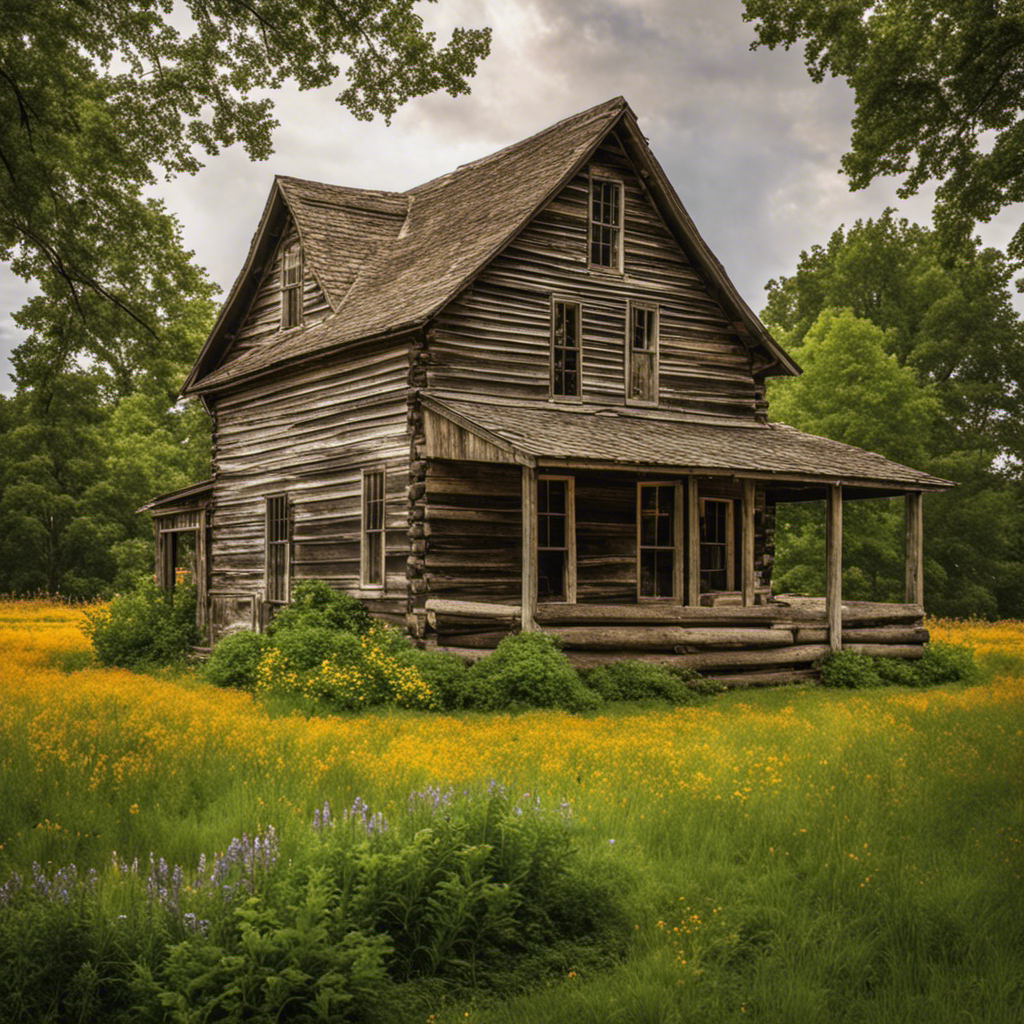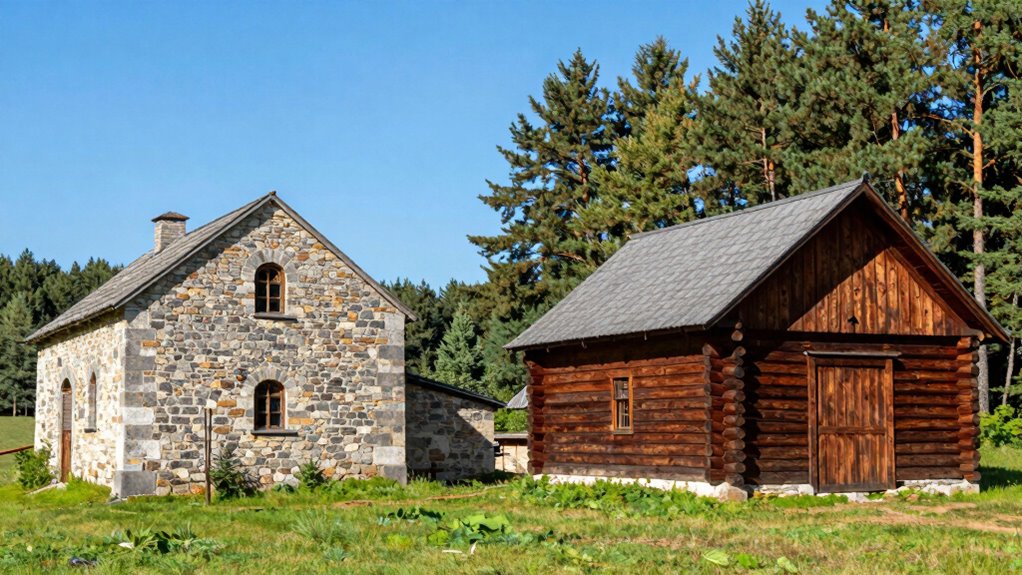

You’ll find that farm regions choose stone or pine based on their local resources, climate, and cultural preferences. Stone is common in areas with abundant quarries because it’s durable and weather-resistant, ideal for harsh weather. Pine, on the other hand, is favored where timber is plentiful, offering a natural look and easier construction. Understanding these factors helps explain why different regions favor different materials—keep exploring to uncover more about this regional difference.

Get furniture and decor delivered free — and shop member deals
- Fast, free delivery on millions of items
- Access to Prime Big Deal Days deals on October 6–7
- Prime Video, Amazon Music and more included
Key Takeaways
- Regional resource availability influences the choice of stone or pine for farm construction.
- Climate conditions determine the durability and suitability of stone versus pine materials.
- Cultural and aesthetic preferences shape the visual and symbolic preferences for building materials.
- Environmental adaptation requires durable stone in harsh weather regions, while pine suits milder climates.
- Economic and sustainability factors favor locally sourced, cost-effective materials like stone or pine.
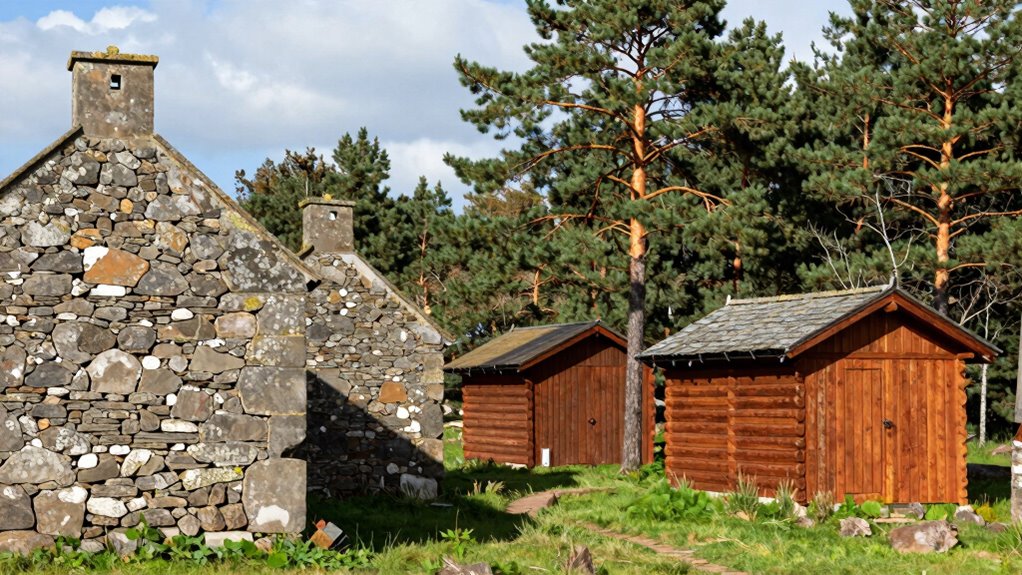
When choosing materials for farm buildings, the decision often depends on more than just availability—they reflect the region’s unique environmental and cultural factors. In some areas, stone dominates farm construction, while in others, pine is the preferred choice. This variation isn’t random; it’s shaped by climate adaptation and aesthetic preferences that have evolved over generations. You’ll find that regions with abundant stone resources often opt for it because it offers durability in harsh weather and stands up well against the elements. For farms situated in areas prone to heavy rain, snow, or wind, stone provides a sturdy, low-maintenance structure that resists moisture and temperature fluctuations. It’s a practical choice that minimizes repairs and keeps livestock safe, especially in climates with extreme conditions. On the other hand, pine is favored in regions where the environment supplies ample timber and the climate is milder. Its lighter weight makes it easier and quicker to build with, which is advantageous for farmers looking to expand or modify structures rapidly. Pine also offers a natural aesthetic that many farmers find appealing, blending seamlessly with the surrounding landscape and evoking a rustic charm. Aesthetic preferences play a significant role in material selection. Regions where visual harmony with nature matters tend to favor pine, which can be treated or painted in various colors to suit local tastes. Conversely, stone structures often project a sense of permanence and strength that aligns with cultural values of resilience and tradition. Climate adaptation is another essential factor; stone’s thermal mass helps regulate indoor temperatures, keeping farms cooler in summer and warmer in winter. Meanwhile, pine, being less insulating, may require additional measures like insulation or weatherproofing, particularly in colder climates. The local environment directs these choices, ensuring that the building materials serve both functional and cultural purposes. Additionally, sustainable resource management influences material selection, as communities seek environmentally friendly options that support their local ecosystems. Considering the long-term durability and maintenance costs of each material also plays a crucial role in the decision-making process. Furthermore, the cost-effectiveness of these materials can significantly impact the decision-making process for farmers when constructing or renovating their farm buildings. An understanding of regional resource availability is crucial in understanding why certain materials are preferred over others. Ultimately, whether a farm is built from stone or pine reflects a combination of environmental conditions, climate considerations, and aesthetic ideals. You can see it in how communities adapt their construction methods based on the resources available and the visual identity they wish to project. The result is a tapestry of farm buildings that tells a story—one of resilience, tradition, and harmony with nature. Each material choice reveals what a region values most—be it durability, beauty, or practicality—shaped over centuries into a distinctive architectural language.
As an affiliate, we earn on qualifying purchases.
Frequently Asked Questions
How Does Climate Influence Building Material Choices for Farms?
Climate influences your choice of building materials because you need to adapt to local conditions and guarantee material durability. In colder, wetter areas, you opt for stone, which withstands moisture and temperature fluctuations better. Conversely, in milder, drier climates, pine is suitable since it’s easier to work with and provides good insulation. Your goal is to select materials that offer long-term resilience, matching your farm’s specific climate challenges.
Are There Cultural Preferences Behind Using Stone or Pine?
You notice that cultural preferences influence building materials, reflecting each region’s historical significance and regional identity. In some areas, stone symbolizes strength and durability, honoring long-standing traditions, while pine is favored for its availability and ease, embodying local craftsmanship. These choices reveal how communities value their history and environment, shaping their farm structures to reflect cultural pride and regional uniqueness.
What Impact Does Soil Type Have on Construction Materials?
Think of soil type as the silent architect shaping your farm’s future. You’ll notice that in areas with stable soil, you can confidently choose materials like stone for durability, knowing it’ll stand the test of time. Conversely, in regions with less stable soil, pine becomes appealing due to its flexibility and lighter weight. Soil stability directly influences material durability, guiding your construction choices to guarantee long-lasting, resilient structures.
How Do Economic Factors Affect Building Material Selection?
You’re influenced by economic factors when choosing building materials, as costs impact your decision. If you prioritize material durability, stone might be your go-to, despite higher costs, because it lasts longer. On the other hand, pine offers aesthetic appeal and affordability, making it attractive if budget constraints exist. Your choice balances these factors—durability and appearance—along with your financial situation, shaping the overall style and longevity of your farm structures.
Do Transportation Costs Influence Material Choices for Farms?
Transportation costs influence your material choices like a tightrope walker balancing carefully. If transportation logistics are challenging, you’ll prefer locally available materials, like pine from nearby forests, to avoid expensive shipping. Conversely, if stone is readily accessible, it becomes the practical choice despite higher transportation costs. Your decision hinges on material availability and transportation expenses, which directly impact your farm’s building strategies, ensuring efficiency and cost-effectiveness.
Conclusion
In the end, whether a farm region is built in stone or pine depends on its story and surroundings. Think of it as nature’s way of dressing itself — sturdy stone for resilience, pine for flexibility and harmony. Just like choosing the right outfit for a day, selecting the building material shapes the character of the land. So, next time you see a farm, notice how its bones tell a story as unique as the land itself.
Halloween Picks
halloween
As an affiliate, we earn on qualifying purchases.