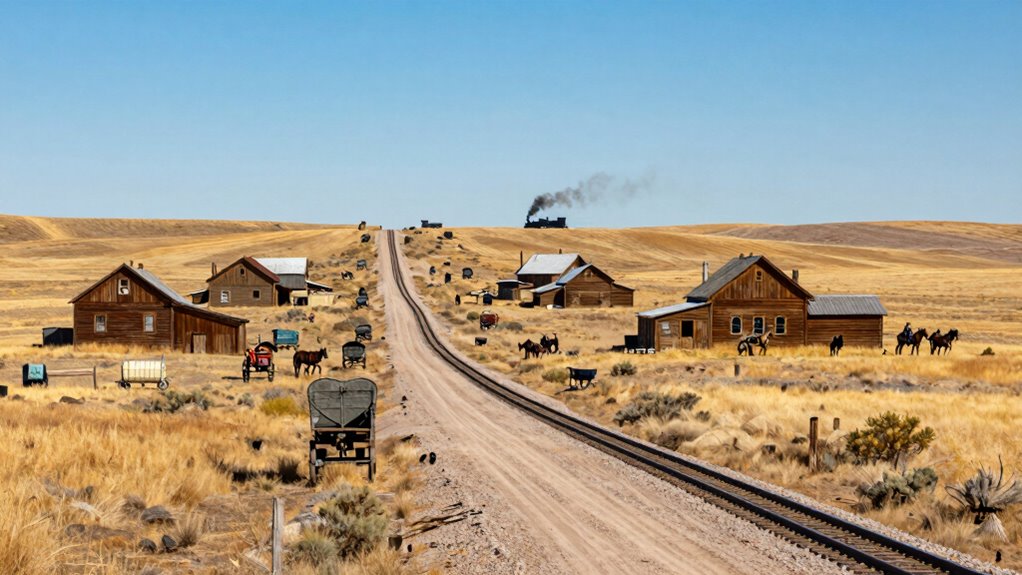

Stage routes and rail stops revolutionized western farm settlements by connecting farmers directly to larger markets and communities. They shifted farms from isolated homesteads relying on trails to bustling hubs of trade and social activity. Transportation made it easier to send crops to distant markets and brought supplies quickly. This growth spurred new settlement patterns, boosted the economy, and blended Native American and settler innovations. To discover more about how this transformation shaped the region, keep exploring further.

Get furniture and decor delivered free with Prime
- Fast, free delivery on millions of items
- Prime Video, Amazon Music and more included
- Member-only deals all year
Key Takeaways
- Stage routes and rail stops connected farms to larger markets, enabling easier transportation of crops and supplies.
- They transformed isolated farms into active settlement centers and regional economic hubs.
- Transportation routes facilitated larger-scale farming and encouraged settlement in new, accessible areas.
- They promoted cultural exchange by blending Native American, Hispanic, and Anglo traditions along routes.
- Indigenous trail systems influenced and improved modern transportation networks, shaping settlement development.
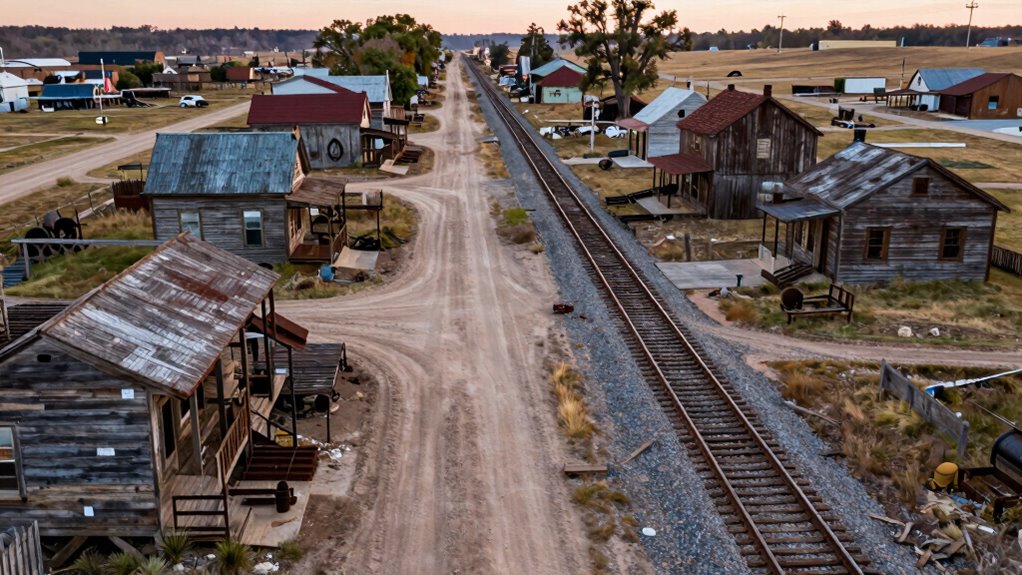
Changes to stage routes and rail stops have considerably altered Western farm settlements, reshaping how residents and goods move across the region. Before these transportation networks expanded, farms were often isolated, relying on trails and local routes that stretched only as far as nearby rivers or small trading posts. When stagecoaches and later trains arrived, they connected these remote areas to larger markets, transforming the economic landscape and reshaping community life. You can see how these routes became the lifelines that integrated farms into broader regional economies, making it easier to send crops to market and bring in supplies.
Transportation networks transformed remote farms into thriving hubs, connecting communities and expanding regional markets.
Native American influences played a significant role in shaping these transportation routes. Indigenous peoples had already established extensive trail systems that linked different regions, often following natural landmarks like rivers and mountain passes. When settlers and railroad builders arrived, they often adapted or expanded upon these existing pathways. This blending of Native American trail knowledge with new infrastructure meant routes were more efficient and better suited to the terrain. As a result, many early roads and rail stops trace their origins back to indigenous pathways, highlighting the deep-rooted influence of Native American knowledge on agricultural development and settlement patterns. The Native American trail systems provided foundational pathways that modern routes often followed or expanded upon. Additionally, the incorporation of indigenous knowledge into infrastructure planning further improved transportation efficiency.
The development of stage routes and rail stops also accelerated agricultural expansion in the West. As transportation improved, farmers found it easier to move their produce to distant markets, encouraging larger-scale farming and new crop varieties. The railroads, in particular, opened up previously inaccessible lands, turning them into productive farmland. This growth led to a surge in settlement, as farmers and entrepreneurs moved into areas that had been sparsely populated. You’d notice that towns sprouted around key stops—these became hubs of commerce, social life, and agricultural activity, fueling the region’s economic development. Additionally, the expansion of transportation networks played a crucial role in shaping settlement patterns and land use in the West.
Furthermore, the increased movement of goods and people contributed to the cultural exchange and the blending of different traditions. Native American influences persisted through shared knowledge of the land, while new settlers brought their customs and practices. Rail stops often became melting pots of Native American, Hispanic, and Anglo cultures, shaping the social fabric of the region. These transportation routes didn’t just move goods—they moved ideas, traditions, and people, fostering a dynamic environment that supported agricultural development and a diverse community life. Additionally, the integration of these routes often reflected a combination of indigenous and settler innovations that improved transportation efficiency and settlement patterns.
historical stagecoach travel accessories
As an affiliate, we earn on qualifying purchases.
As an affiliate, we earn on qualifying purchases.
Frequently Asked Questions
How Did Stage Routes Influence Town Population Growth?
Stage routes greatly boosted town population growth by creating a lively stagecoach economy and encouraging route development. As stagecoaches regularly traveled through these towns, they attracted settlers, traders, and businesses enthusiastic to capitalize on improved transportation. This increased accessibility made towns more appealing for farming and commerce, leading to steady population increases and economic development. The consistent movement of people and goods fostered thriving communities along these crucial route networks.
Were Rail Stops Planned Before Settlements or After?
Rail stops were generally planned after settlements began, like planting seeds before the harvest. As railway expansion accelerated, towns often grew around these stops, shaping settlement planning. Railway companies chose strategic locations based on existing communities or potential growth areas. So, rather than preordained sites, rail stops evolved alongside settlement development, acting as catalysts that transformed quiet farms into bustling hubs, much like a spark igniting an already fertile field.
How Did Transportation Changes Affect Local Farming Practices?
Transportation changes, like reliable rail stops, directly impacted your farming practices by enabling you to access new markets quickly. This encouraged you to adopt better agricultural techniques, improve crop yields, and explore crop diversification to meet varied demands. With easier transportation, you’re less dependent on local markets alone, allowing you to experiment with different crops and increase your farm’s profitability, ultimately shaping the growth and sustainability of your farmstead.
Did Some Settlements Decline Due to Route Changes?
You might notice that some settlements declined unexpectedly, a coincidence tied to route planning. When stagecoach routes shifted or stops moved, towns relying on the stagecoach economy suffered. These changes disrupted local trade and communication, often causing decline. Route planning, intended to improve travel, sometimes unintentionally led to the decline of certain settlements, highlighting how transportation decisions deeply affected community growth and survival.
What Role Did Transportation Routes Play in Regional Trade?
Transportation routes played a vital role in regional trade by connecting economic hubs across vast areas. As you travel along these trade routes, you facilitate the movement of goods, making trade more efficient and accessible. Rail stops and stage routes link farms to markets, boosting local economies. These routes help create thriving communities centered around commerce, encouraging growth and development in the region. Without them, regional trade would slow considerably.
Conclusion
So, as you watch these once-isolated farms bloom into bustling towns, it’s ironic how the very routes meant to connect and grow them also brought chaos and change. The quiet, sprawling fields now hum with trains and stages, transforming peaceful farms into busy hubs. You’d think progress would bring serenity, but instead, it’s a whirlwind of movement and noise. In the end, those routes that promised unity, often, just scattered the quiet charm of the frontier.
Halloween Picks
halloween
As an affiliate, we earn on qualifying purchases.