
Springhouses stayed important in the MidAtlantic because they used natural groundwater to keep food cool without electricity or ice. Made from simple, durable materials like stone and mortar, they provided a reliable way to preserve perishable items like dairy, meat, and vegetables. Their passive cooling method was energy-efficient and suited to the region’s environment. If you want to discover more about how these structures shaped local life and heritage, keep exploring their fascinating history.
Key Takeaways
- Springhouses utilized natural groundwater for passive cooling, essential before modern refrigeration.
- They provided a reliable, low-cost method to preserve perishable foods in rural communities.
- Their simple, durable design made them practical and sustainable over generations.
- Springhouses supported regional food security and reduced waste by extending shelf life.
- They are cultural symbols reflecting resourcefulness and environmental adaptation in MidAtlantic history.
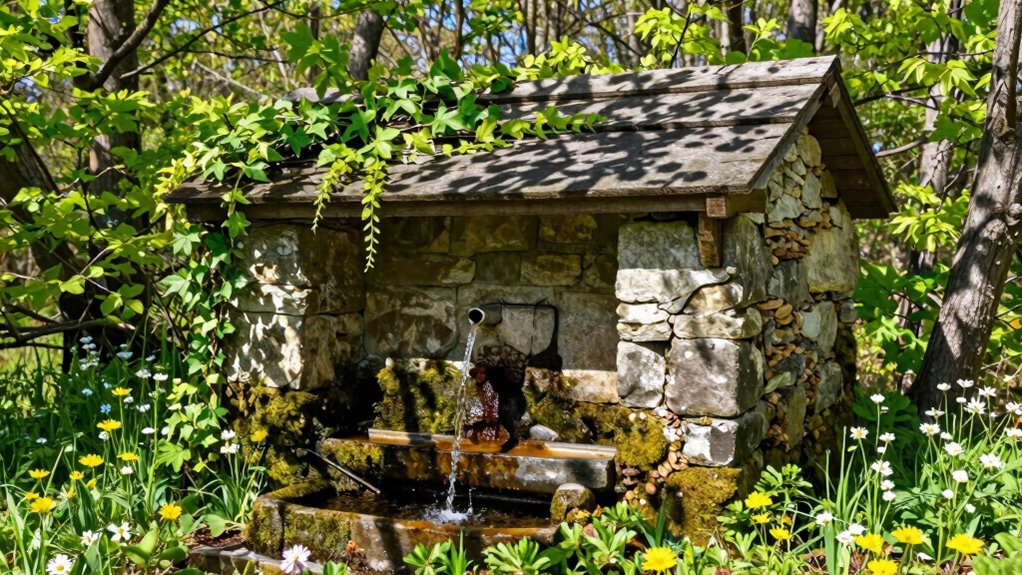
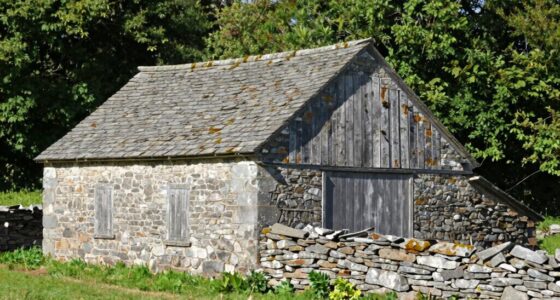
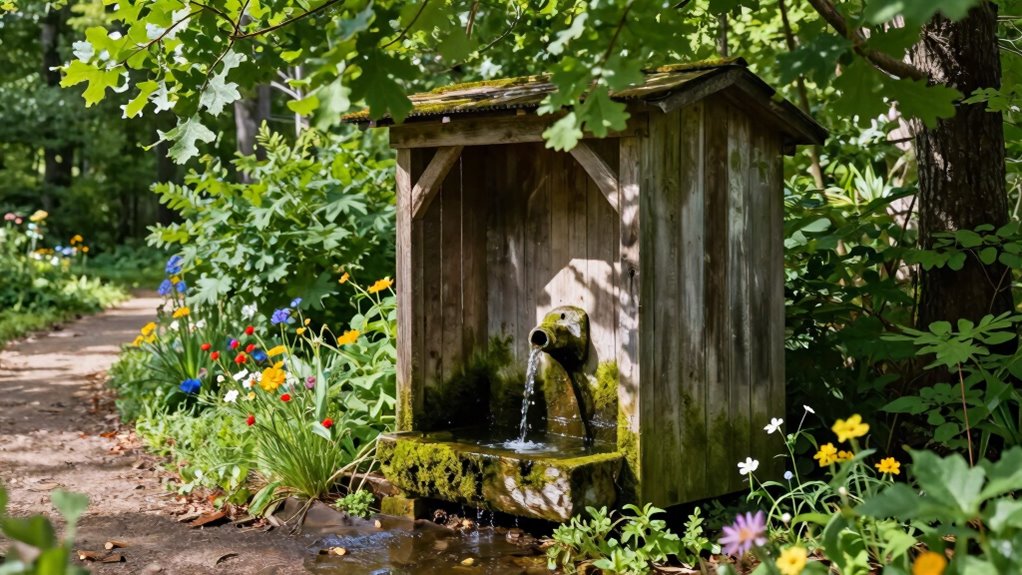
Springhouses in the MidAtlantic are a fascinating part of the region’s historical architecture, serving as natural cooling structures for food preservation. You might wonder why these simple stone buildings remained so essential for decades, even as technology advanced. The answer lies in their practicality and the significance they held for local communities. Springhouse construction was straightforward but effective, utilizing readily available materials like stone and mortar to create a structure that harnessed the constant cool temperature of underground spring water. This natural refrigeration meant that residents could store perishables like dairy, meat, and vegetables without relying on ice or more modern refrigeration methods, which weren’t always accessible or affordable in rural areas. Additionally, the sustainable design of springhouses minimized energy use, making them an environmentally friendly solution long before modern eco-consciousness became widespread. The consistent temperature helped prevent spoilage and extended the freshness of stored items, which was especially vital in regions with limited access to other cooling options. This reliance on natural cooling methods exemplifies the environmental adaptability of early rural architecture.
The importance of springhouses in the MidAtlantic wasn’t just about convenience; it was about survival and self-sufficiency. You see, in earlier times, farmers and households depended heavily on preserving their harvest and dairy products to get through winter or lean months. Springhouses provided a reliable, low-cost solution that worked year-round, especially in places where electricity and modern appliances were unavailable or unreliable. Because springhouses used the natural coolness of groundwater, they remained at a steady temperature, usually between 45 and 55 degrees Fahrenheit, which was ideal for food storage. This consistent environment helped prevent spoilage and reduced the risk of foodborne illnesses, making springhouses an essential part of daily life. Moreover, their passive cooling capability exemplifies the ingenuity of past construction techniques that utilized natural resources efficiently.
From a preservation perspective, springhouses played a pivotal role in local economies and food customs. They allowed communities to extend the shelf life of their food, maintain a stable supply, and reduce waste. Over time, many of these structures have become symbols of regional heritage, representing a way of life centered on resourcefulness and sustainability. Understanding the historical significance of springhouses helps us appreciate how environmental factors and local ingenuity shaped rural life. Today, their historical preservation is imperative, not only to protect these unique structures but also to understand the ingenuity of past generations. You can see the value in maintaining these buildings, as they offer tangible links to the region’s agricultural roots and early technological adaptations. Recognizing their significance helps us appreciate how resourcefulness and environmental harmony shaped early rural life.
As an affiliate, we earn on qualifying purchases.
Frequently Asked Questions
How Did Springhouses Influence Local Midatlantic Economies?
Springhouses influenced local Midatlantic economies by enabling communities to preserve perishable goods efficiently through their unique springhouse architecture. This innovation reduced spoilage and supported local trade. In historical preservation efforts, maintaining springhouses helps keep regional heritage alive, attracting tourism and fostering pride. Their practical design and cultural significance continue to boost local economies, illustrating how these structures historically supported economic stability and today contribute to heritage-based economic development.
Were Springhouses Used for Purposes Other Than Refrigeration?
Ever wondered if springhouses served more than just refrigeration? Absolutely. Their architecture often symbolized purity and sustenance, embodying a essential community hub. Beyond storing perishables, springhouses were used for brewing, cheese-making, and even social gatherings. Their sturdy design and natural spring water made them versatile, transforming them into multifunctional spaces. You can see how springhouse symbolism extended beyond utility, representing life, health, and community resilience in the MidAtlantic.
What Materials Were Commonly Used to Construct Springhouses?
You’ll find that springhouse construction mainly used durable materials like stone and wood. Common materials for springhouses included sturdy limestone or fieldstone walls, which kept the interior cool and protected from weather. Wooden beams often supported the roof, and sometimes, the floors were made of stone or wood planks. These materials guaranteed the springhouse remained a reliable, cool storage space, essential for preserving food before modern refrigeration.
How Did Seasonal Changes Affect Springhouse Functionality?
Seasonal temperature fluctuations and springwater flow variability directly affect your springhouse’s functionality. During warmer months, rising temperatures can cause the interior to warm, risking spoilage of stored food. Conversely, in winter, colder temperatures help preserve perishables naturally. Variations in springwater flow may reduce cooling efficiency during dry periods, making it essential for you to observe seasonal changes closely. Proper management ensures your springhouse remains a reliable, natural refrigeration method year-round.
Are Any Springhouses Still Operational Today?
Some springhouses are still operational today, mainly for historical preservation or educational purposes. While modern springhouse use has declined, preservation efforts aim to maintain their historical significance. You can visit preserved springhouses at heritage sites or farms, where they serve as living exhibits of early refrigeration techniques. These structures remind us of the importance of sustainable, natural cooling methods and keep the legacy of traditional water-powered refrigeration alive.
Conclusion
So, it’s pretty ironic, isn’t it? Even with all our modern conveniences, we still relied on those old springhouses for fresh water and preservation. They might seem outdated now, but back then, they were the backbone of daily life. Sometimes, the simplest solutions turn out to be the most enduring—proof that even in today’s high-tech world, old ways can still surprise us with their staying power. Who knew?