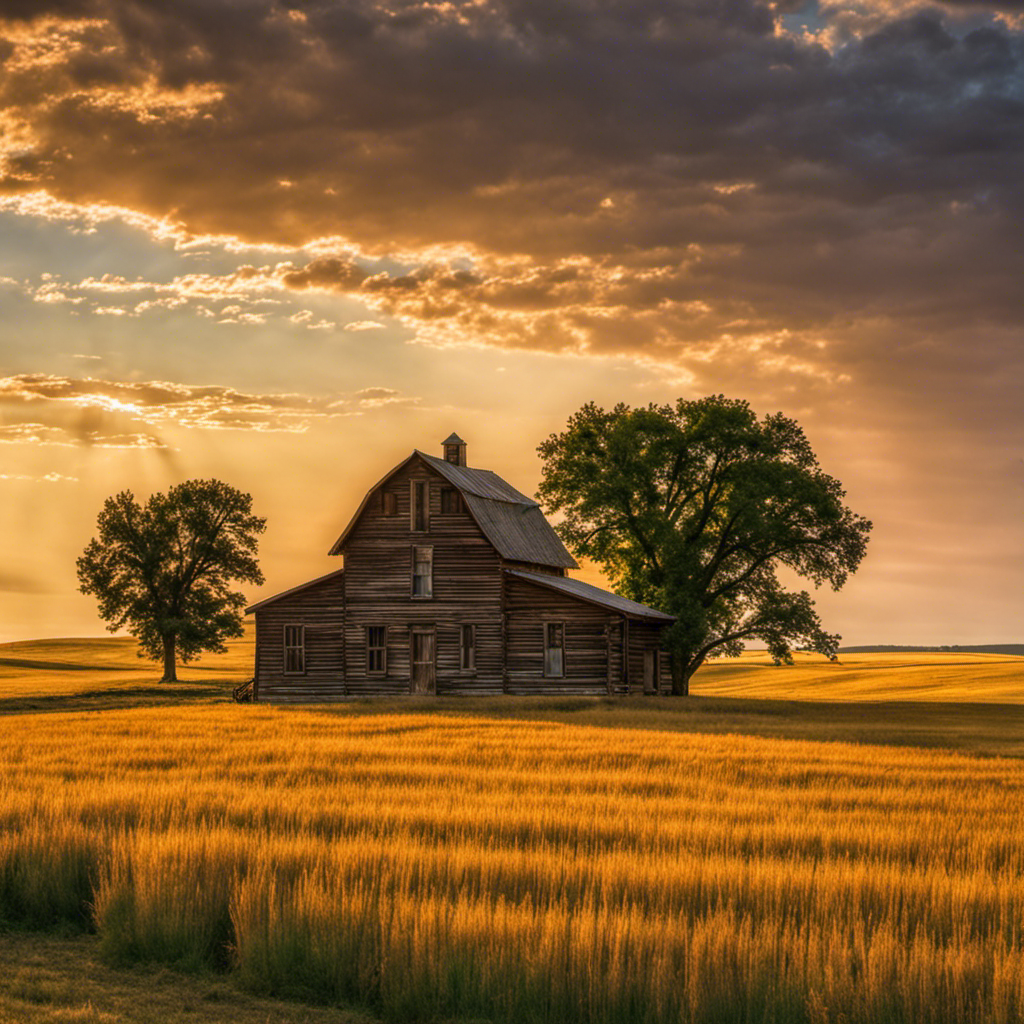
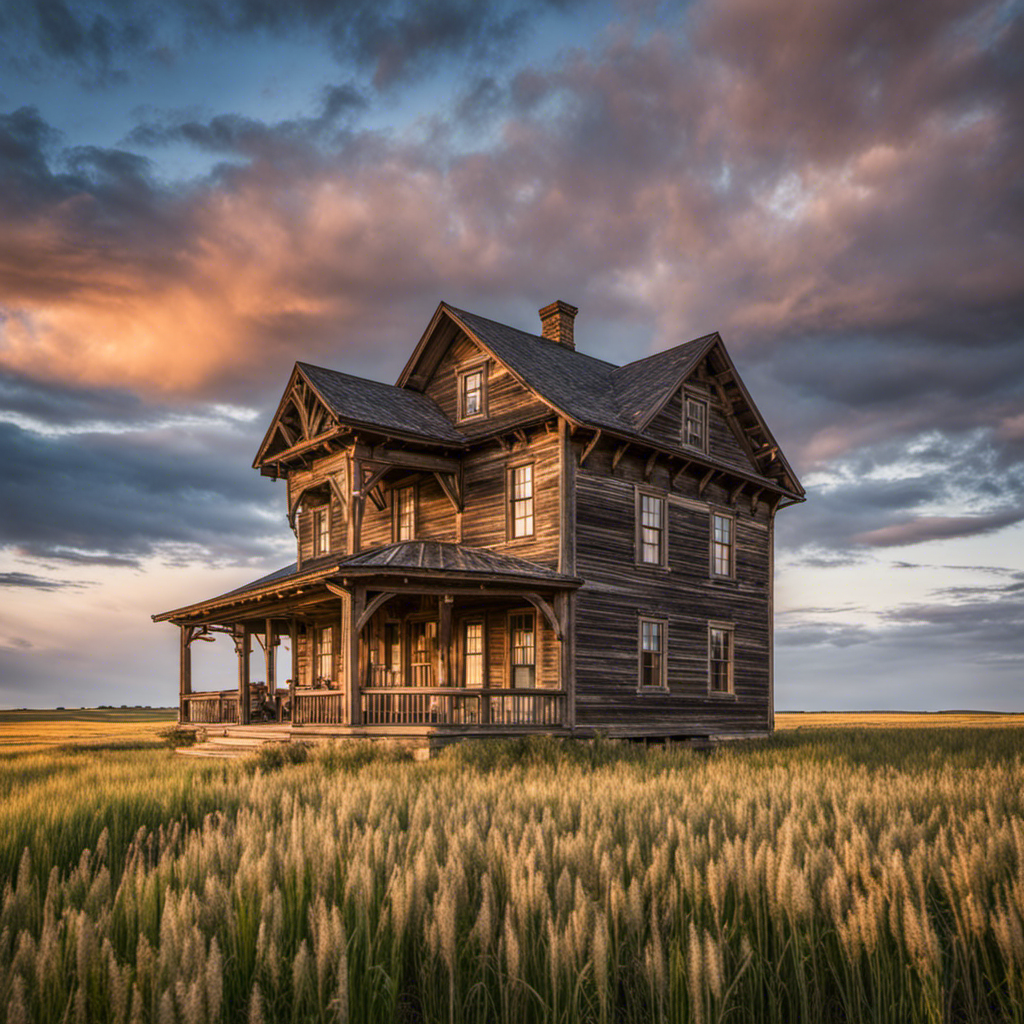
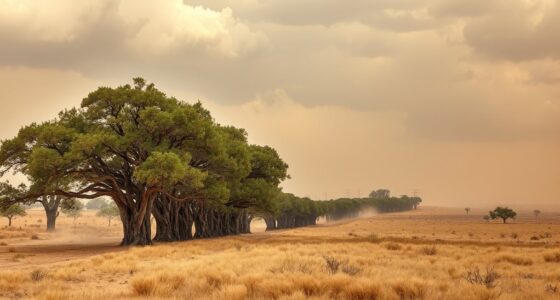
On the treeless plains, settlers built sod houses called “soddies” by using the land itself, inspired by indigenous techniques. They cut thick blocks of earth and grass, stacking them like bricks to create durable, insulating walls. These homes withstand extreme weather, keeping warmth in winter and coolness in summer. They show how humans adapt to harsh environments using natural resources. If you explore further, you’ll discover even more about these resilient structures and their history.
Key Takeaways
- Sod houses, or “soddies,” were built using blocks of sod due to the treeless plains’ lack of timber.
- Indigenous shelter techniques utilizing sod and earth inspired settlers’ construction methods for durability.
- Thick sod walls provided insulation, helping homes withstand extreme temperatures and harsh weather conditions.
- Building with sod allowed for effective land use and resilience without traditional building materials.
- These structures symbolize adaptability and survival on the treeless plains, showcasing human ingenuity and environmental harmony.
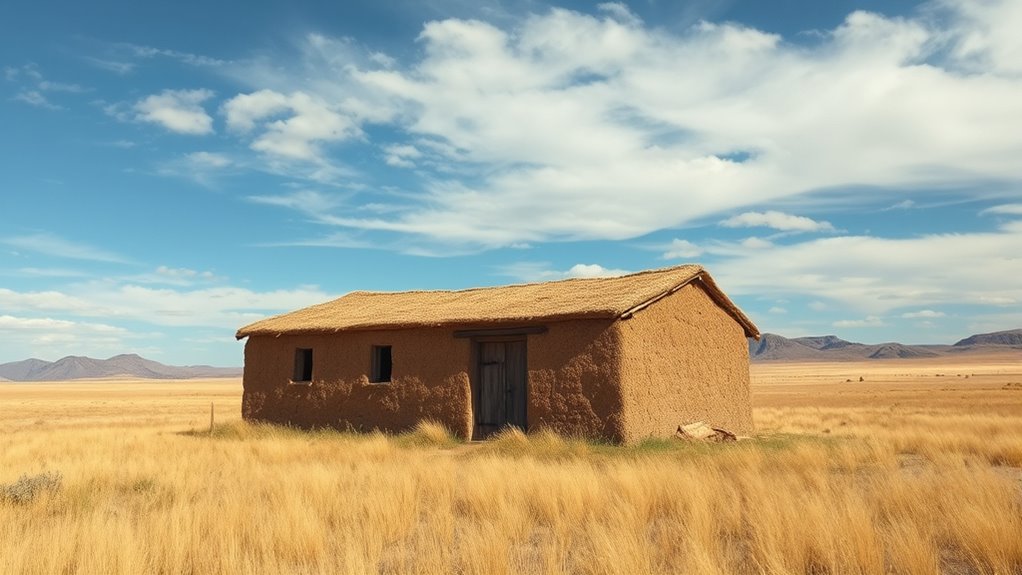
On the treeless plains of the American frontier, settlers faced a formidable challenge: how to build sturdy homes without timber. With no trees to harvest, they turned to the land itself, adopting innovative methods that relied on the natural materials available. You might be surprised to learn that indigenous peoples had long mastered similar adaptations, using sod and earth to create shelter that blended with the environment and offered protection from the elements. These indigenous adaptations served as a blueprint for settlers, demonstrating how to craft homes that could withstand the harsh weather conditions of the plains. You’ll find that sod houses, often called “soddies,” became a practical solution, combining earth, grass, and roots to form thick walls that provided excellent weather resilience.
The thick, insulating walls of sod houses helped keep the interior warm during bitter winters and cool during scorching summers. Unlike flimsy structures, these homes could absorb and deflect the extreme temperature swings common on the plains. Their durability wasn’t just luck; it was the result of understanding the land and working with it. You might notice that the indigenous adaptations to the environment influenced how settlers approached building. They learned to harness the land’s natural insulation, making their homes more than just shelter—they became resilient fortresses against the relentless weather.
Building a sod house wasn’t glamorous, but it was effective. You’d start by cutting sod into manageable blocks, then stacking them like bricks to form walls. The roots and grasses embedded in the sod provided additional stability and insulation. Because the walls were thick and heavy, they could withstand high winds and heavy snowfalls, essential on the plains where storms could be fierce. Over time, settlers realized that maintaining a sod house required regular repairs—patching cracks and replacing sod blocks—but that was a small price to pay for a home that could survive the elements year after year.
The indigenous knowledge of utilizing earth for shelter proved invaluable, shaping how settlers adapted to their environment. Your experience of living in or building a sod house would include appreciating its resilience and understanding that this method was born from necessity and ingenuity. These homes stand as a symbol of human adaptability, showing how, even in the absence of timber, people can create sturdy, weather-resistant dwellings by working closely with the land.
Frequently Asked Questions
How Did Sod Houses Influence Modern Sustainable Architecture?
Sod houses influenced modern sustainable architecture by showing how eco-friendly design can utilize natural materials. You see, they used earth as natural insulation, which reduces energy use for heating and cooling. This approach inspires today’s eco-conscious builders to incorporate natural insulation and locally sourced materials, making structures more sustainable. By learning from sod houses, you can create energy-efficient, environmentally friendly homes that blend seamlessly with nature.
What Were Common Tools Used to Build Sod Houses?
You use simple tools like shovels, axes, and hoes to gather and shape sod blocks for construction. These tools help you cut and lift sod, which provides natural insulation, making your house warm in winter and cool in summer. You also employ basic construction techniques such as stacking sod tightly and sealing gaps to improve sod insulation. These methods guarantee your sod house is sturdy and well-insulated using available resources.
How Did Sod Houses Impact the Daily Lives of Inhabitants?
Sod house construction transformed prairie living by offering a sturdy, affordable shelter, making daily life more manageable. You’d find comfort in its insulation against harsh weather and appreciate the simplicity of maintaining it with basic tools. This practical home shape fostered a tight-knit community and allowed you to focus on farming and survival, proving that resourcefulness and adaptation deeply influenced your routines and overall well-being on the treeless plains.
Were Sod Houses Resistant to Harsh Weather Conditions?
Yes, sod houses were quite resistant to harsh weather conditions. Their thick walls provided excellent insulation, keeping the interior warm during cold winters and cool in summer. This was a key Treeless plains adaptation, allowing you to survive and even thrive in tough environmental conditions. The natural materials used in sod houses made them sturdy against wind, rain, and extreme temperatures, offering reliable shelter in challenging climates.
What Are the Archaeological Methods Used to Study Sod Houses?
You use excavation techniques to carefully uncover sod houses, removing soil layers without damaging the structure. Once exposed, you analyze the materials, such as wooden posts or organic remains, with radiocarbon dating to determine their age. These methods help you understand how sod houses were built, used, and abandoned, providing valuable insights into the lives of early settlers on the treeless plains.
Conclusion
Just as a humble sod house stands strong amid the endless treeless plains, so too can you find resilience within yourself, no matter how barren the landscape. Like roots stretching deep into the earth, your perseverance can anchor you through life’s storms. Remember, even in the most unlikely places, life finds a way to grow. Embrace your inner strength, and like the sturdy sod house, you’ll weather any challenge that comes your way.