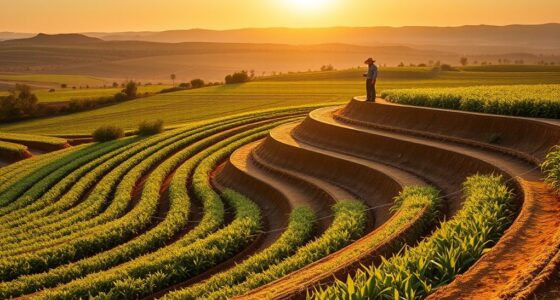
During the Dust Bowl, planting shelterbelts, or rows of trees and shrubs, was a key solution to curb wind erosion. These natural barriers helped slow the wind, trap dust, and protect the soil from erosion, restoring some balance to the damaged landscape. By creating microclimates and stabilizing the land, shelterbelts proved their importance in long-term conservation efforts. If you want to learn more about how these strategies transformed the land, keep exploring.
Key Takeaways
- Shelterbelts served as natural windbreaks, reducing dust storms and soil erosion during the Dust Bowl.
- Planted along fields and open plains, they helped stabilize the landscape and conserve moisture.
- Native trees in shelterbelts were chosen for their resilience against harsh environmental conditions.
- These windbreaks complemented other soil conservation techniques like crop rotation and contour plowing.
- Shelterbelts demonstrated the importance of proactive, long-term land management to prevent environmental crises.
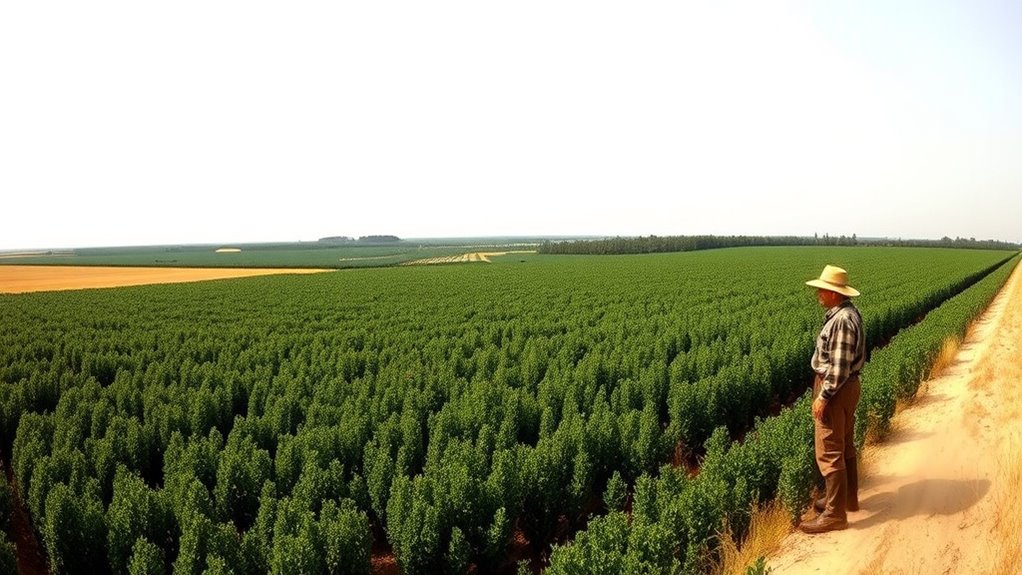
Have you ever wondered how farmers fought back against the devastating dust storms of the Dust Bowl? It wasn’t just luck or chance—it was strategic action rooted in conservation practices. One of the most effective methods was planting windbreaks, also known as shelterbelts. These are rows of trees and shrubs carefully placed to block the relentless wind and reduce soil erosion. You can imagine how these natural barriers acted like shields, protecting the land from the force of the wind and preventing the topsoil from being swept away. Farmers realized that by establishing windbreaks, they could create a microclimate that held moisture in the soil and made farming more sustainable during those harsh years.
Implementing windbreaks became a cornerstone of conservation practices during the Dust Bowl era. Instead of leaving the land exposed to the elements, farmers planted trees along field borders, roads, and open plains. These trees served multiple functions—they slowed wind speed, trapped dust particles, and helped retain soil moisture. The choice of tree species was deliberate, often native species that could withstand the tough conditions. Over time, these windbreaks grew into dense barriers, acting as wind filters that lessened the power of dust storms and minimized soil loss. This approach proved to be a simple yet powerful way to restore some stability to the battered landscape, and it emphasized the importance of proactive conservation practices that prioritized long-term health over short-term gains. Additionally, understanding the science behind soil erosion prevention helped farmers optimize their efforts and ensure lasting land productivity.
The success of windbreaks inspired broader conservation efforts. Farmers learned that maintaining healthy, well-placed shelterbelts not only protected their crops but also improved the overall health of the land. They understood that conservation practices like planting windbreaks weren’t just about stopping dust storms—they were about restoring balance to a fragile ecosystem. These efforts helped prevent further erosion and encouraged farmers to adopt other soil-preserving techniques, such as crop rotation and contour plowing. The lesson was clear: working with nature through conservation practices could combat even the most destructive forces, turning a crisis into an opportunity for sustainable farming. Today, the legacy of those windbreaks remains as a testament to how thoughtful planning and conservation practices can protect the land, even in the face of severe environmental challenges.
Frequently Asked Questions
How Long Does It Take for Shelterbelts to Become Effective?
It usually takes a few years for shelterbelts to become effective. You’ll notice wind reduction and improved soil preservation within 3 to 5 years as the trees grow and establish their root systems. Consistent care, proper planting, and selecting the right species speed up the process. Over time, shelterbelts markedly slow wind flow, reducing erosion and helping protect your land from the harsh effects of wind and dust.
What Types of Trees Are Best for Shelterbelts?
Did you know that planting dense rows of native trees can reduce wind speed by up to 70%? For shelterbelts, choose hardy species like eastern red cedar, black locust, or hybrid poplar, which thrive in your region. Focus on diverse tree species and ideal planting density to create a strong, effective barrier. This combination ensures maximum wind protection and longevity for your shelterbelt.
Can Shelterbelts Be Used in Urban Areas?
Yes, you can use shelterbelts in urban areas to promote urban greening and provide city windbreaks. Planting trees as part of urban greening efforts helps reduce wind speed, improve air quality, and add aesthetic value. By strategically placing trees along streets, parks, or building perimeters, you create effective city windbreaks that protect against wind erosion, noise, and pollution, making your city more comfortable and environmentally friendly.
Are Shelterbelts Sustainable in Changing Climate Conditions?
A stitch in time saves nine, and shelterbelts can be sustainable if you prioritize climate adaptability. You need to contemplate changing weather patterns and select resilient plant species to ensure their long-term viability. By regularly maintaining and adapting your shelterbelts, you can help them withstand climate shifts, making them a valuable part of your environmental strategy. With proper planning, shelterbelts can continue to provide benefits despite a changing climate.
What Are the Costs Involved in Establishing Shelterbelts?
You’ll find that establishing shelterbelts involves costs like purchasing seedlings, labor, and ongoing maintenance, which you should consider in a detailed cost analysis. Funding sources can include government grants, local community programs, or private donations. While initial expenses vary depending on size and materials, investing in shelterbelts can offer long-term benefits like soil conservation and wind reduction, making the costs worthwhile for sustainable land management.
Conclusion
As you imagine the gentle embrace of shelterbelts, you can almost see the land whispering thanks, its worries softened by rows of steadfast trees. These quiet guardians stand as nature’s gentle reminder that even in tough times, a little patience and care can turn the tide. With each leafy barrier, you help paint a brighter horizon—one where the winds no longer carry away hopes, but instead cradle them softly, whispering promises of resilience and renewal.