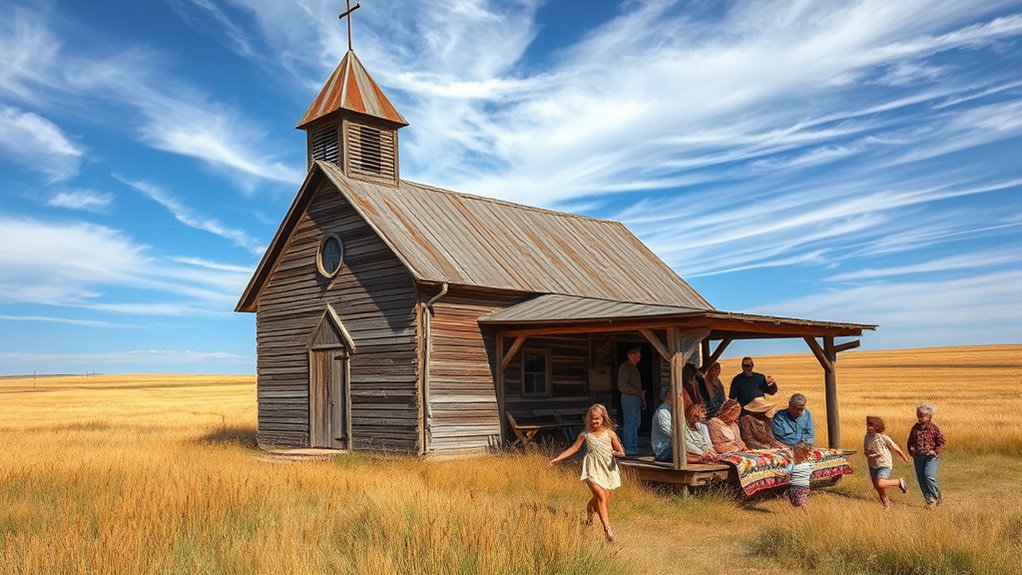

Prairie churches are more than places of worship; they serve as the social heart of rural communities. You’ll find them hosting holiday events, potlucks, and community celebrations that bring neighbors together. These gatherings create a warm, familiar environment where you can reconnect with long-time friends and meet newcomers. By supporting each other through ups and downs, these churches help build a strong, resilient social fabric that keeps communities united—exploring this further reveals even deeper roles they play.
Key Takeaways
- Prairie churches serve as central social hubs, facilitating community gatherings beyond worship services.
- They host events like potlucks, fundraisers, and celebrations that strengthen community bonds.
- Church-sponsored socials foster camaraderie, welcoming both longtime residents and newcomers.
- They provide support during hardships and celebrate milestones such as weddings and baptisms.
- Regular church gatherings help maintain intergenerational relationships and build resilient rural communities.
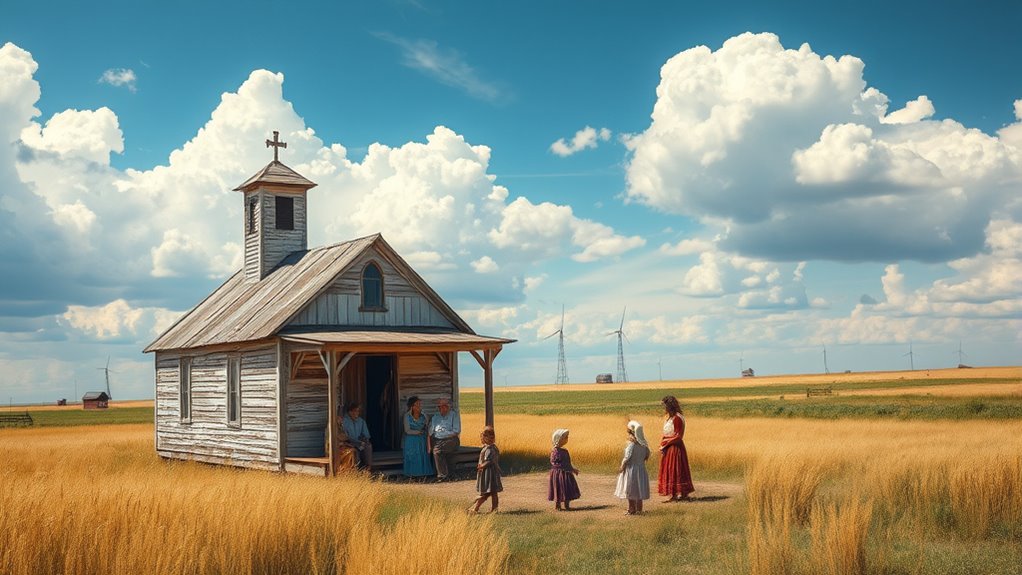
Prairie churches have long served as more than just places of worship; they are the heart of social life in rural communities. When you step into these churches, you’re not just entering a space for spiritual reflection—you’re joining a lively hub of community interaction. The church community often makes up the backbone of social gatherings, bringing neighbors together in ways that go far beyond Sunday services. Whether it’s a holiday celebration, a fundraising event, or just a weekend potluck, these gatherings foster a strong sense of belonging. You quickly realize that in small towns, the church isn’t just about faith; it’s about forging connections that hold the community together through shared experiences.
During social gatherings at prairie churches, you experience a vibrant mix of traditions, conversation, and camaraderie. These events are usually well-attended because everyone understands that they serve as essential touchpoints for maintaining relationships. You might find yourself chatting with someone you’ve known for years or meeting new faces who’ve just moved in. The warmth and familiarity create an inviting atmosphere where everyone feels welcome. Church-sponsored socials, like pancake breakfasts or quilt shows, become opportunities for neighbors to catch up, share stories, and celebrate milestones. These gatherings reinforce bonds that often stretch back generations, making the social fabric of the community stronger with each event.
In prairie communities, the church functions as a gathering place that addresses more than spiritual needs. It’s where you can seek support during tough times and celebrate the joys of life. When someone faces hardship, it’s not uncommon for the church community to rally around them, providing meals, assistance, or just a listening ear. Conversely, during times of celebration—such as weddings, baptisms, or anniversaries—the church becomes a venue for community-wide joy, where everyone feels involved. These social gatherings aren’t just about having fun; they serve as crucial opportunities for community members to connect, share, and support each other in a meaningful way.

Pinnacle 3 Piece Thermo Dish Hot or Cold Casserole Serving Bowls with Lids Turquoise
PINNACLE THERMO Insulated Bowls is the HEALTHY CHOICE! The Thermo Bowls Maintain Food Temperature Warm for up to…
As an affiliate, we earn on qualifying purchases.
As an affiliate, we earn on qualifying purchases.
Frequently Asked Questions
How Did Prairie Churches Influence Local Community Development?
You see, prairie churches greatly influenced local community development by serving as central hubs where people gathered. Their distinctive church architecture fostered a sense of identity and pride. Religious doctrines promoted social cohesion and moral values, guiding community behavior. These churches hosted events, meetings, and support networks, helping towns grow and thrive. Their presence shaped social life, creating a strong, interconnected community rooted in faith and shared traditions.
What Role Did Social Events Play in Church Life?
Social events in church life actually played a crucial role in strengthening community bonds. You likely participate in church fundraising events and youth groups, which foster camaraderie and shared purpose. These gatherings don’t just support church activities—they create opportunities for neighbors to connect, collaborate, and build trust, making your community more resilient and vibrant. So, social events are more than fun—they’re essential for nurturing a unified, supportive church community.
How Did Prairie Churches Accommodate Large Social Gatherings?
You’ll find prairie churches designed with spacious church architecture to host large social gatherings comfortably. They often feature big halls or multipurpose rooms, making community outreach events easy to organize. These spaces allow everyone to participate, fostering strong social bonds. By accommodating large groups, prairie churches strengthen community ties and guarantee that social events remain an essential part of church life, encouraging active involvement from all members.
Were There Any Notable Differences Between Church Social Activities in Different Regions?
You’ll notice regional traditions influenced church social activities, leading to notable differences across areas. In some regions, potlucks and barn dances were common, emphasizing community bonding, while others favored organized picnics or holiday pageants. These event variations reflect local customs and resources. Your experience varies depending on the region, but overall, these gatherings fostered strong social ties, making church events central to community life wherever you go.
How Did Social Life in Prairie Churches Evolve Over Time?
Imagine a river flowing, gradually shaping the land—your social life in prairie churches evolved similarly. Over time, you see church music become more lively, fostering a sense of community. Religious outreach expanded beyond church walls, connecting members with broader society. This evolution reflected a shift from simple gatherings to vibrant social hubs, where music and outreach became essential, shaping a more active, engaged congregation that grew closer with each passing year.

TecUnite 50 Pcs Heart Health Awareness Pens Bulk Red Ribbon Awareness Accessories Heart Health Ballpoint Pens for Men Women Patients Fundraising Office Charity Events Supplies
heart disease awareness Accessories: our package includes 50 red ribbon pens, each made of durable plastic; The heart…
As an affiliate, we earn on qualifying purchases.
As an affiliate, we earn on qualifying purchases.
Conclusion
As you step back and look at prairie churches, you realize they’re the heartbeat of the community, like a sturdy tree anchoring a field. These churches don’t just offer spiritual guidance; they weave people together, creating a fabric of shared stories and traditions. Their presence turns the vast prairie into a vibrant tapestry of social life, proving that even in open spaces, connection and faith blossom brightly, holding everyone close like the roots of a mighty oak.

Hahafelt Welcome to Our Church Banner for Church 24 x 72 Inch Easter Adjustable X-Stand Banner Lent Ceremonies Religious Decorations Jesus Resurrection Banners for Christian Churches Supplies
Size for Visual Impact: each welcome to our church banner (single-sided print) measures 24"x 72" (W x L),…
As an affiliate, we earn on qualifying purchases.
As an affiliate, we earn on qualifying purchases.

Kulture Games Get ChurchED | The Christian Party Game| Christian Gifts & Cards | Bible Trivia Game | Charades Games | Family & Youth Groups | Bible Quiz (Sing, Act/Charades, Explain)
Christian party fun: Elevate your gatherings with Kulture Games Get ChurchED, a Christian card game and ultimate Christian…
As an affiliate, we earn on qualifying purchases.
As an affiliate, we earn on qualifying purchases.