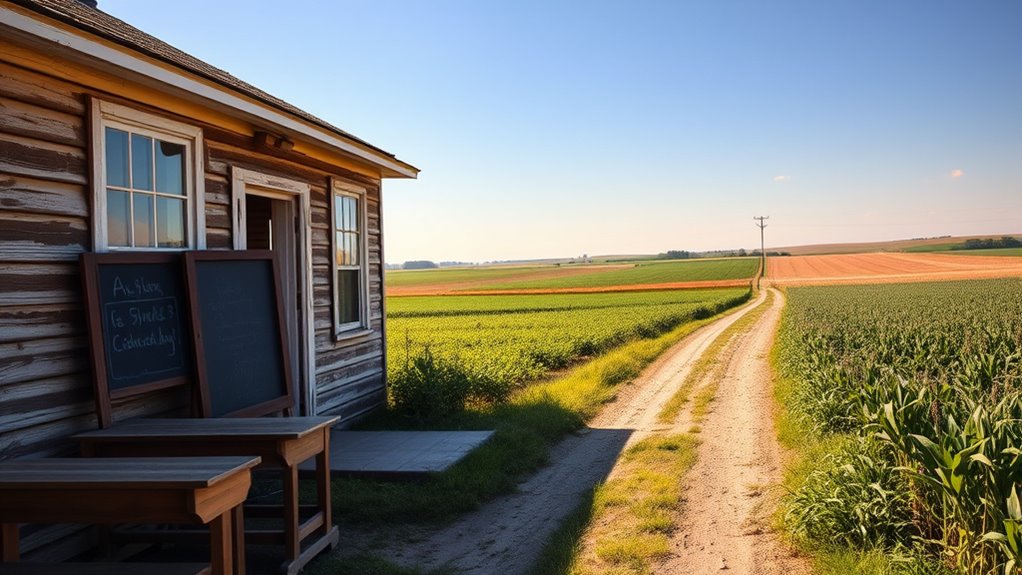

In rural communities, one-room schools and farm lanes symbolize a close-knit way of life where education and daily chores blend seamlessly. These small schools served as community centers where children learned practical skills, shared stories, and built strong bonds. The schoolhouse was more than a place of learning—it nurtured traditions, trust, and collective pride. If you want to uncover how these humble schools shaped generations and community spirit, you’ll find plenty of stories to explore.
Key Takeaways
- One-room schools served as central community hubs in rural areas, fostering social bonds and local identity.
- Education focused on practical skills like farming, livestock care, and community life.
- Multi-age classrooms promoted teamwork, mutual support, and shared learning experiences.
- Schools hosted community events, strengthening social ties and collective support.
- These schools played a vital role in shaping community values and sustaining rural traditions.
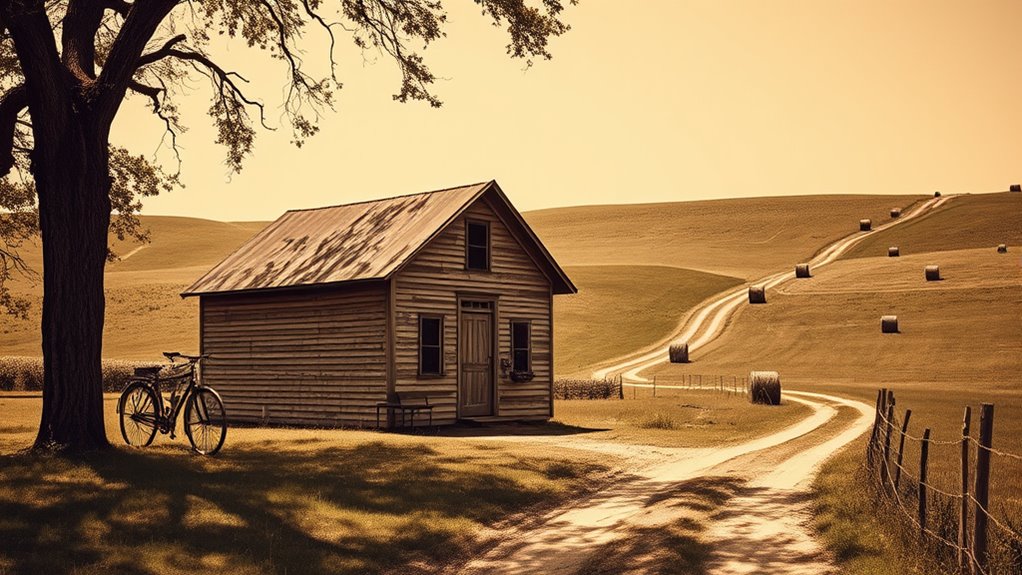
One-room schools and farm lanes paint a vivid picture of rural life in the past, where education and daily chores intertwined seamlessly. In these communities, rural education wasn’t just about learning from textbooks; it was an essential part of community development. You’d find children gathering in a single classroom, often filled with the sounds of lessons, laughter, and the hum of daily life outside. These schools served as hubs for the entire community, where folks not only learned but also shared news, celebrated events, and supported each other through hardships. The schoolhouse itself was usually a simple wooden structure, but it held great significance, acting as a cornerstone for community identity and cohesion.
Rural education in these settings was practical and hands-on, reflecting the needs of the community. Teachers, often local residents, understood the importance of preparing children for life on the farm and in their community. Lessons weren’t limited to reading, writing, and arithmetic; they included skills like planting, harvesting, and caring for livestock. This approach helped ensure that each generation could sustain the local economy and uphold traditions. Because students often came from multiple ages and grades, they learned to work together, fostering a sense of teamwork and mutual support. It wasn’t unusual for older kids to help teach younger ones, reinforcing a culture of shared responsibility.
Rural schools taught practical skills like farming and teamwork, ensuring community traditions and support thrived across generations.
Community development thrived alongside rural education. The schoolhouse was where social bonds were strengthened, and local leaders emerged. Events like school plays, fairs, and gatherings drew neighbors together, creating a tight-knit fabric that supported everyone’s growth. You’d see community members volunteering their time to maintain the school, making sure it stayed a welcoming space for all. These efforts built trust and a sense of collective ownership that extended beyond the school doors. As children learned and grew, they carried those community values forward, helping to shape the future of the entire area.
In many ways, rural education in these one-room schools was more than just a means to learn reading and math; it was a foundation for community development. It encouraged cooperation, resilience, and a shared sense of purpose. These schools fostered an environment where everyone played a part—whether as student, teacher, or supporter—and that collaborative spirit became the backbone of rural life. When you reflect on this history, it’s clear that these humble schools did more than educate—they nurtured communities, cultivated traditions, and laid the groundwork for generations to come.
Frequently Asked Questions
How Did One-Room Schools Influence Rural Community Development?
You see, one-room schools fostered rural social cohesion by bringing neighbors together regularly, strengthening community ties. They also promoted community leadership, as local residents often took on roles like school board members or teachers. This shared responsibility encouraged cooperation and mutual support, helping the community grow resilient. By providing a central place for education and gatherings, these schools became essential to rural development and the sense of belonging among residents.
What Are the Main Challenges Faced by Farm Lane Transportation?
You face unpredictable challenges on farm lanes, where poor rural infrastructure can turn simple trips into dangerous endeavors. Limited access to reliable transportation options and maintenance issues threaten transportation safety, often leaving you stranded or delayed. Harsh weather and rough terrain only amplify these problems, making it harder to get essential supplies or reach emergency services. The struggle to improve these conditions remains a constant, urgent priority in rural communities.
How Did One-Room Schools Adapt to Technological Changes?
You saw that one-room schools adapted to technological changes by gradually incorporating new tools to enhance rural education. Teachers used radios, projectors, and later, computers to bring more resources into the classroom, making lessons more engaging. You might have noticed how these schools embraced technological integration to overcome isolation, connect with broader knowledge sources, and improve students’ learning experiences despite limited resources. This evolution helped keep rural education relevant and effective.
What Role Did Farm Lanes Play in Local Trade?
Farm lanes played a crucial role in rural commerce by serving as essential transportation routes that connected farmers to local markets. You rely on these narrow paths to move crops, livestock, and goods efficiently, ensuring they reach buyers on time. These routes facilitated trade, supported community growth, and helped sustain local economies, making farm lanes vital for maintaining economic vitality in rural areas.
Are One-Room Schools Still Operational Today?
You’ll find that many one-room schools no longer operate, but some stand as symbols of rural architecture and historical preservation. These small, timeless structures serve as a window into the past, reminding us of simpler times. While most have been replaced or repurposed, a few are still open, offering a glimpse of history and community spirit. They remain cherished landmarks, preserving the legacy of rural education.
Conclusion
As you imagine walking down quiet farm lanes, the old one-room school stands tucked among whispering trees, its weathered exterior holding stories of simpler times. You can almost hear children’s laughter echoing through the open windows, their lessons carried by the gentle breeze. Though these schools are gone, their spirit lingers in the golden fields and winding dirt roads, reminding you of a time when community and curiosity thrived side by side in harmony.