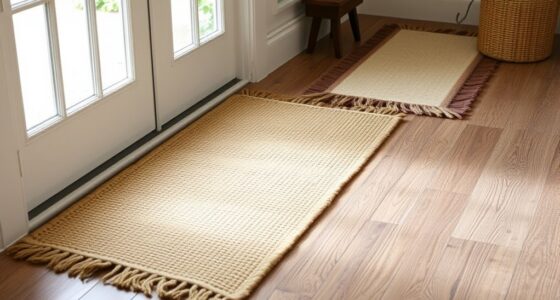
To keep barn dust out of your house, seal gaps around windows, doors, vents, and outlets with weatherstripping or caulking. Use air purifiers with HEPA filters in key areas to trap airborne dust particles. Maintain proper ventilation to prevent dust buildup and install door sweeps and dust barriers in busy zones. Regular cleaning, such as vacuuming with a HEPA filter and dusting with damp cloths, further reduces dust. Keep these strategies in mind to improve your indoor air quality and learn more about effective dust control tips.

Get furniture and decor delivered free with Prime
- Fast, free delivery on millions of items
- Prime Video, Amazon Music and more included
- Member-only deals all year
Key Takeaways
- Seal gaps around windows, doors, vents, and electrical outlets to prevent dust infiltration.
- Use air purifiers with HEPA filters in living areas to trap airborne barn dust particles.
- Implement proper ventilation and dust barriers to reduce indoor dust buildup.
- Regularly clean with HEPA-filtered vacuums and damp cloths to minimize settled dust.
- Place entrance mats and encourage removing footwear to limit dust tracked inside.

Have you ever noticed how barn dust seems to sneak into your house no matter how careful you are? It’s frustrating watching that fine, gritty dust settle on your furniture and cling to your curtains, despite your efforts to keep it out. The good news is, there are practical steps you can take to minimize its intrusion. One of the most effective ways is to use air purifiers. These devices can considerably reduce airborne dust particles, filtering out the tiny allergens that escape from your barn and settle inside. When you run an air purifier with a HEPA filter in your living space, you actively clean the air, making it healthier to breathe and reducing overall dust buildup. Positioning these purifiers in key areas—like the living room or bedrooms—helps create a cleaner environment, especially if you’re dealing with persistent barn dust.
Using HEPA air purifiers in key rooms helps reduce barn dust and improve indoor air quality.
Another essential step is sealing gaps around your windows, doors, and any openings that connect your house to the outside or barn area. Barn dust often finds its way inside through tiny cracks or spaces, so by sealing these gaps, you block a primary entry point. You can use weatherstripping or caulking to close off leaks around your window frames and door jambs. Pay close attention to vents, electrical outlets, and where pipes or cables enter the house, as these spots can also be sneaky gateways for dust. Taking the time to seal these openings not only keeps barn dust at bay but also improves your home’s energy efficiency, keeping heating and cooling costs down. Additionally, understanding the importance of air quality can help you select the most effective filtration and sealing strategies. Proper ventilation also plays a key role in controlling dust, ensuring stale air doesn’t accumulate indoors. Incorporating dust prevention measures, such as installing door sweeps and using dust barriers in high-traffic areas, can further reduce dust infiltration.
Along with air purifiers and sealing gaps, maintaining a regular cleaning schedule is essential. Frequent vacuuming with a vacuum equipped with a HEPA filter helps pick up dust that settles on floors and furniture. Dusting surfaces with a damp cloth prevents dust from becoming airborne again. Wearing a mask when cleaning, especially in areas near the barn, can also keep you from inhaling too much dust. Incorporating dust control measures such as using mats at entrances can further reduce the amount of dust tracked inside. Combining these strategies creates an all-encompassing approach: filtering the air, blocking entry points, and removing dust as it appears.
Ultimately, controlling barn dust inside your house involves a combination of technology and proactive measures. Using air purifiers reduces airborne particles, while sealing gaps prevents dust from sneaking in. These small but consistent efforts make a big difference in maintaining a cleaner, healthier home environment, letting you enjoy your space without constantly battling the dust.
HEPA air purifier for dust removal
As an affiliate, we earn on qualifying purchases.
As an affiliate, we earn on qualifying purchases.
Frequently Asked Questions
Can Air Purifiers Effectively Reduce Barn Dust Indoors?
Air purifiers can effectively reduce barn dust indoors, especially if they have strong dust filtration technology. Look for models with HEPA filters, which trap tiny dust particles and allergens. Their effectiveness depends on the purifier’s size and room coverage. Regularly replacing filters keeps the device working efficiently. While an air purifier isn’t a complete solution, it considerably improves indoor air quality by removing barn dust particles.
Are There Specific Cleaning Schedules to Prevent Dust Buildup?
Yes, establishing consistent cleaning routines helps prevent dust buildup. You should vacuum and dust high-traffic areas at least twice a week, using a vacuum with a HEPA filter. Implement dust barriers like plastic sheeting or heavy curtains around barn entrances to trap dust before it enters your home. Regularly wash bedding, curtains, and upholstery, and clean air filters to reduce indoor dust levels effectively.
What Types of Filters Are Best for Barn Dust?
You should use high-efficiency particulate air (HEPA) filters to improve barn air quality and effectively trap barn dust. HEPA filters are designed to capture tiny dust particles, making them ideal for dust mitigation techniques. Regularly replacing or cleaning these filters guarantees peak performance. For added protection, consider using activated carbon filters alongside HEPA filters to reduce odors and other airborne contaminants, keeping your home environment cleaner and healthier.
How Often Should Barn Ventilation Systems Be Maintained?
Think of barn ventilation as the lungs of your barn—if you don’t care for it, dust and odors will take over. You should inspect and maintain your barn ventilation system at least twice a year, preferably before and after the peak dust season. Regular maintenance guarantees effective dust mitigation, keeps air fresh, and prevents dust buildup from sneaking into your house. Stay proactive, and your barn will breathe easier.
Does Humidity Control Prevent Dust From Entering the House?
Controlling humidity helps improve barn air quality, which in turn reduces dust entering your house. Maintaining ideal humidity levels prevents dust from becoming airborne and settling on surfaces. Dust prevention methods like proper ventilation and regular cleaning work best when humidity is managed. By keeping humidity in check, you create a less dusty environment, making it easier to keep barn dust out of your home and improve overall air quality.
Conclusion
By following these simple tips, you can keep barn dust from sneaking into your home and turning it into a barnyard. Regular cleaning, using mats, and sealing gaps make a big difference. Remember, even a wise old owl would agree that a dust-free house means healthier air and happier days. So, embrace these tricks like a well-trained cowboy and enjoy a cleaner, more comfortable space—without dust bunnies haunting your every step.
Halloween Picks
halloween
As an affiliate, we earn on qualifying purchases.