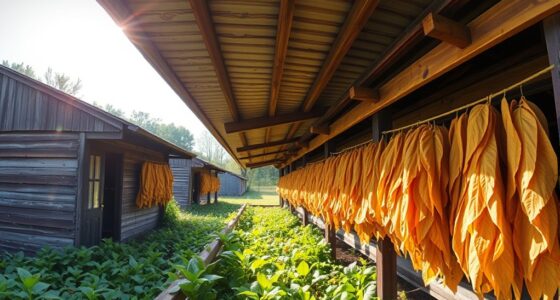
Illinois’s corn cribs and elevator towns reveal your connection to the state’s rich farming history. These structures were built to protect crops from pests and weather while showcasing practical, yet beautifully crafted, architecture. Towns with historic grain elevators serve as hubs for transportation and commerce, symbolizing Illinois’s agricultural growth. Many are preserved as landmarks, highlighting resilience and ingenuity. If you continue exploring, you’ll uncover even more fascinating stories behind these iconic symbols of Illinois’s farming legacy.
Key Takeaways
- Illinois’s corn cribs are historic structures that showcase traditional farming methods and architectural craftsmanship.
- Elevator towns in Illinois feature tall grain elevators that serve as key hubs for storing and shipping crops.
- Corn cribs were built to protect crops from pests and weather, reflecting Illinois’s agricultural history.
- Many historic grain elevators are preserved as cultural landmarks, symbolizing Illinois’s farming resilience.
- These structures highlight the evolution of Illinois’s grain industry from simple wooden facilities to modern industrial complexes.

Illinois is renowned for its rich agricultural heritage, and nowhere is this more evident than in its historic corn cribs and elevator towns. These structures are more than just functional buildings; they stand as attestations to the state’s farming history and its development over the past centuries. When you explore these sites, you’ll notice how they highlight the importance of grain storage in Illinois’s economy. Corn cribs, with their distinctive designs, were built to keep harvested crops safe from pests and the elements, ensuring a reliable supply of grain for local markets and beyond. These structures were often made from wood, featuring slatted sides or open vented walls that allowed air to circulate, helping to dry and preserve the crop. They exemplify practical, yet often beautifully crafted, historic architecture that was tailored to meet the needs of Illinois farmers.
Illinois’s historic corn cribs showcase practical, beautifully crafted architecture vital to its farming heritage.
As you wander through elevator towns, you’ll see clusters of towering grain elevators that punctuate the landscape. These massive structures are the backbone of Illinois’s grain industry, serving as hubs where farmers bring their harvests to be stored before shipment. The design of these elevators evolved over time—initially simple wooden structures, they grew into steel and concrete giants that could hold thousands of bushels of grain. Their verticality and engineering marvels showcase how industrial architecture adapted to the agricultural demands of the region. These towns and their elevators became essential centers of commerce, connecting small farms to national and international markets. Many of these historic structures are now preserved as cultural landmarks, offering insight into Illinois’s agricultural development.
You’ll notice that many of these historic architecture elements have been preserved or restored, offering a window into Illinois’s past. Some towns have worked to maintain their elevator districts, recognizing their cultural significance and the stories they tell about local communities. When you visit, you might find old grain bins and cribs repurposed for new uses, or standing as nostalgic landmarks. These structures symbolize more than just grain storage—they embody the resilience and ingenuity of Illinois farmers who built them to last through generations.
Understanding the history behind these buildings deepens your appreciation for Illinois’s farming roots. They remind you that agriculture wasn’t just a livelihood but a way of life that shaped towns, landscapes, and architecture. Whether it’s the humble corn crib or the towering elevator, each structure reflects a period of innovation and growth, connecting the present to Illinois’s storied agricultural past. As you explore these sites, you’ll see how historic architecture and grain storage have been woven into the fabric of Illinois’s identity, standing as enduring symbols of its farming legacy.
Top picks for "illinoi corn crib"
Open Amazon search results for this keyword.
As an affiliate, we earn on qualifying purchases.
Frequently Asked Questions
How Did Corn Cribs Influence Illinois Agriculture Development?
Corn cribs revolutionized Illinois agriculture by providing efficient corn storage solutions, allowing you to protect your harvest from pests and weather. This innovation enabled you to store large quantities of corn, which improved market timing and reduced spoilage. As a result, corn cribs fostered agricultural development by supporting productivity and economic growth. Their design exemplifies how agricultural innovation directly benefits farmers like you, boosting overall efficiency and sustainability in Illinois farming communities.
Are Any Historic Corn Cribs Open for Public Tours?
Yes, some historic corn cribs are open for public tours, allowing you to explore their preservation and learn about agricultural history. You can visit preserved sites where volunteers and organizations host tours, providing insight into corn crib construction and their role in farming communities. Check local historical societies or farm museums for schedules and details on public tours, so you can experience these iconic structures firsthand and appreciate their significance.
What Are the Architectural Differences Among Illinois Elevator Towns?
You’ll notice that Illinois elevator towns display a tapestry of grain silo designs and architectural styles, each telling its own story. Some feature towering, cylindrical silos that resemble giant pencils, while others show square, brick structures with ornate cornice details. These differences highlight regional influences and evolving technologies, giving each town a unique silhouette. As you explore, you’ll see how these structures blend functionality with local character, creating a visual symphony of agricultural history.
How Have Modern Storage Methods Impacted Traditional Corn Cribs?
Modern storage methods have markedly transformed traditional corn cribs by incorporating advanced grain drying techniques and silo design. You’ll notice that newer silos are taller, more durable, and better suited for large-scale storage, reducing the need for manual labor. These innovations improve efficiency, protect crops from spoilage, and streamline harvest processes, making traditional corn cribs less common as farmers adopt these modern solutions for effective grain drying and storage.
Which Illinois Towns Are Best Preserved for Historical Visits?
You’ll find Galena and Nauvoo are the best-preserved towns for historical visits, like stepping into a living museum. These towns shine with heritage preservation, offering rich stories and well-maintained sites. Their charming streets invite exploration, boosting tourism opportunities for visitors enthusiastic to experience the past firsthand. As you stroll through, you’ll feel the town’s history pulse beneath your feet, making your visit both educational and unforgettable.
Conclusion
As you explore Illinois’s corn cribs and elevator towns, you see how these structures stand as silent sentinels of an agricultural legacy. They’re more than just buildings—they’re the heartbeat of the Midwest, shaping communities and livelihoods. Like old friends watching over the fields, they remind you that history and progress are forever intertwined. Embrace their stories, for they’re the roots that anchor Illinois’s farming spirit, growing stronger with each passing season.