To identify safe reclaimed wood for indoor use, look for wood sourced responsibly from demolitions or repurposed structures with clear documentation of its origin. Check that it’s been properly dried and free of hazardous chemicals, treatments, or contamination. Choose wood finished with non-toxic, low-VOC or water-based products that won’t off-gas harmful fumes. Making sure these safety steps helps create a healthy indoor environment—stick around to discover how to ensure your reclaimed wood meets all safety standards.
Key Takeaways
- Verify the wood’s source, ensuring it’s responsibly harvested from deconstructed or repurposed buildings.
- Confirm the wood is free from hazardous chemical treatments and has documentation of safe processing.
- Ensure the reclaimed wood has been properly dried to prevent warping, mold, and cracking indoors.
- Use finishes that are low-VOC, non-toxic, and environmentally friendly to maintain indoor air quality.
- Request certification or testing reports to confirm the wood is free from harmful preservatives, paints, or chemical contaminants.
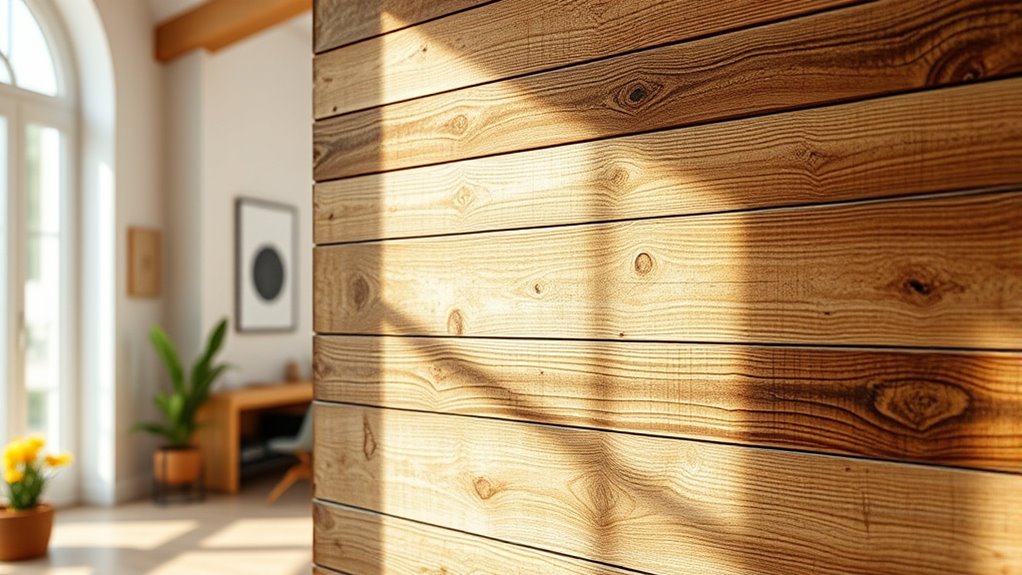
Reclaimed wood is gaining popularity as a sustainable and stylish choice for indoor spaces. When you’re choosing reclaimed wood, it’s essential to ensure it’s safe for indoor use, which means understanding how it’s sourced and what finishes are applied. One of the main concerns with reclaimed wood is its sustainable sourcing. You want to verify that the wood was harvested responsibly, without contributing to deforestation or environmental harm. Look for suppliers who prioritize eco-friendly practices, such as sourcing from buildings being demolished or repurposing wood from old structures. These sources typically adhere to regulations that prevent illegal logging and ensure the wood’s origin is transparent.
Choose responsibly sourced reclaimed wood from eco-friendly suppliers for safe, sustainable indoor use.
Beyond sustainable sourcing, it’s crucial to consider the finish options applied to reclaimed wood. Finishes can impact indoor air quality, so you should seek out options that are non-toxic, low-VOC, or VOC-free. Many reputable suppliers use finishes that are environmentally friendly and safe for indoor environments, especially if you or your family members have allergies or sensitivities. You can opt for natural oils, beeswax, or water-based sealants, which preserve the wood’s beauty while maintaining a low chemical profile. Avoid finishes with harmful chemicals, as these can off-gas over time, affecting indoor air quality.
Inspecting reclaimed wood also involves checking for any signs of previous treatments or contamination. Historically, some reclaimed wood may have been treated with preservatives, paints, or chemicals that are unsafe for indoor spaces. It’s wise to ask suppliers for detailed information about the wood’s history and whether it has been tested for hazardous substances. Reputable vendors often provide certification or documentation confirming their wood has been properly cleaned and processed for indoor use.
You should also look for reclaimed wood that has been properly dried and milled to meet indoor standards. Properly dried wood reduces the risk of warping, cracking, or mold growth, making it safer and more durable inside your home. When selecting reclaimed wood, don’t hesitate to inquire about its moisture content and how it was processed. This information can help you avoid potential issues down the line. Additionally, choosing wood that has been treated with environmentally friendly finishes can further enhance indoor safety and sustainability.
Frequently Asked Questions
How Can I Test Reclaimed Wood for Hidden Contaminants?
You should start by visually inspecting the reclaimed wood for mold contamination or signs of damage. Next, consider testing for chemical residues using a home testing kit or hiring a professional for lab analysis. Properly cleaning and sealing the wood can help reduce risks, but testing guarantees no harmful substances like mold or chemical residues remain. Always prioritize safety before using reclaimed wood indoors.
What Certifications Ensure Reclaimed Wood Is Safe for Indoor Use?
Your indoor air quality depends on choosing reclaimed wood with the right certifications. Look for FSC (Forest Stewardship Council) or SFI (Sustainable Forestry Initiative) certifications, which guarantee sustainable harvesting and safety standards. Additionally, seek wood treatment certifications like Greenguard Gold, which assure low emissions of volatile organic compounds (VOCs). These certifications act like a shield, ensuring your reclaimed wood is safe, eco-friendly, and perfect for indoor environments.
Are There Specific Types of Reclaimed Wood Best Suited for Indoor Environments?
You should choose reclaimed wood with tight, attractive wood grain for indoor use, as it’s more stable and less prone to warping. Look for woods with non-toxic finish types, like water-based or natural oils, which are safer for indoor environments. Avoid woods with heavily chemical-based finishes, and opt for reclaimed hardwoods like oak or maple, which offer durability and beauty, ensuring your indoor space stays healthy and stylish.
How Do I Identify Reclaimed Wood That Has Been Properly Cleaned?
A stitch in time saves nine, so start by inspecting the reclaimed wood closely. Look for signs of proper wood treatment, such as smooth surfaces and absence of mold or pests. Check the moisture content with a moisture meter—ideally below 12%—to make certain it’s properly dried. Properly cleaned reclaimed wood should look clean, dry, and free of odors, making it safe for indoor use.
What Are the Signs of Potential Indoor Air Quality Issues From Reclaimed Wood?
You should watch for a strong wood odor, which may indicate poor air quality, and check for visible mold presence, especially in crevices or porous areas. If the reclaimed wood smells musty or shows signs of mold, it could release airborne spores or VOCs that affect indoor air quality. Always inspect thoroughly and verify the wood has been properly cleaned and dried before bringing it inside.
Conclusion
In your pursuit of perfect, prep your project with pristine, safe reclaimed wood. By checking for contaminants and choosing certified sources, you’ll create a beautiful, blemish-free space that’s both sustainable and serene. Remember, the right reclaimed wood not only elevates your environment but also guarantees safety and satisfaction. So, select wisely, scrutinize thoroughly, and savor your stylish, safe sanctuary—where every plank tells a story and every detail delights.