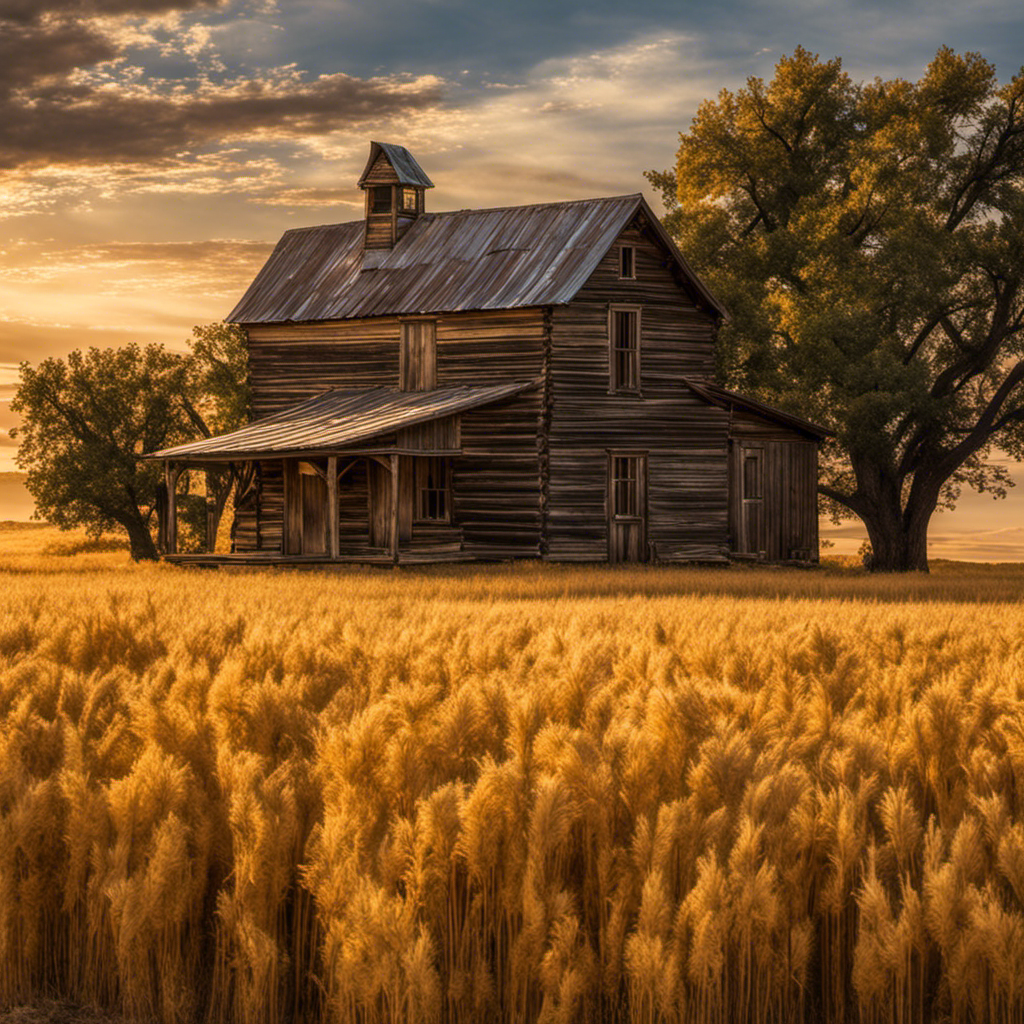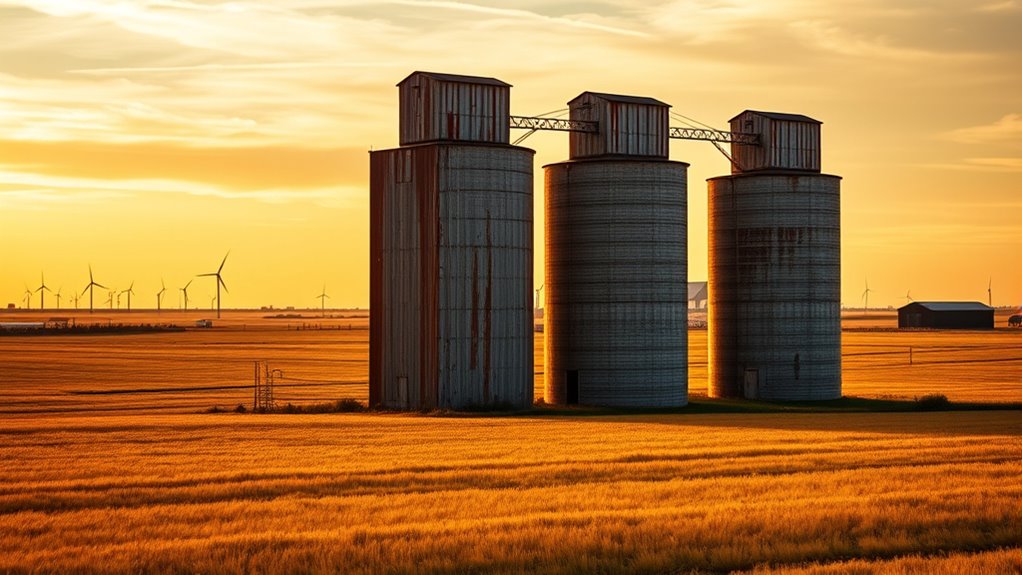

Grain elevators are iconic features of prairie horizons that symbolize the region’s rich agricultural history and economic strength. As towering structures with their silos and sturdy frameworks, they played a crucial role in connecting farms to markets via railroads, transforming the grain industry. Their distinctive architecture and regional style evoke a nostalgic sense of prairie life. To discover more about their cultural significance and evolution, keep exploring these emblematic symbols of resilience.
Key Takeaways
- Grain elevators are iconic symbols of prairie landscapes, representing agricultural progress and regional history.
- Their towering structures serve as visual landmarks and remnants of transportation development along rail lines.
- Architecturally, they feature tall silos with practical, durable designs reflecting evolving construction techniques.
- Preserved historic elevators symbolize resilience and cultural identity of prairie communities.
- They continue to evoke nostalgia, connecting past farming traditions with present regional landscapes.
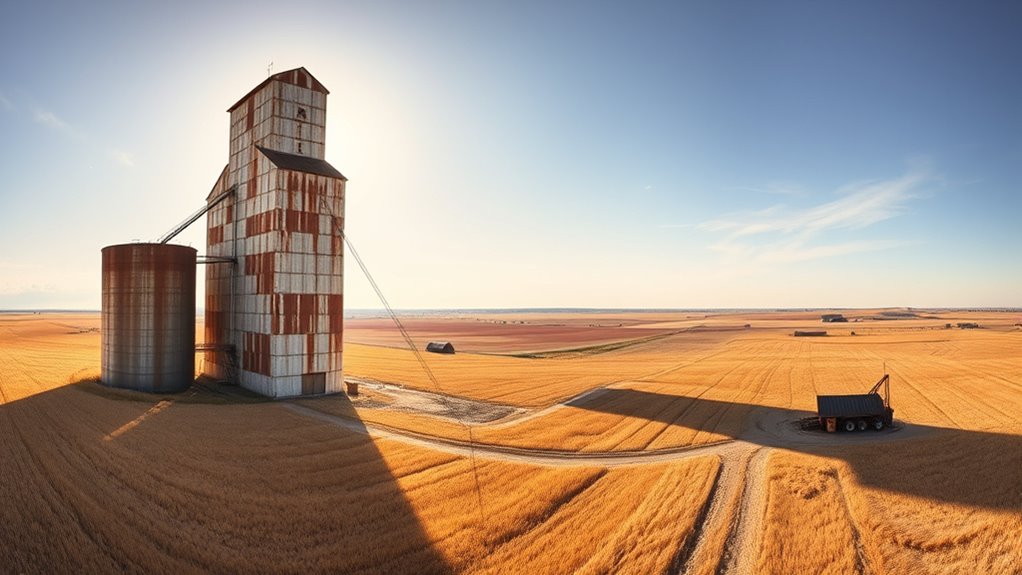
Have you ever wondered how grains from farms reach markets across the country? It’s a fascinating journey that begins at towering structures known as grain elevators. These massive facilities are more than just functional buildings; they are symbols of agricultural progress and economic development. Their historical significance is profound, representing the evolution of farming communities and the growth of transportation networks. During the late 19th and early 20th centuries, as railroads expanded across the plains, grain elevators became essential hubs where farmers could quickly and efficiently load their harvests onto trains. This technological advancement transformed the grain industry, making it possible to move vast quantities of crops across long distances, fueling both local economies and national markets.
As you look at a grain elevator, you might be struck by its architectural design. Many of these structures are characterized by their tall, slender silos and robust frameworks, designed not only for practicality but also to withstand the harsh prairie elements. Their design often reflects the ingenuity of early engineers who balanced functionality with durability. Some elevators feature distinctive features like cupolas or decorative elements that pay homage to the region’s history or the company that built them. Despite their utilitarian purpose, they often have a striking visual presence that dominates the horizon, serving as landmarks that mark the agricultural landscape. The architectural design of grain elevators has evolved over time, from simple wooden structures to steel and concrete giants, mirroring advances in construction techniques and materials. Yet, even as modern facilities become more streamlined and automated, the classic elevator remains a nostalgic icon of prairie life. Additionally, many of these structures are protected as historic landmarks, preserving their cultural significance for future generations.
These structures are not just about function; they embody a cultural identity. They stand as monuments to the hardworking farmers and laborers who relied on them, and to the communities that grew around these hubs of activity. The architectural design often reflects regional styles and practical needs, with features tailored to specific climatic conditions. Many elevators feature large doors and storage silos that optimize space and efficiency, allowing for quick loading and unloading. Their towering presence also serves as a visual reminder of the crucial role agriculture plays in the nation’s economy. Whether you see them as historic relics or modern marvels, grain elevators continue to symbolize the enduring strength and resilience of prairie life, connecting the past with the present and keeping the spirit of the plains alive along the horizon.

Walthers Cornerstone Grain Conveyor 933-3124 HO Scale Model Railroad – Structure Kit
Molded in Realistic Color
As an affiliate, we earn on qualifying purchases.
As an affiliate, we earn on qualifying purchases.
Frequently Asked Questions
How Have Grain Elevators Impacted Local Economies Historically?
You’ve seen how grain elevators have historically boosted local economies by facilitating the grain trade, making it easier for farmers to store and sell their crops. They’ve driven rural development, providing jobs and attracting businesses to small towns. These iconic structures act as economic hubs, supporting community growth and ensuring farmers can efficiently participate in national and international markets, ultimately strengthening the local economy.
Are Any Grain Elevators Designated as Historical Landmarks?
You might think most grain elevators have been demolished, but many still hold heritage recognition as historical landmarks. Preservation efforts have saved several iconic structures, celebrating their role in agricultural history. These elevators stand as symbols of prairie strength and resilience, and local communities actively work to maintain them. By recognizing their significance, you can appreciate how these landmarks preserve cultural heritage and continue to inspire future generations.
What Materials Are Commonly Used in Constructing Traditional Grain Elevators?
Traditional grain elevators are mainly built with steel and wood, offering durability and ease of construction. You’ll also find concrete used in their foundations for stability. Their architectural styles often feature tall, rectangular shapes with vertical lines to maximize storage capacity. These construction materials and styles reflect their functional purpose and iconic look, making grain elevators recognizable symbols of prairie landscapes and agricultural history.
How Do Modern Grain Storage Methods Compare to Historic Elevators?
Modern grain storage methods are like sleek guardians compared to historic elevators. You’ll find innovations like climate-controlled silos and automated systems that keep grain fresh longer. These advancements reduce elevator maintenance challenges and improve efficiency. Unlike traditional structures, today’s methods emphasize precision and technology, transforming grain storage from rustic towers into high-tech strongholds, safeguarding harvests with smarter solutions that serve your needs better and last longer.
What Are the Environmental Challenges Facing Grain Elevator Preservation?
You face environmental challenges like climate change and habitat loss that threaten grain elevator preservation. Rising temperatures and unpredictable weather can weaken structures and accelerate deterioration. Habitat loss around sites reduces biodiversity and ecosystem stability, making preservation harder. To protect these iconic horizons, you must implement sustainable practices, adapt to changing conditions, and advocate for policies that address climate impacts and conserve surrounding habitats. Your efforts are crucial for maintaining their historical significance.

Patent Prints – Otis Elevator Patent Art – Elevator Wall Art Poster (8.5 x 11") – 277
The PREMIERE store on Amazon where you receive two prints for the same price that others charge for…
As an affiliate, we earn on qualifying purchases.
As an affiliate, we earn on qualifying purchases.
Conclusion
As you stand before these towering grain elevators, you realize they’re more than just structures—they’re the sentinels of the prairie, watching over generations of farmers and harvests. Like the timeless spires of a cathedral, they reach toward the sky, embodying resilience and hope. Their silent presence reminds you that, just as the horizon stretches endlessly, so does the enduring spirit of the prairie and its people, forever standing tall against the winds of change.

SHENIFY 24x36in Large Vintage Landscape Framed Canvas Wall Art Prairie in Full Bloom Classic Painting Modern Farmhouse Bathroom Office Decor – Natural Framed
Timeless Elegance – Transport yourself to a bygone era with our captivating framed canvas vintage grassland paintings.From nostalgic…
As an affiliate, we earn on qualifying purchases.
As an affiliate, we earn on qualifying purchases.

Zeckos Vintage White Finish Farmhouse Style Galvanized Decorative Tin Silo Canister Set of 3 Western Décor – Rustic Grain Bin Charm for Your Western Home Decor
Generous Dimensions – The large canister stands at 10.75 inches high and 8.25 inches in diameter, the medium…
As an affiliate, we earn on qualifying purchases.
As an affiliate, we earn on qualifying purchases.