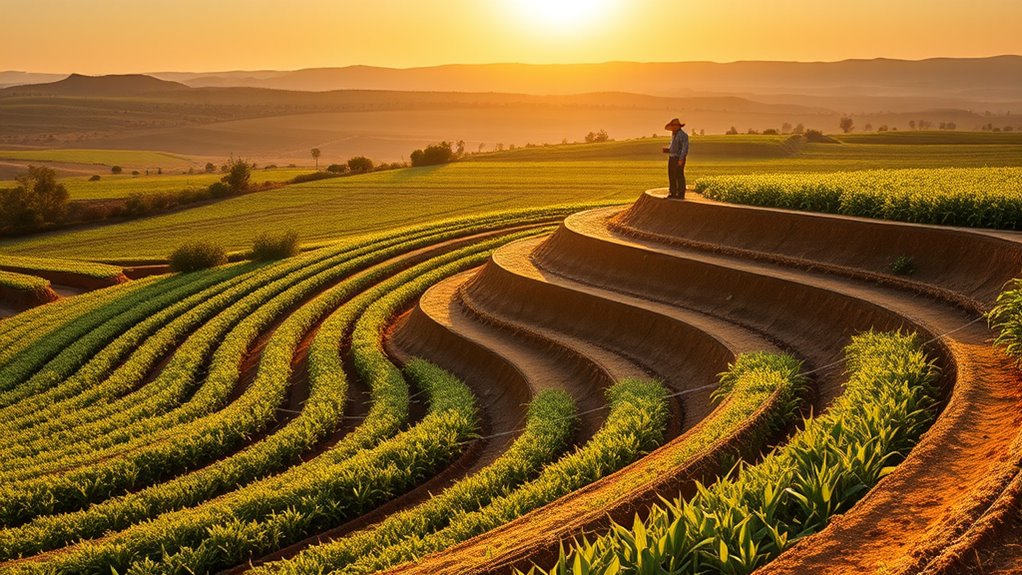

To succeed in dryland farming, implement drip or sprinkler irrigation to conserve water and reduce runoff. Use soil conservation techniques like contour farming, terraces, and strip cropping to prevent erosion and boost moisture retention. Mulching with crop residues or cover crops shields soil from erosion and helps retain moisture. Combining targeted irrigation with soil management makes your land more resilient to drought. Keep exploring these methods to develop a sustainable, productive dryland farming system tailored to your land.
Key Takeaways
- Implement drip or sprinkler irrigation systems to efficiently deliver water directly to plant roots, reducing wastage.
- Use contour farming and terracing on slopes to prevent surface runoff and enhance water infiltration.
- Apply mulch and cover crops to protect soil from erosion and improve moisture retention.
- Combine targeted irrigation with soil conservation practices to maximize water efficiency and soil health.
- Regularly monitor and adapt land management techniques to suit changing weather patterns and maintain sustainability.
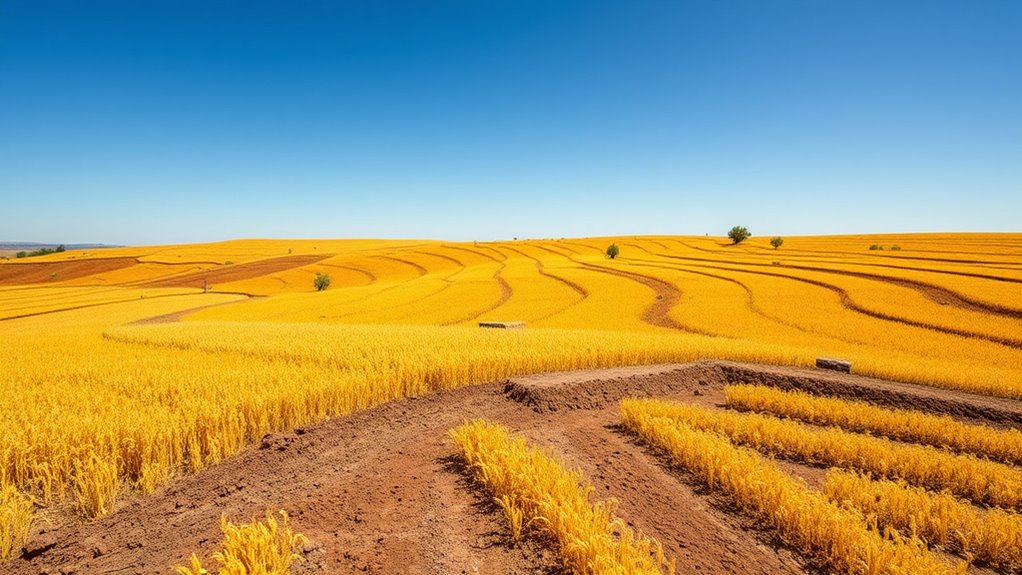
Dryland farming techniques are essential for cultivating crops in areas with limited or unpredictable rainfall. When water is scarce, you need smarter strategies to make every drop count. One of the most effective ways to do this is by choosing the right irrigation methods. Instead of relying on traditional flood irrigation, which can lead to water wastage, you might opt for drip or sprinkler systems. Drip irrigation delivers water directly to the plant roots, minimizing evaporation and runoff, which is critical when water resources are tight. Sprinkler systems, on the other hand, can be adjusted to provide just the right amount of moisture, helping you conserve water while ensuring your crops receive adequate hydration. These methods not only improve water efficiency but also reduce the risk of soil erosion caused by excessive surface runoff, making them indispensable components of successful dryland farming.
In addition to selecting effective irrigation methods, soil conservation plays a pivotal role in maintaining the health of your land. Without proper soil management, the risk of erosion, nutrient depletion, and compaction increases, which can severely hinder crop growth. To combat this, you should implement techniques such as contour farming, terracing, or strip cropping. Contour farming involves planting along the natural contours of the land, reducing water runoff and soil erosion. Terracing creates stepped levels on slopes, slowing water flow and allowing it to infiltrate the soil. Strip cropping alternates strips of different crops, which helps protect the soil from wind and water erosion while also breaking pest cycles. These practices help to build a resilient soil structure that retains moisture and nutrients, essential for dryland farming success.
You also need to pay attention to soil cover, such as crop residues or cover crops, which act as a shield against erosion and moisture loss. Using organic mulches or cover crops can improve soil organic matter, enhance water retention, and prevent surface runoff. Incorporating cover cropping techniques can further enhance soil stability and nutrient cycling. When you combine soil conservation techniques with targeted irrigation methods, your farm becomes more resilient to drought conditions and unpredictable weather patterns. These strategies work together to maximize water use efficiency, protect your soil from degradation, and promote sustainable crop production. Remember, the key is to adapt these techniques to your specific land conditions, continuously monitor your soil health, and adjust your practices accordingly. With careful planning and implementation, you can make dryland farming both productive and sustainable, even in the face of limited rainfall.
Frequently Asked Questions
What Crops Are Best Suited for Dryland Farming?
You should consider crops like millet, sorghum, and chickpeas for dryland farming. These crops thrive with proper crop rotation, which helps maintain soil fertility and reduce pest issues. Incorporate pest management strategies early on to safeguard your crops from pests and diseases. By choosing drought-tolerant varieties and practicing sustainable techniques, you can maximize yields even in dry conditions and ensure long-term farm productivity.
How Do I Prepare Soil for Dryland Cultivation?
Imagine your soil as a thirsty sponge waiting to soak up the rain. To prepare it for dryland cultivation, start with soil testing to understand its nutrient and moisture levels. Then, enrich your soil with organic amendments like compost or manure, which improve retention and fertility. Break up compacted layers, remove weeds, and gently loosen the soil surface to make certain roots can penetrate easily, setting the stage for a healthy crop.
What Are the Common Challenges in Dryland Farming?
You face challenges like soil erosion and pest management in dryland farming. To combat soil erosion, you should implement cover cropping and contour farming techniques. Managing pests requires careful monitoring and integrated pest control methods to prevent crop damage. Drought stress also poses a threat, so adopting drought-resistant crops and efficient water use strategies can help you maintain productivity. Addressing these issues ensures healthier crops and better yields in dryland conditions.
How Can Water Conservation Be Improved in Dryland Farms?
Water conservation in dryland farms is like saving a treasure chest; every drop counts. You can improve it by implementing rainwater harvesting systems to capture every rainfall and reduce runoff. Practicing soil moisture management, such as mulching and minimal tillage, helps retain water in the soil. These strategies help you make the most of limited water resources, ensuring healthier crops and more sustainable farming in challenging conditions.
Are There Any Modern Technologies That Enhance Dryland Farming?
Yes, modern technologies like sensor technology and drone monitoring substantially enhance dryland farming. You can use soil moisture sensors to precisely monitor water levels, ensuring efficient water use. Drones help you assess crop health and identify issues early, allowing targeted interventions. These tools enable you to optimize resources, improve yields, and adapt to changing conditions, making dryland farming more sustainable and productive with minimal water usage.
Conclusion
By applying these dryland farming techniques, you can markedly boost your crop yields even in arid conditions. Did you know that farmers using water-conserving methods have increased productivity by up to 30%? Embracing techniques like contour farming and cover cropping not only conserves water but also improves soil health. With dedication and smart practices, you can turn challenging drylands into productive farmland, securing a better future for yourself and your community.