
TL;DR
Home organization experts recommend using empty egg cartons as dividers for rolling storage carts. This method costs little to nothing and offers more flexibility than rigid plastic bins. It is particularly effective for organizing small craft, office, and jewelry supplies.
Home organization experts are recommending a low-cost alternative to plastic bins for rolling storage carts: empty egg cartons. This method utilizes the natural compartments of the cartons to sort small items like craft supplies, office essentials, and jewelry. By repurposing materials already available in many households, this approach eliminates the need for expensive dividers while offering a customizable fit for various shelf sizes.

Get furniture and decor delivered free with Prime
- Fast, free delivery on millions of items
- Prime Video, Amazon Music and more included
- Member-only deals all year
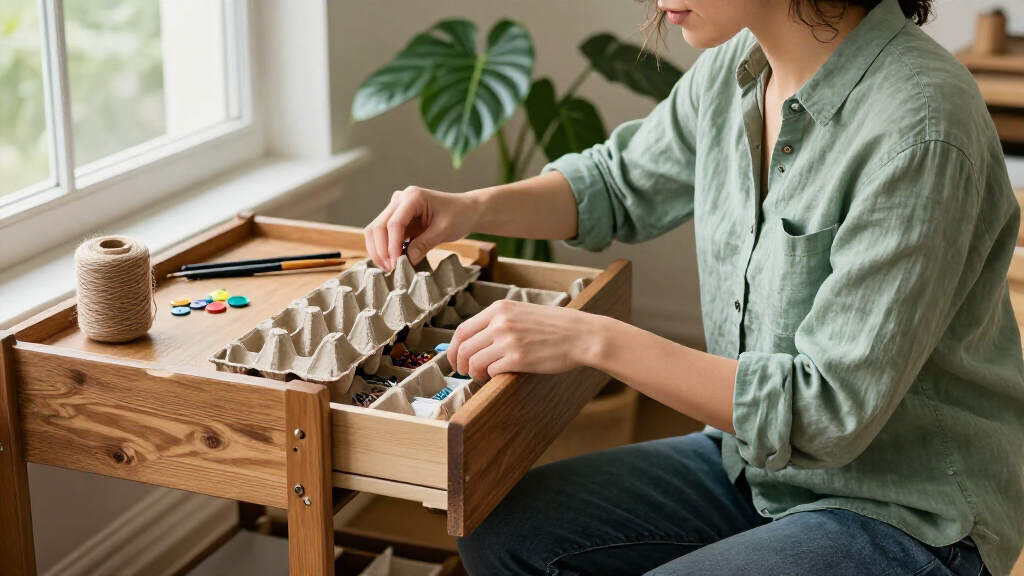
The primary advantage of using egg cartons is their inherent structure. The molded cups serve as natural compartments for tiny items that often get lost in deep cart shelves. According to Hunker, the lid of the carton can also be utilized as a tray-style storage compartment, while the dividers between the cups are suitable for holding small elastic items like rubber bands or bracelets. This dual functionality maximizes the utility of a single item.
For implementation, users can simply place an open carton on a shelf. However, the flexibility of the material allows for custom sizing. Unlike rigid plastic bins, egg cartons can be cut down to fit specific shelf dimensions or to create smaller organizers. To prevent sliding, experts suggest applying glue dots or non-slip shelf liner to the bottom of the carton. This ensures the organizer stays in place even when the cart is moved.
While molded pulp cartons are the most common and eco-friendly option, they are not the only choice. Some users prefer clear plastic versions for visibility, though these are less protective. For those seeking durability, ceramic egg holders offer a long-lasting alternative, though they come at a higher cost. The standard cardboard-style carton remains the most cost-effective solution, especially when sourced from household waste or friends.
Cost Savings and Flexibility Over Bins
This method matters primarily because it addresses a common cost barrier in home organization. Plastic bins designed for specific cart shelves can be expensive, particularly when multiple sizes are needed. By using egg cartons, the cost is effectively zero for households that already purchase eggs. This democratizes organization, making it accessible without a significant financial investment. Furthermore, the ability to cut and customize the cartons allows for a perfect fit in irregular spaces, a feature rigid bins lack.
The environmental angle is also significant. Molded pulp cartons are biodegradable and often made from recycled paper. Reusing them extends their lifecycle and reduces waste. In contrast, plastic bins contribute to long-term waste streams. For consumers prioritizing sustainability, this DIY approach offers a practical way to reduce their environmental footprint while maintaining an organized home.
Products Worth Considering

Bose TV Speaker Compact Soundbar with Bluetooth and HDMI-ARC, Black

Levoit Vital 100S-P Air Purifier with Washable Pre-Filter

Shark Matrix Plus 2-in-1 Robot Vacuum and Mop with 60-Day Self-Emptying Base
As an affiliate, we earn on qualifying purchases.
Limitations of Standard Cart Shelves
Rolling storage carts, such as the popular IKEA Raskog, are widely used for their mobility and open design. However, their deep shelves present a challenge for organizing small items. Without dividers, small objects like beads, paper clips, or paint tubes tend to scatter and mix. Standard storage bins often fail to address this because they are either too large for the shelf or too rigid to fit snugly. This gap in the market for flexible, small-item solutions has led to the resurgence of using household items like egg cartons as functional organizers.
“One of the best parts of this DIY organization idea versus buying bins is the cost: If you’re already buying eggs, you don’t have to spend any extra money.”
— Hunker
Durability and Hygiene Concerns
While cost-effective, molded pulp cartons are susceptible to damage from moisture and wear. It is not yet clear how long these organizers last in high-traffic areas or humid environments. Additionally, using cartons that previously held raw eggs raises hygiene questions. While cleaning is possible, it is uncertain whether standard washing methods fully sanitize the porous material. Users may need to consider whether to use new cartons or thoroughly sanitize used ones to avoid contamination.
Customization and Material Upgrades
For those looking to enhance the aesthetic or durability of their egg carton organizers, customization options are available. Painting the cartons allows for color-coding systems, which can improve item retrieval speed. Decoupage with decorative napkins can add visual appeal while protecting the surface with glue. Alternatively, users can opt for ceramic or plastic versions if longevity is a priority. These upgrades transform a simple waste item into a personalized and durable storage solution.
Key Questions
Do I need to buy new egg cartons for this?
No. You can use empty cartons from eggs you have already purchased. If you do not use many eggs, you can ask friends or family to save theirs. New cartons are available online if you prefer a specific size or material.
How do I stop the cartons from sliding on the cart?
Apply glue dots or a piece of non-slip shelf liner to the bottom of the carton. This creates friction against the shelf surface, keeping the organizer in place when the cart is moved.
Can I clean egg cartons before using them?
Molded pulp cartons are difficult to fully sanitize due to their porous nature. It is recommended to use new cartons for items like jewelry or food-related crafts. For office supplies, lightly wiping down used cartons may suffice, but caution is advised.
Are plastic egg cartons better than cardboard?
Plastic cartons are more durable and easier to clean, but they are less eco-friendly and often more expensive. Cardboard (molded pulp) cartons are biodegradable and typically more protective for fragile items, making them the preferred choice for most DIY organizers.
Source: rss