
TL;DR

Get furniture and decor delivered free with Prime
- Fast, free delivery on millions of items
- Prime Video, Amazon Music and more included
- Member-only deals all year
Hunker has outlined a DIY front-door wreath made by cleaning, painting and layering pistachio shells into flower shapes, then gluing them to a wreath base. The project reuses shells and allows for seasonal color changes, but it takes time and the report does not provide tested durability or cost figures.
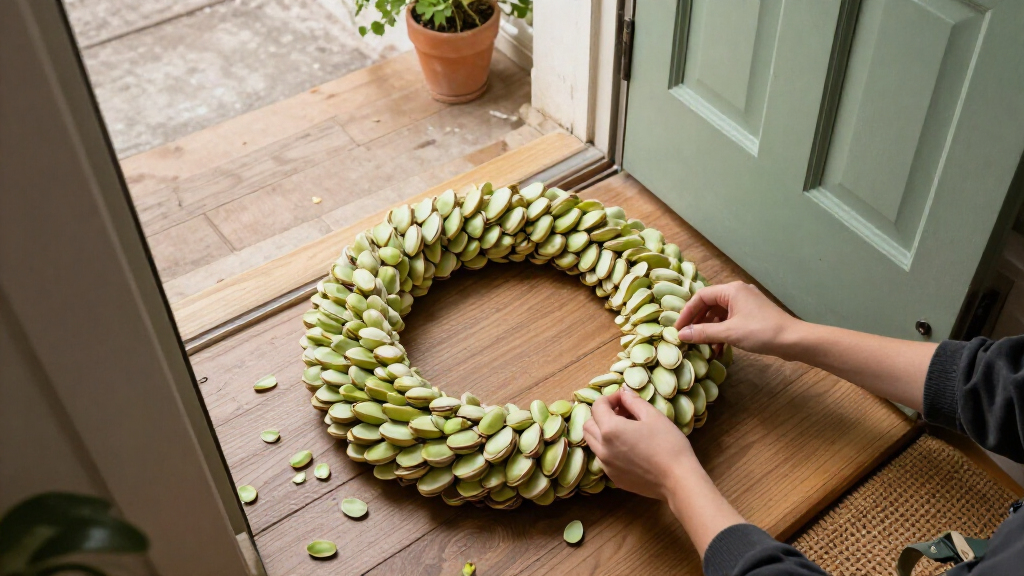
Hunker has shared instructions for making a front-door wreath from pistachio shells, turning cleaned, painted shells into layered flower shapes and attaching them to a wreath form. The project offers a way to reuse a household discard for seasonal decor, though it calls for detailed handwork and the report gives no tested cost or lifespan figures.
The suggested materials include pistachio shells, cardboard or a pool noodle for the base, adhesive, a craft knife, twine or ribbon, and spray paint. Hunker says an existing wreath form can also be reused. For a standard 36-inch-wide door, the report suggests a wreath base about 24 inches in diameter, while noting that cardboard can be cut into a ring or a pool noodle can be joined with duct tape and covered.
Before assembly, the shells are rinsed in hot water to remove residue, then spread on a baking sheet to dry. They can be painted one color or sorted and painted in several shades; the instructions advise coating both sides. To form each bloom, glue three or four shells upright at the center of a small cardboard circle, then add overlapping layers outward, placing adhesive along the lower edge of each shell.
After making enough flowers for the chosen design, attach them to the wreath base and allow the adhesive to set. Hunker suggests finishing with a ribbon or twine hanger, positioned so the wreath sits about 14 inches below the top of the door. The colors and hanging material can be changed for different seasons or occasions.
A Low-Cost Route to Custom Door Decor
The idea combines reuse and personalization: shells that might otherwise be discarded become the visible material in a decorative piece, and paint colors can be selected to suit a home or season. It may appeal to people who want an alternative to fresh-flower wreaths or mass-produced designs, without buying a complete arrangement.
That appeal comes with a trade-off. The shells must be cleaned and dried, painted on both sides, and glued one by one into flowers. Hunker itself describes the process as requiring time for small details. Readers should treat the project as a hands-on craft rather than a quick substitute for a ready-made wreath; the source offers no measured price comparison or independent durability test.
Products Worth Considering

Hisense 43-Inch E6 Cinema Series Hi-QLED 4K UHD Smart Fire TV (43E6QF)

Hisense 40-Inch Class QD4SR Series Hi-QLED FHD Smart Roku TV (2026 Model)

TCL 43-Inch 4K UHD Smart LED Roku TV (43S435, 2021 Model)
As an affiliate, we earn on qualifying purchases.
From Discarded Shells to Blooms
The source frames the project as an alternative to wreaths made with fresh flowers, which it says can wilt outdoors, and to inexpensive designs that may not match a homeowner’s preferences. Those are the article’s rationale for the craft, rather than results from a product comparison. Its central technique is to overlap individual shells so they read visually as petals, then arrange the finished flowers on a ring.
The base can be made from reused shipping or shoe-box cardboard, shaped into a hollow circle, or from a pool noodle covered with twine or ribbon. The report also suggests repurposing an old wreath. These options make the construction adaptable, but the material and adhesive choices may affect how well a finished piece holds up in a particular location.
““you’ll have to sweat the small details for this DIY.””
— Hunker
Durability and Costs Are Not Tested
The report does not give a materials budget, estimated work time, or results from testing the wreath outdoors. Its description of the shell flowers holding up season after season is Hunker’s claim; the source does not specify exposure conditions, adhesive type used in a test, or how long a finished wreath lasted. Sun, rain, temperature changes and the chosen base or glue could affect performance.
It is also unclear how many shells or flowers a typical design requires, since that depends on wreath size and how densely the maker covers it. The instructions list several adhesives but do not compare their suitability. Makers may need to check product labels and allow adequate drying and curing time before hanging the wreath.
Choose a Base and Test the Finish
Readers following the instructions can start by choosing a wreath base and gathering enough clean shells, then decide on a color palette before assembling the flowers. Because the source does not supply a shell count or cost estimate, the amount of material and time will depend on the intended size and coverage. Testing paint and adhesive on a few shells first may help a maker judge the finish before completing the design.
Once the glue has set, the finished wreath can be hung with ribbon or twine and checked periodically for loose shells, especially if it is placed outdoors. Hunker’s report does not announce a product release or a scheduled follow-up; the next step is the reader’s own craft project, with performance depending on materials and conditions.
Key Questions
What supplies are needed for the pistachio-shell wreath?
The listed supplies are cleaned pistachio shells, a cardboard or pool-noodle base, an adhesive, a craft knife, twine or ribbon, and spray paint. An old wreath form can be reused instead of making a new base.
How are the shells shaped into flowers?
Glue three or four shells upright near the center of a small cardboard circle, then add overlapping shells around them. Continue outward until the bloom reaches the preferred size, using adhesive along the lower edge of each shell.
Can the wreath be customized for different seasons?
Yes. Hunker suggests painting shells in different colors and changing the wreath’s ribbon or twine. Those changes can give the arrangement a seasonal or occasion-specific look.
Will a pistachio-shell wreath last outdoors?
Hunker says the blooms can hold up season after season, but its report does not provide outdoor testing or a specific lifespan. Results may vary with weather exposure, the base and the adhesive used.
Source: hunker.com