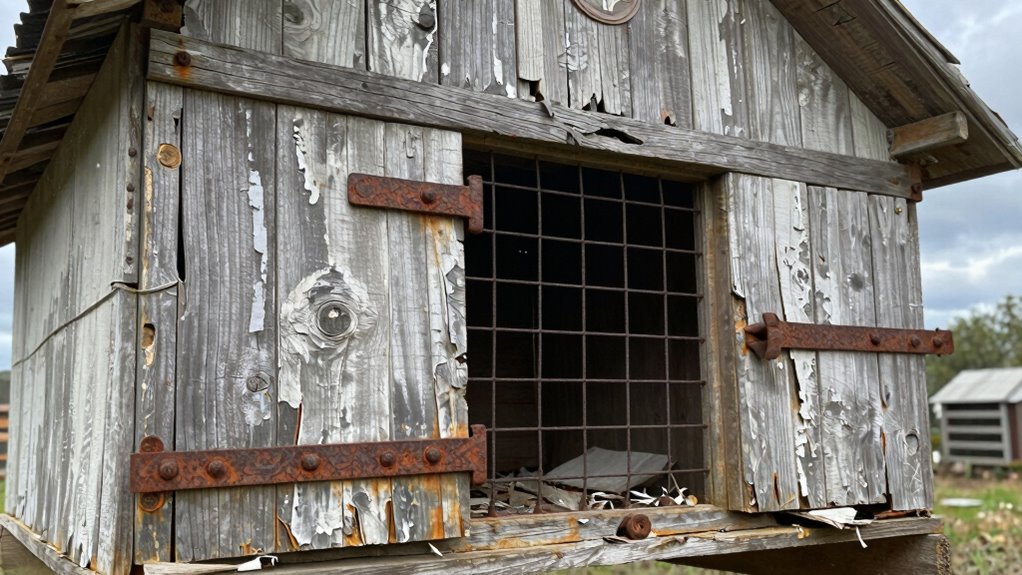

Avoid neglecting predator-proofing and ventilation, as these mistakes can greatly shorten your coop’s lifespan. Using weak or inappropriate materials, like chicken wire instead of hardware cloth, creates easy access points for predators. Poorly designed vents can cause moisture buildup and health issues for your hens. Gaps, openings, and weak spots make your flock vulnerable and lead to costly repairs. Keep these issues in mind to build a durable, safe home for your chickens — discover how to do it right ahead.
Listen free for 30 days with Audible
Thousands of audiobooks and originals — cancel anytime.
As an affiliate, we earn on qualifying purchases.
Key Takeaways
- Using inadequate or easily damaged materials, making the coop vulnerable to predators and weather damage.
- Failing to reinforce entry points, gaps, and weak spots, allowing predators to access the flock.
- Ignoring proper ventilation, leading to moisture buildup, respiratory issues, and reduced coop lifespan.
- Neglecting regular inspections to identify and repair damage early, accelerating wear and tear.
- Overlooking the importance of secure fencing and predator-proofing, risking flock loss and structural deterioration.

Setting up your chicken coop improperly can considerably reduce its lifespan, leading to costly repairs and unhappy hens. One of the biggest mistakes you might make is neglecting predator protection. Predators like raccoons, foxes, and even neighborhood dogs can quickly ruin your flock if your coop isn’t secure. Failing to install sturdy, reinforced fencing or doors can leave gaps for these animals to exploit. Remember, predators are often clever and persistent, so you need to think beyond just a basic fence. Use hardware cloth instead of chicken wire, as it’s stronger and harder for predators to chew through or push aside. Make sure all entry points are lockable and sealed tightly, including vents and access doors, because even small openings can be enough for a determined predator. Regularly inspect your coop for signs of attempted break-ins and reinforce weak spots immediately. Protecting your hens isn’t just about keeping predators out; it’s also about designing a coop that deters them altogether. Additionally, choosing appropriate materials that resist damage and entry can greatly enhance your coop’s longevity.
Another critical aspect often overlooked is ventilation design. Poor ventilation can cause more than just discomfort; it can seriously harm your hens’ health. A poorly ventilated coop traps moisture, ammonia, and heat, creating an environment prone to respiratory diseases and infections. When setting up your coop, make sure to incorporate adequate ventilation that promotes airflow without creating drafts directly on the birds. Strategic placement of vents, windows, or screened openings can help achieve this balance. Don’t block natural airflow with thick insulation or heavy materials—aim for a design that encourages fresh air to circulate while protecting your hens from harsh weather. Proper ventilation also helps control humidity levels, which reduces the risk of mold and bacteria buildup. If you live in a colder climate, plan for adjustable vents or windows that can be closed during winter nights. By paying attention to ventilation design, you create a healthier, more comfortable environment that contributes to the longevity of your coop and the well-being of your chickens.
In the end, neglecting predator protection and ventilation design are two mistakes with lasting consequences. Securing your coop against predators and ensuring proper airflow might seem like small details, but their impact on your coop’s durability and your hens’ health is significant. Address these issues from the start, and you’ll save yourself time, money, and stress down the line. A well-protected, well-ventilated coop not only lasts longer but also keeps your hens happier and healthier, making your efforts as a chicken keeper truly worthwhile.
As an affiliate, we earn on qualifying purchases.
Frequently Asked Questions
How Often Should I Clean My Chicken Coop?
You should clean your chicken coop at least once a week to keep it healthy. Regular cleaning helps manage waste and reduces disease risk, supporting your feeding routines and egg collection schedule. Make sure you remove old bedding, debris, and manure, then replace it with fresh bedding. Consistent cleaning keeps the environment clean, odor-free, and comfortable for your chickens, ultimately prolonging the coop’s lifespan and maintaining healthy egg production.
What Temperature Is Ideal for a Chicken Coop?
You should aim for a coop temperature around 65-75°F to keep your chickens comfortable. Proper coop insulation helps maintain this temperature, reducing stress. Consistent warmth encourages steady egg collection, as extreme cold can slow egg production. Make sure the coop stays well-ventilated but free from drafts, and monitor temperature regularly to prevent overheating or chilling, ensuring your chickens stay healthy and productive.
How Do I Prevent Predators From Entering the Coop?
Think of your coop as a fortress, and predators as sneaky invaders. To keep them out, install predator-proof fencing that’s sturdy and tall enough to deter climbers. Use secure latch systems on all doors and nesting boxes, making it impossible for predators to open them. Regularly inspect for weak spots or damage, and clear away any debris or brush nearby that could hide or attract predators.
What Type of Bedding Is Best for Chickens?
You should choose a bedding material that provides deep bedding for comfort and insulation, like straw, wood shavings, or shredded paper. Deep bedding helps keep the coop dry and odor-free, making it healthier for your chickens. Regularly add fresh bedding and turn it to prevent mold and moisture buildup. This guarantees your chickens stay comfortable, healthy, and your coop stays odorless and clean for longer.
How Can I Improve Coop Ventilation Effectively?
Did you know poor ventilation causes up to 80% of health issues in chickens? To improve coop ventilation effectively, focus on ventilation upgrades that boost natural airflow. You can add adjustable vents, roof vents, or side windows to increase fresh air circulation. Make sure these openings are placed high to allow warm, moist air to escape and fresh air to enter, creating a healthier environment for your chickens.
Conclusion
Avoid these setup mistakes, and you’ll give your chicken coop a longer, healthier life. Think of your coop as a sturdy ship sailing through the seasons—if you neglect its maintenance and overlook small issues, it’ll eventually take on water. By paying attention to proper setup, you guarantee your coop remains a safe harbor for your flock. Keep it shipshape, and your chickens will thrive in their cozy, well-built home for years to come.
Flea & tick season Picks
flea and tick prevention
As an affiliate, we earn on qualifying purchases.