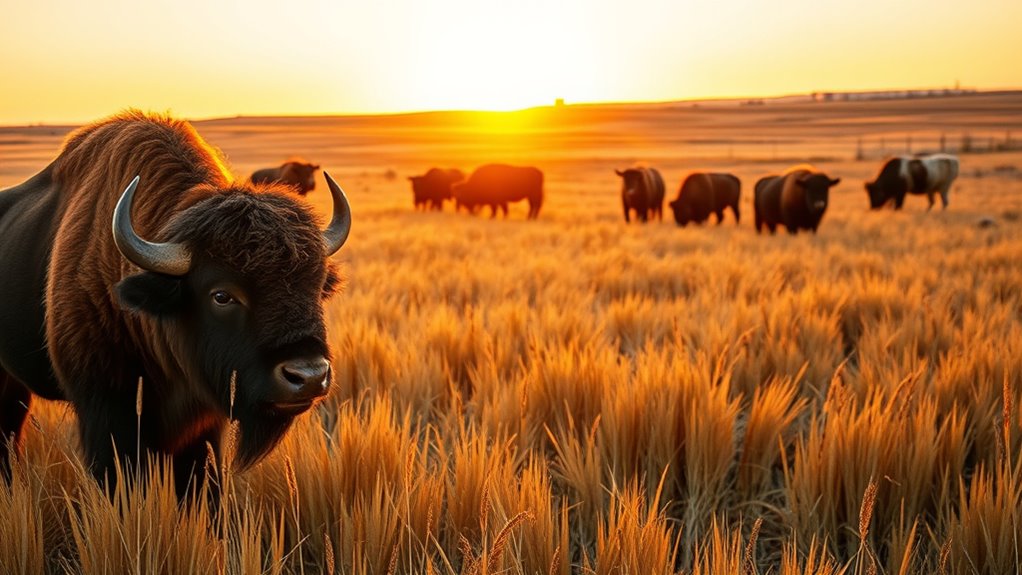

The shift from bison to beef cattle on the plains is driven by economic gains, as cattle are easier to manage and meet market demands for beef. This changeover impacts ecosystems by reducing the natural ecological roles bison played, leading to overgrowth and soil issues. Indigenous practices prioritized land health, but modern cattle farming often overlooks this balance. If you keep exploring, you’ll uncover how these changes shape the future of prairie ecosystems.
Key Takeaways
- The transition from bison to beef cattle reflects shifts in economic priorities and land management practices on the Great Plains.
- Moving away from bison impacts prairie ecosystems by reducing natural grazing and ecological benefits they provided.
- Indigenous land use emphasized sustainability, which was often disrupted by the introduction of cattle ranching.
- Economic factors favor cattle for market stability and lower management intensity, driving the shift from bison to beef.
- Balancing ecological health with economic needs requires integrating traditional practices and modern land management strategies.
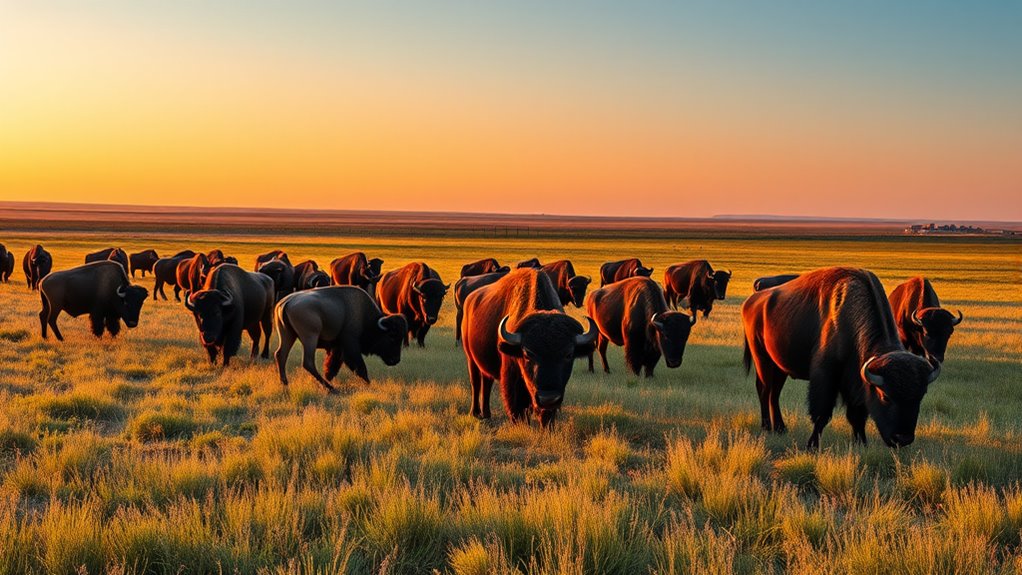
Have you ever wondered why some ranchers shift from raising bison to beef cattle? The reasons are complex, rooted in both historical shifts and economic realities. Historically, indigenous practices played a significant role in managing bison populations, emphasizing sustainable use and reverence for the land. These practices helped maintain ecological balance, ensuring that the land could support bison without overexploitation. However, as European settlers moved west and the cattle industry grew, ranchers began to favor beef cattle for their market value and easier management. This transition often meant moving away from traditional indigenous methods, which prioritized ecological impacts and the health of the grasslands.
Ranchers shift from bison to beef cattle due to economic factors and changing land management practices.
When ranchers switch from bison to beef cattle, they often do so because of economic pressures. Beef cattle are more adaptable to modern grazing techniques and require less intensive management compared to bison, which are more sensitive to environmental changes. This shift allows ranchers to maximize profits with less risk, especially when market demands for beef are high. But it also has ecological impacts. Bison, as native grazers, historically played a crucial role in shaping the prairie ecosystem. Their grazing patterns helped control invasive plant species, promote biodiversity, and maintain healthy grasslands. Moving away from bison can lead to less natural regulation of these ecosystems, which may result in overgrowth of certain plants, soil degradation, or loss of native species.
The ecological impacts of transitioning are significant. Indigenous practices often focused on balancing land use with ecological health, recognizing that the land’s vitality depended on respecting natural cycles. In contrast, the shift to beef cattle has sometimes led to overgrazing, soil erosion, and reduced habitat diversity. Ranchers who move away from traditional indigenous practices might not fully consider these ecological consequences, opting instead for short-term economic benefits. Additionally, the decline of bison populations can reduce the ecological benefits they provided to the grasslands. Yet, some modern ranchers are beginning to revisit these practices, blending traditional knowledge with contemporary methods to mitigate ecological impacts.
Ultimately, the transition from bison to beef isn’t just about changing animals—it reflects broader shifts in land management, economic priorities, and cultural values. While beef cattle offer convenience and market stability, they also pose challenges to the ecological integrity of the plains. Recognizing the importance of indigenous practices can help balance economic needs with ecological sustainability. As you consider this transition, think about how it affects the land and future generations. Balancing tradition with progress is crucial if we want to preserve the prairie’s health amid ongoing change.

Great Range, 90%/10% Ground Bison Brick, 1 lb
Ground bison
As an affiliate, we earn on qualifying purchases.
As an affiliate, we earn on qualifying purchases.
Frequently Asked Questions
How Did the Decline of Bison Impact Native American Cultures?
You feel the impact of the bison decline deeply, as it caused significant cultural loss for Native American communities. The loss of these animals disrupted traditional practices, ceremonies, and sustenance, weakening your native traditions. Without the bison, your cultural identity and way of life suffered, forcing you to adapt or abandon long-held customs. This decline not only affected your survival but also threatened the transmission of your cultural heritage to future generations.
What Environmental Changes Occurred During the Transition From Bison to Cattle?
Imagine your favorite garden suddenly overrun with weeds—that’s what happened to the grasslands. As cattle replaced bison, overgrazing led to grassland degradation and soil erosion. Cattle herds trampled delicate soils, reducing plant diversity and causing long-term environmental harm. This shift drastically changed the landscape’s health, disrupting ecosystems and diminishing natural resilience, much like a garden losing its vigor after neglect.
How Did the Cattle Industry Influence Westward Expansion?
You see, the cattle industry fueled westward expansion by boosting the ranching economy and creating demand for new settlements. Cattle drives moved large herds to railheads, opening up vast territories and encouraging settlers to claim land. This migration helped develop towns and infrastructure, transforming the West into a thriving region. Your role in this expansion was pivotal, as cattle industry growth directly shaped the settlement and economic development of the frontier.
Were There Any Health Differences Between Bison and Beef?
You’ll find that bison and beef have different nutritional profiles, impacting health benefits. Bison is leaner, with less fat and fewer calories, making it a healthier choice for heart health and weight management. Beef tends to have more saturated fat, which can affect cholesterol levels. So, choosing bison could offer you better nutritional benefits, especially if you’re aiming for a diet that supports overall wellness and reduces health risks.
What Role Did Government Policies Play in Shifting From Bison to Cattle?
You should know that government policies, especially subsidies and land regulations, heavily influenced the shift from bison to cattle. For example, between 1862-1900, the U.S. government granted millions of acres of land to cattle ranchers. These policies encouraged cattle farming by making land more accessible and profitable, which led to the decline of bison populations. Your understanding of these policies highlights their critical role in transforming the Plains’ landscape and economy.

Grass-Fed Cattle: How to Produce and Market Natural Beef
Used Book in Good Condition
As an affiliate, we earn on qualifying purchases.
As an affiliate, we earn on qualifying purchases.
Conclusion
As you reflect on the change from bison to beef, remember that today’s cattle industry produces over 25 billion pounds of beef annually, compared to the once-abundant bison populations. This shift transformed the plains but also led to the near-extinction of the bison. While beef now dominates, understanding this history helps you appreciate the environmental and cultural impacts. Recognizing these changes reminds you of the delicate balance between progress and preservation on the great plains.

Tending the Wild: Native American Knowledge and the Management of California's Natural Resources
As an affiliate, we earn on qualifying purchases.
As an affiliate, we earn on qualifying purchases.

A Practical Guide to Prairie Reconstruction: Second Edition (Bur Oak Book)
As an affiliate, we earn on qualifying purchases.
As an affiliate, we earn on qualifying purchases.