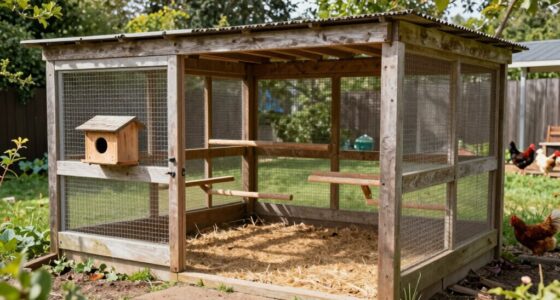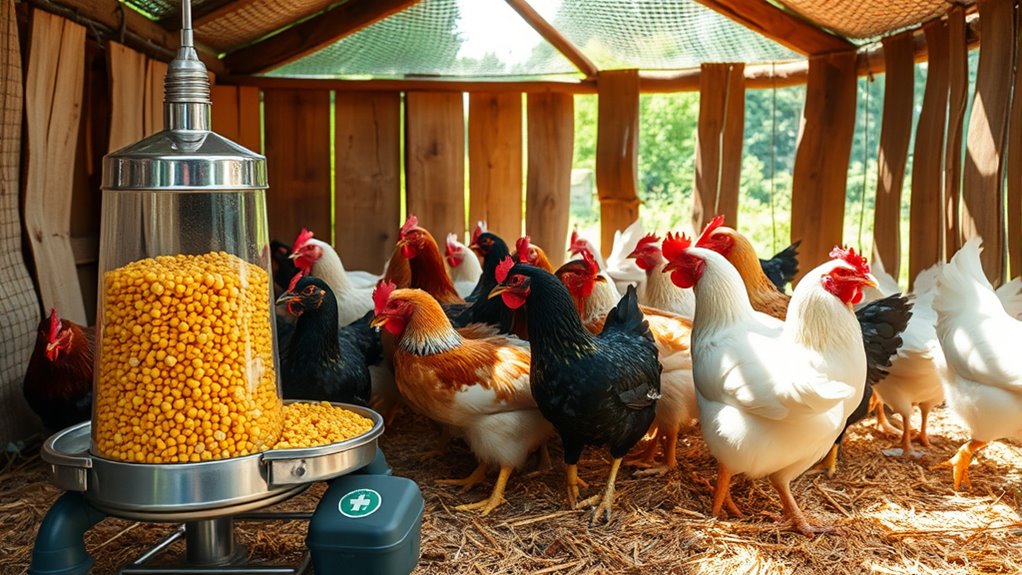

To care for your chickens, start with a clean, secure coop that provides shade and ventilation. Feed them a balanced diet of chicken feed, supplemented withgreens and grains. Monitor their health by checking regularly for signs of sickness, stress, or aggression, and manage behaviors like egg-eating and roosters’ temperaments. Consistent maintenance keeps your flock happy and productive. If you’re curious about optimizing your coop, feed, and health routines, there’s plenty more to learn to keep your chickens thriving.

Get furniture and decor delivered free — and shop member deals
- Fast, free delivery on millions of items
- Access to Prime Big Deal Days deals on October 6–7
- Prime Video, Amazon Music and more included
Key Takeaways
- Provide a clean, secure, and well-ventilated coop with private nesting boxes to promote healthy laying and prevent stress.
- Feed chickens a balanced diet with appropriate grains, vegetables, and access to clean water for optimal health and egg production.
- Collect eggs regularly to prevent cracks, contamination, and encourage consistent laying behavior.
- Monitor flock health by observing behavior, checking for signs of illness, and maintaining good hygiene and vaccination routines.
- Manage roosters carefully to prevent aggression and stress, ensuring a peaceful environment for hens and overall flock harmony.
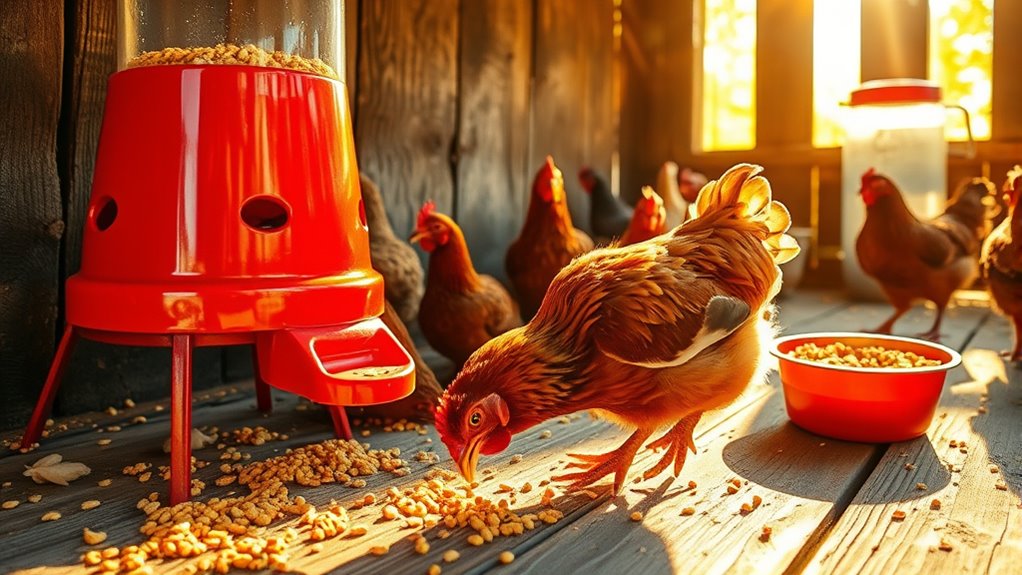
Have you ever wondered what it takes to raise healthy, happy chickens? One of the first steps is understanding how to manage daily chores like egg collection and rooster management. These activities are vital for maintaining a productive and stress-free coop. When it comes to egg collection, consistency is key. You should plan to gather eggs at least once or twice daily, ideally in the morning and early afternoon. Frequent collection prevents eggs from becoming dirty, cracked, or eaten by your hens. It also encourages your chickens to lay more regularly, since they’re less likely to associate their nesting boxes with stress. Make sure your nesting boxes are clean, private, and comfortable to promote consistent laying. Using clean bedding and keeping the boxes in a quiet, shaded area will help your hens feel secure and encourage them to lay eggs there. When collecting eggs, handle them gently to prevent cracks, and consider using baskets or containers that keep them secure. Proper egg collection not only keeps your eggs fresh but also reduces the chances of contamination or egg-eating behaviors, which can become a problem if eggs are left in the coop too long. Additionally, ensuring proper nutrition and a clean environment supports overall hen health and egg production.
Rooster management is another essential aspect of raising chickens. If you have a mixed flock, deciding whether to keep a rooster depends on your goals. Roosters can protect hens from predators and help with natural breeding, but they can also be noisy and aggressive. If you choose to keep a rooster, monitor its behavior closely. Some roosters become overly aggressive or territorial, which can stress your hens and create an unsafe environment. Managing your rooster involves ensuring he has enough space, proper nutrition, and a calm environment. If the rooster becomes aggressive, it might be necessary to separate him temporarily or find a new home for him. On the other hand, if you’re raising chickens primarily for eggs, you might opt to keep a hen-only flock, which simplifies management and reduces noise. Remember, even if you keep a rooster, proper management involves observing his behavior and making adjustments before issues escalate. Proper management practices can also prevent issues like egg-eating behaviors and improve flock harmony.
Both egg collection and rooster management are ongoing tasks that require attention and consistency. By staying on top of these chores, you help create a safe, clean, and productive environment for your chickens. This, in turn, leads to healthier hens, more eggs, and a happier flock. Proper management practices also reduce stress and prevent common problems like egg-eating, aggression, or poor laying habits. When you understand and incorporate these routines into your daily chores, you’ll find raising chickens becomes more enjoyable and less stressful. Ultimately, attentive care and responsible management lay the foundation for a thriving chicken coop where your birds can flourish.
chicken coop with ventilation and nesting boxes
As an affiliate, we earn on qualifying purchases.
As an affiliate, we earn on qualifying purchases.
Frequently Asked Questions
How Can I Prevent Chickens From Escaping the Coop?
To prevent your chickens from escaping, reinforce your fence by checking for holes and adding extra wire or mesh where needed. Improve your coop design by installing secure latches and ensuring doors close tightly. Regularly inspect the fencing and coop to catch weaknesses early. Providing enough space inside the coop also reduces stress and the urge to escape. With these steps, your chickens stay safe and contained.
What Are Common Signs of Chicken Bullying?
You’ll notice some subtle whispers of trouble in your flock, like persistent pecking behavior or chickens avoiding certain flock members. These are signs of gentle dominance struggles within the flock hierarchy. Watch for feather loss, wounded skin, or a chicken that’s consistently isolated. Address these signs early by providing enough space, enriching the environment, and ensuring no one chicken becomes the target of unwanted attention, keeping peace in your flock.
How Do I Introduce New Chickens to My Flock?
When introducing new chickens, start with a hen introduction by placing the newcomers in a separate pen nearby, allowing visual and scent contact. Gradually, let them observe each other for several days. Then, supervise supervised flock integration during supervised free-range time or in a neutral space. This process helps prevent bullying and guarantees a smoother progression, giving everyone time to adjust to the new members.
Are There Natural Remedies for Chicken Parasites?
Yes, you can use herbal remedies like garlic, neem, and wormwood for chicken parasite prevention and control. These natural remedies help reduce parasites without chemicals, promoting overall health. Regularly adding garlic to their feed or applying neem oil can keep parasites at bay. Remember, consistency is key in natural treatment, and combining herbal remedies with good hygiene practices enhances their effectiveness. Always consult a vet for proper dosage and safety.
What Should I Do if a Chicken Stops Laying Eggs?
Oh, your hen’s suddenly decided to skip her daily performance—what a surprise! First, check her health and environment; stress or illness can halt egg production. *Make certain* she’s well-fed and not overworked. Sometimes, hens take a break to recharge. If she remains eggless, consult a vet to rule out underlying issues. Remember, a happy, healthy hen lays eggs—so give her the care she deserves.
Conclusion
Now that you’ve learned the basics of building a coop, choosing the right feed, and keeping your chickens healthy, you’re like a gardener tending a thriving flower bed. With patience and care, your chickens will flourish, providing you with fresh eggs and delightful company. Remember, caring for chickens is a rewarding journey—each little step helps your flock grow strong and happy. So go ahead, embrace your new role as their dedicated caretaker and enjoy the harvest!
Halloween Picks
halloween
As an affiliate, we earn on qualifying purchases.