
TL;DR

Get furniture and decor delivered free — and shop member deals
- Fast, free delivery on millions of items
- Access to Prime Big Deal Days deals on October 6–7
- Prime Video, Amazon Music and more included
Apple is said to be creating a privacy‑focused smart home camera that never records video, instead delivering AI‑generated text descriptions of activity. The device would join an upcoming Apple smart‑home hub and could launch as early as November 2026, though many details remain unconfirmed.
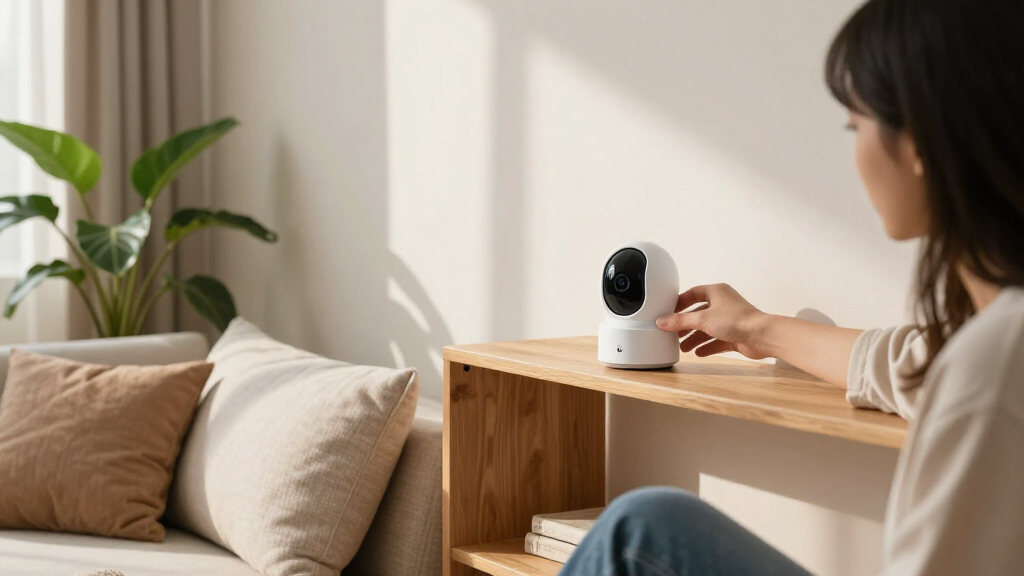
Apple is reportedly preparing to ship a smart‑home security camera that never records video, instead using on‑device artificial intelligence to generate brief text descriptions of motion and facial events, according to Mark Gurman’s comments on the Power On podcast.
The camera is described as a small cylindrical device that will be sold alongside Apple’s anticipated smart‑home hub, codenamed J490. Gurman said the unit operates at a “very low frame rate” and relies on an image sensor similar to Sony’s IMX500, which processes visual data locally without storing raw footage. The result is a privacy‑preserving sensor that can detect motion, recognize faces, and send users alerts such as “John entered the kitchen” or “Motion detected near front door,” but no video files are ever created or transmitted.
Apple’s existing HomeKit Secure Video platform already includes a “Detect Activity” mode that stops streaming while still tracking motion. The new camera would extend this concept by eliminating video entirely, using AI to interpret the scene in real time. Gurman also linked the technology to a rumored pair of AirPods with built‑in cameras, suggesting Apple is consolidating low‑resolution imaging and on‑device processing across product lines.
Privacy‑Centric Security Redefined
By removing video recording, Apple aims to address growing consumer concerns about surveillance data being hacked or misused. Because all analysis happens on the device, there is no need for cloud storage of raw images, reducing attack surface and compliance burdens for users in regulated regions. The approach could also differentiate Apple’s ecosystem from competitors that rely on continuous video streams, potentially attracting privacy‑conscious buyers who have been hesitant to adopt traditional smart‑home cameras.
For developers, the shift means new integration points via HomeKit APIs that deliver textual events rather than video clips, opening opportunities for third‑party automation services that act on specific phrases like “unknown person detected” without handling video data.
Apple privacy smart home security camera
As an affiliate, we earn on qualifying purchases.
As an affiliate, we earn on qualifying purchases.
Apple’s Expanding Smart‑Home Portfolio
Apple has been gradually building a broader smart‑home strategy since the launch of HomePod mini and the acquisition of several IoT startups. The rumored J490 hub, expected to debut next month, would serve as a central controller for lights, locks, and sensors. Adding a dedicated security camera aligns with Apple’s pattern of bundling hardware that leverages its privacy narrative, similar to the recent emphasis on on‑device processing in iPhone cameras and AirPods.
Earlier this year, leaks suggested Apple was developing AirPods equipped with tiny cameras for spatial awareness. Gurman’s comment that the home camera uses “a very similar technology” indicates a cross‑product reuse of AI‑enabled image sensors, reinforcing Apple’s strategy of unifying hardware capabilities across its ecosystem.
“”Detect Activity” mode stops video streaming while continuing to track motion.”
— Apple HomeKit documentation (2025)
Open Questions About Specs and Availability
Apple has not confirmed any official specifications, pricing, or exact launch date for the camera. It is unclear whether the device will support third‑party integrations beyond HomeKit, how accurate its facial recognition will be without video, and if users can opt into limited video capture for specific scenarios. Additionally, the extent of on‑device AI processing power required and any potential impact on battery life (if the unit is powered by an internal source) remain undisclosed.
Upcoming Milestones and Market Outlook
Analysts expect Apple to unveil the J490 hub and accompanying camera at a special event in November 2026, followed by pre‑orders shortly thereafter. After launch, developers will likely receive updated HomeKit SDKs enabling apps to parse the textual alerts. Consumer response will be monitored closely to gauge demand for video‑free security solutions, which could influence future iterations or expansion into other privacy‑first sensors.
Key Questions
Will the camera ever store video footage?
According to Gurman’s statements, the device is designed **not** to record or store any video. All image data is processed locally and discarded after generating a text description.
How does the camera detect faces without video?
The camera uses an on‑device AI chip paired with a low‑resolution image sensor (similar to Sony’s IMX500) that runs facial‑recognition algorithms in real time, producing textual alerts instead of visual records.
Can the camera work with existing HomeKit accessories?
Apple intends the camera to integrate into its HomeKit ecosystem, so users should be able to add it alongside lights, locks, and other sensors through the Apple Home app.
Will third‑party apps receive the same text alerts?
Developers are expected to access the alerts via updated HomeKit APIs, allowing automation services to react to phrases like “motion detected” or “unknown person entered.” Exact API details have not yet been released.
Is there any risk of false positives with AI‑only detection?
Apple has not disclosed accuracy rates. As the technology relies on low‑resolution imaging and on‑device processing, some misidentifications may occur, and Apple may later provide settings to adjust sensitivity.
Source: rss
Halloween Picks
halloween
As an affiliate, we earn on qualifying purchases.