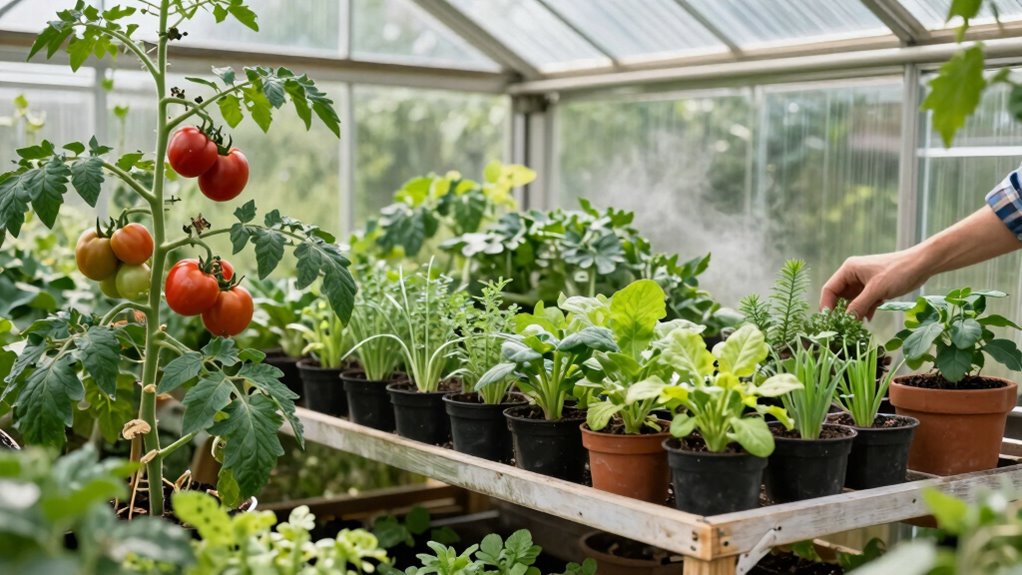

By using greenhouses, you can extend your northern garden’s season and protect plants from harsh weather. They create controlled environments for early seed starting, plant propagation, and delicate crops. Good ventilation and temperature control help prevent diseases and pests while maintaining perfect conditions. You can also adjust light levels and climate controls for ideal growth. Keep exploring, and you’ll discover even more tricks to maximize your garden’s potential year-round.

Get furniture and decor delivered free with Prime
- Fast, free delivery on millions of items
- Prime Video, Amazon Music and more included
- Member-only deals all year
Key Takeaways
- Greenhouses extend growing seasons by providing a controlled environment for early planting and late harvesting.
- Using climate control systems and supplemental heating maintains optimal temperatures year-round.
- Proper ventilation prevents mold and fungal issues, ensuring healthier plant growth.
- Physical barriers and pest management strategies reduce pest threats and decrease chemical use.
- Microclimates inside greenhouses support diverse and delicate plant varieties outside their typical season.
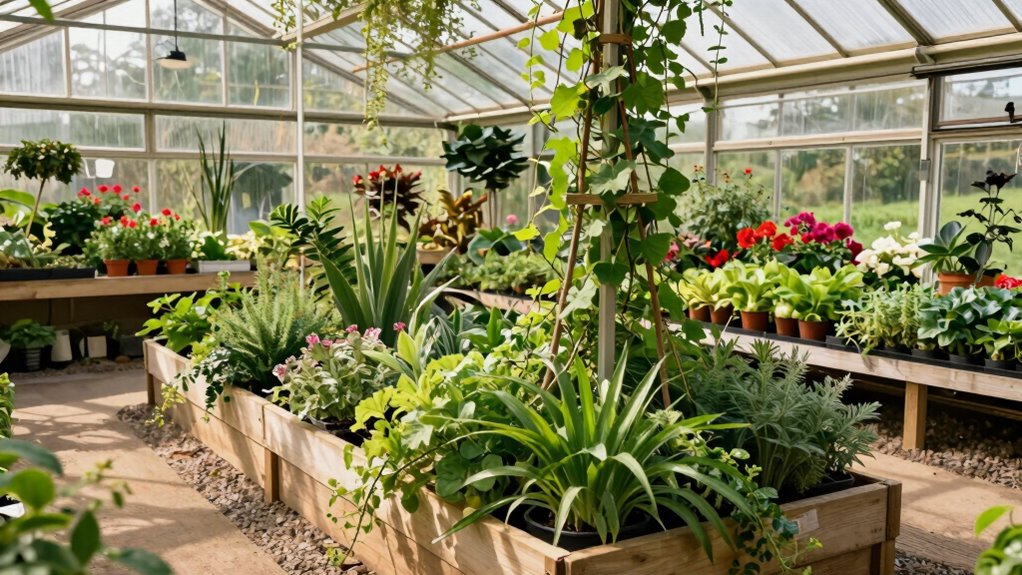
If you’re gardening in the north, a well-designed greenhouse can extend your growing season and protect your plants from harsh weather. It’s a game-changer, especially when it comes to plant propagation, giving you a controlled environment to start seedlings early and guarantee robust growth. Using the greenhouse for plant propagation means you can take cuttings or sow seeds before outdoor conditions are suitable, giving your plants a head start. You can also create microclimates within your greenhouse, optimizing temperature and humidity to encourage root development and healthier plants. Since the environment is more stable, your success rate for propagating new plants improves markedly, and you get to enjoy an earlier harvest.
A greenhouse in the north extends seasons, boosts propagation success, and creates microclimates for healthier plants.
Pest management is another key advantage of having a greenhouse in northern climates. When pests are a constant threat, especially in the growing season, a greenhouse acts as a barrier, reducing the need for chemical interventions. You can implement integrated pest management strategies more effectively inside your controlled environment. Regular monitoring becomes easier, and you can quickly identify and address pest issues before they spread. Additionally, you can use physical barriers like row covers or fine mesh screens to keep insects out, and maintain cleanliness to prevent infestations. This approach not only protects your plants but also reduces chemical use, making your garden safer and more sustainable.
The trick to maximizing these benefits lies in proper ventilation and temperature regulation. Good airflow prevents mold and fungal diseases, which thrive in damp, stagnant air, and it helps regulate pests that prefer warm, humid environments. You’ll want to incorporate fans or vents that you can open and close as needed. When it comes to plant propagation, maintaining consistent temperatures encourages root growth, so consider heating mats or supplemental heat sources during colder months. This stability allows you to propagate plants year-round, even when outdoor conditions are unfavorable. Proper ventilation is essential to keep the environment healthy and prevent issues that could hinder plant growth. Additionally, controlling light levels within your greenhouse can further enhance plant health and growth rates. Incorporating climate control systems can further optimize environmental conditions for your plants’ success.
Furthermore, a well-maintained greenhouse allows you to experiment with different plant varieties and extend your crop diversity. You can try growing more delicate or exotic plants that wouldn’t survive outside the short northern growing season. The ability to control pests also means you can experiment with organic methods, like introducing beneficial insects or applying natural repellents, without risking widespread infestations. Overall, these greenhouse tricks—focused on plant propagation and pest management—help you get more from your northern garden, making the most of every growing season.
greenhouse climate control systems
As an affiliate, we earn on qualifying purchases.
As an affiliate, we earn on qualifying purchases.
Frequently Asked Questions
How Much Does Setting up a Greenhouse Typically Cost?
Setting up a greenhouse typically costs between $1,000 and $10,000, depending on size and features. You should conduct a thorough cost analysis and consider setup considerations like materials, insulation, and ventilation. Basic models are more affordable, while advanced options with automated systems increase costs. Planning carefully helps guarantee you choose a greenhouse that fits your budget and gardening needs, making your investment worthwhile.
What Are the Best Plants for Northern Greenhouse Gardening?
You should focus on plant selection that thrives in your climate, such as hardy greens like kale and spinach, which adapt well to cooler temperatures. Tomatoes and peppers can also do well if you control the environment. For climate adaptation, choose plants that are resilient and suit your greenhouse’s specific conditions. This approach guarantees a successful garden, even during the shorter northern growing season.
How Do I Prevent Pests Inside a Greenhouse?
Think of your greenhouse as a peaceful garden village, where pests are unwelcome visitors. To prevent them, use natural pest control methods like introducing beneficial insects—biological pest management—that naturally keep pests in check. Keep your greenhouse clean, remove debris, and inspect plants regularly. These proactive steps create a healthy environment, making it difficult for pests to settle in, so your plants stay healthy and resilient.
Can I Automate Greenhouse Temperature Controls?
Yes, you can automate greenhouse temperature controls. You’ll want to install systems for automated ventilation and humidity regulation that adjust based on sensors’ readings. These systems open vents or activate fans to maintain ideal temperatures and humidity levels, creating a stable environment for your plants. Automating these controls reduces manual effort, prevents temperature swings, and helps extend your growing season, ensuring healthier plants and better yields.
What Are Common Greenhouse Maintenance Mistakes?
Like Icarus flying too close to the sun, you might overlook ventilation issues or make watering errors. These are common mistakes in greenhouse maintenance. Poor ventilation can lead to overheating and disease, while overwatering or underwatering damages plants’ roots. Regularly check vents and fans, and establish a consistent watering schedule. Staying attentive helps prevent these pitfalls, ensuring your greenhouse remains a healthy environment for your plants to thrive.
Conclusion
By embracing these greenhouse tricks, you extend your growing season, protect your plants, and enjoy lush, vibrant gardens year-round. You create a haven where seeds sprout sooner, flowers bloom longer, and harvests flourish. You nurture growth in the cold, shelter warmth in the chill, and cultivate beauty in the bleak. With these simple strategies, you turn your northern garden into a thriving oasis, where possibilities are endless, and the season never truly ends.
Halloween Picks
halloween
As an affiliate, we earn on qualifying purchases.