
TL;DR
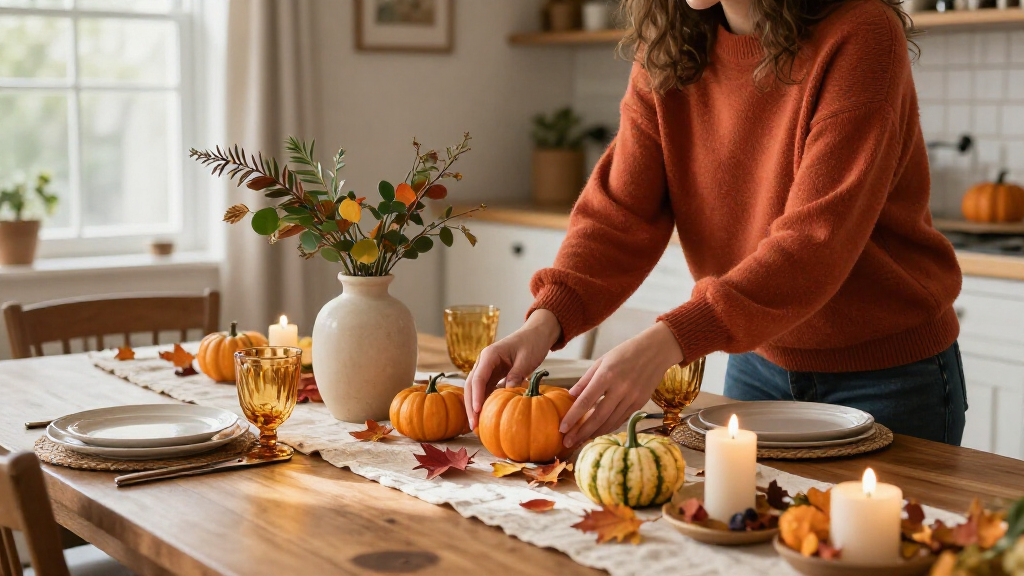
A good Thanksgiving table centerpiece decor plan starts with the table itself: leave room for platters, keep the arrangement low enough for conversation, and choose a few seasonal materials in a restrained palette. Use stable trays or vessels, protect the table from damp produce, and keep candles safely away from dried foliage.
The turkey is ready, the rolls are warm, and then the platters land: suddenly the centerpiece is competing for the last few inches of table. Thanksgiving table centerpiece decor works best when it brings the autumn mood without getting between your guests and dinner.

Get furniture and decor delivered free with Prime
- Fast, free delivery on millions of items
- Prime Video, Amazon Music and more included
- Member-only deals all year
This guide shows you how to choose a scale, palette, and mix of materials that fit your table and meal. You’ll get practical ideas for long and round tables, a simple assembly process, and ways to keep candles, greenery, and produce safe around food.
You don’t need a towering arrangement or a shopping cart full of decorations. A shallow bowl of pears, a few branches, and warm candlelight can make the table feel generous while leaving plenty of space for conversation and serving.
Keep decor low or split into small clusters so guests can see one another.
Mark plates and serving dishes before choosing the centerpiece footprint.
Choose two or three main colors, then build interest with varied natural textures.
Set damp fruit and fresh greenery on a tray or protective runner.
Keep dried foliage away from flames; choose LED candles when the table is crowded.
Keep the centerpiece low so guests can talk across dinner
A conversation-friendly Thanksgiving centerpiece stays below seated eye level or breaks into small pieces you can move. That lets guests see one another across the table while still giving the meal a clear focal point. A low bowl of pears or a narrow line of greenery can feel festive without becoming a wall between your aunt and the person across from her.
Before you decorate, sit in a chair at the table and look across it. If a vase blocks the view, lower it, move it off center, or split the display into a few small groupings. For example, a family with eight guests might use three low clusters of mini pumpkins and greenery, spaced between place settings, instead of one tall vase in the middle.
Keep the shape compact as well as low. A spread of loose objects can drift into plates and glasses, especially once guests reach for the gravy. Place small pieces on a shallow tray or narrow runner so your arrangement has a tidy boundary.
Let faces stay visible. A centerpiece should frame the meal, not make guests lean around it to talk.
Products Worth Considering

Dyson V12 Detect Slim Absolute Cordless Stick Vacuum

Shark WANDVAC Power PET Cordless Handheld Vacuum, White, WV410WH

Google Nest Thermostat (Fog)
As an affiliate, we earn on qualifying purchases.
Measure first to save room for platters and serving bowls
Measure your table and sketch the places for plates, glasses, and serving dishes before you set out decor. The centerpiece has to share the table with the meal, and a beautiful display that leaves no landing space for mashed potatoes won’t feel useful for long. This is one of the key points for a blog article about decorating a table you’ll actually eat at.
Try this quick setup in the room where you’ll serve dinner:
- Lay out place settings or mark their edges with napkins so you can see the usable center strip.
- Set down empty platters where you expect people to pass or serve food.
- Place the runner and main decor in the space that remains, then check whether guests can still reach across comfortably.
- Keep one section clear for drinks or the first hot dish, and make the centerpiece easy to lift away.
For a 36-inch-wide table, a narrow runner and a few shallow pieces may leave more useful room than a wide floral arrangement. The exact fit depends on your serving style: a buffet meal needs less space on the table than a family-style dinner with several shared bowls. That choice has a practical tradeoff: reserving space for platters may mean a simpler centerpiece, but it prevents decor from turning serving into a round of rearranging and passing pieces overhead.
Put a plate or empty casserole dish in the spot where your centerpiece will sit. If it doesn’t fit, your design needs a smaller footprint.
Choose a small color palette that makes fall textures stand out
A restrained palette makes Thanksgiving decor feel considered without requiring matching sets. Choose two or three main colors, then let texture add the interest: cream linen beside warm wood, rust-colored leaves, and a few glossy green pears can look richer than using every autumn shade at once. Limiting the colors gives the eye a place to rest, while differences in sheen and texture keep the arrangement from feeling flat.
Start with what’s already in the room. If your plates are white and your napkins are burgundy, use cream, green, and a touch of brass in the centerpiece. If you have patterned dishes, pull one quiet color from the pattern and repeat it in a ribbon, a candle, or a small fruit accent. That gives your eye a path across the table instead of making every object shout at once. Repeating a color helps unrelated pieces feel connected, which is useful when you’re mixing everyday dishes with gathered or borrowed decor.
A Thanksgiving centerpieces set can be useful when it includes a few pieces you can spread out or reuse separately. But they also need to fit your table and leave room for serving. Before buying a matched set, check the dimensions and count how many pieces will sit on the table at dinner. A coordinated set saves time choosing individual accents; a few versatile pieces offer more flexibility if your table or meal changes from year to year.
| Palette | What to combine | Good fit |
|---|---|---|
| Warm and classic | Rust, cream, natural wood | White dishes and a linen runner |
| Deep and cozy | Burgundy, green, brass | Simple plates that need a richer accent |
| Soft and natural | Olive, ivory, dried tan | Wooden bowls and gathered branches |
Keep the palette visible from the room’s entrance. If the table looks calm from across the room, you’ve probably picked enough colors.
Mix produce, greenery, and wood for a gathered look
Natural materials give a centerpiece depth through color and texture: bumpy gourds, smooth pears, papery leaves, soft linen, and rough branches all feel different in the hand and catch light differently. A few well-chosen pieces often create more character than a large, formal arrangement that takes over the table. The mix works because each material contributes something distinct; repeating too many similar shapes or finishes can make even a full arrangement look monotonous.
Use items you can move or eat after dinner. A wooden bowl with apples, small squash, and a few sprigs of rosemary can become a Thanksgiving table centerpiece that costs little if you already have the bowl and produce. Lay damp greenery over a tray or washable runner, since fresh leaves and fruit can leave moisture or marks on a finished table. Fresh materials add scent and variation, but they need more care and may wilt or release moisture; reusable wood and ceramic last longer and are easier to set up ahead of time.
Keep edible decor clean and separate from anything that has touched candle wax, scented products, or floral treatments. If you plan to serve the fruit later, set it aside before you add candles or flowers. For a quick example, arrange pears and walnuts in a shallow ceramic bowl, then tuck greenery around the outside rather than underneath the fruit. That layout keeps the food easy to reach and reduces the chance that leaves or treatments will contact it.
Use a clear focal point, such as one larger squash or a low bowl, and let smaller pieces support it. Think of the arrangement like a good dinner playlist: a few different notes make it lively, but every note doesn’t need to play at full volume. Without a focal point, small objects compete for attention; with one, you can keep the rest of the display modest and preserve more table space.
- Fresh options: apples, pears, squash, herbs, and unscented greenery.
- Reusable options: wood bowls, linen runners, ceramic vessels, and brass candleholders.
- Easy cleanup: a tray, washable cloth, and compostable foliage.
Fit the arrangement to a round, long, or small table
The table shape should guide the centerpiece shape. A compact grouping suits a round table because it keeps the center balanced, while a long table often looks more natural with a low, elongated runner or several small clusters. A narrow table needs extra restraint: its center strip is also where serving dishes may need to land. Matching the shape helps the arrangement feel intentional, but the meal’s serving pattern should decide how much of that space decor can occupy.
On a round table for four, try a single low bowl of mini pumpkins and fruit. Keep the bowl close enough to the middle that nobody has to reach past it for a glass. On a long table, place three small groupings down the center with clear gaps between them; you can lift one away when someone brings out the turkey platter. Those gaps do useful work: they make the line feel lighter and create ready-made landing places for shared dishes.
For a small apartment table, go vertical only with care. One slim vase holding a few branches might take less surface area than a wide arrangement, but the branches still need to stay out of guests’ sightlines. If your table expands for company, decorate to the larger size only after leaves or extra panels are in place. Otherwise, your centerpiece may sit in a spot that disappears when the table changes shape. A compact design is easier to adapt, while a tall one can save surface area at the cost of visibility and stability.
Try a paper towel roll or a stack of books as a temporary stand-in for the centerpiece. Set it on the table, pull out chairs, and test whether everyone can sit, pass food, and see across. A five-minute rehearsal is easier than rearranging decor while dinner is steaming. It also reveals problems a measurement alone can miss, such as a guest needing more reach space or a chair pulling close to the centerpiece.
Use candles and dried foliage with care around dinner
Keep open flames away from dried leaves, dried flowers, loose sleeves, and anything that could tip into the flame. Dried botanicals can catch fire, and a busy dinner table brings hands, dishes, and napkins close to the centerpiece. When children or pets will be near the table, battery-operated candles provide a warm glow without a live flame. The tradeoff is atmosphere versus risk: real flames add movement and warmth, but a crowded table makes it harder to keep that flame clear as people reach and serve.
Place any real candles in stable holders on a level, heat-resistant surface, and keep them clear of greenery. Don’t leave burning candles unattended; snuff them out before you carry the arrangement or start clearing dishes. If you’re using a fabric runner, make sure its edges and folds stay well away from the flame. Stability matters because a bumped holder can turn a small flame into a hazard, especially when hands are passing dishes nearby.
Scent matters, too. Strongly scented candles or flowers can compete with the smell of turkey, herbs, and warm rolls. Choose unscented candles and mild greenery so guests can enjoy the food without a cloud of perfume rising from the center of the table.
Safety first: If you can’t keep a flame well clear of foliage and sleeves, use LED candles or skip flames entirely.
For example, a display of dried wheat and eucalyptus looks lovely beside the buffet, where guests don’t need to reach over it. At a crowded dining table, use a low ceramic bowl, unscented candle holders with space around them, or LEDs instead. Moving the more delicate display away from the meal preserves its visual effect while reducing the number of ways it can be bumped or ignited.
Assemble a centerpiece in stages so dinner stays easy
A staged setup makes a centerpiece easier to build, adjust, and clear. Start with the pieces that protect the table and define the footprint, then add the focal point and smaller accents. Save candles for last so you can check sightlines and keep flames away from dry or dangling materials. Building from the base upward also helps you catch problems early: if the tray already crowds the place settings, there’s no reason to finish decorating it.
Here’s a practical sequence for Thanksgiving morning: lay down a clean runner or tray; place the bowl or main vessel; add branches or greenery; then tuck in fruit, gourds, and a few smaller details. Sit at the table from each side and check the view. Move anything that blocks a face, crowds a plate, or leaves no place for a serving spoon. Each layer should earn its space; if an accent adds little but makes the arrangement harder to reach around, remove it.
Use stable containers that won’t wobble when someone bumps the table. A heavy ceramic bowl usually sits more securely than a narrow glass vase, and a waterproof tray protects wood from damp produce. If you need to leave the centerpiece in place while serving, divide it into pieces you can remove in seconds. A fixed arrangement may look seamless, but separate pieces are easier to adapt when the meal needs more space.
For a real-world example, set up your decor the evening before with unlit LED candles and dry materials. Add fresh greenery on Thanksgiving morning, then lift out the tray as soon as hot dishes arrive. The table stays inviting, and you don’t need to dismantle a complicated arrangement while guests are waiting for the gravy. Preparing the durable pieces early leaves only the perishable details for the day itself, when your time and attention are already divided.
Frequently Asked Questions
How do I keep a Thanksgiving centerpiece from blocking conversation?
Use a low arrangement or several small clusters, then sit at the table and check the view from each seat. If a vase blocks someone’s face, shorten it, move it to the side, or swap it for a shallow bowl.
What can I put in the center of a Thanksgiving table?
Try a low bowl of apples, pears, or mini squash with a little greenery, or use a narrow runner with small gourds and unscented candles. Choose pieces that match your table size and can move easily when the food arrives.
How can I decorate a small table or one crowded with serving dishes?
Keep the design narrow and compact, and choose one focal piece rather than several wide arrangements. Mark where plates and platters will go first; if space is tight, decorate a sideboard and leave the dining table clear.
Are candles safe around dried leaves and fall decor?
Dried leaves and flowers are flammable, so keep them well away from open flames and heat. Use stable candleholders, never leave burning candles unattended, and choose LED candles if the table is crowded or children and pets are nearby.
Can I make a centerpiece with things I already have at home?
Yes. A wooden bowl, clean fruit, a folded linen runner, and a few branches can create a seasonal display with little or no new shopping. Put produce on a tray to protect the table, and keep edible items away from wax, fragrances, and floral treatments.
Conclusion
Make the centerpiece serve the dinner: keep it low, leave room for platters, and choose a few materials that feel like autumn in your hands. A bowl of pears, a branch of greenery, and a soft glow can do more than a display that crowds every plate.
Set it up, sit down, and look across the table before guests arrive. If you can see every face and still pass the gravy, you’re ready for the best part: a table that feels warm, and a meal everyone can reach.