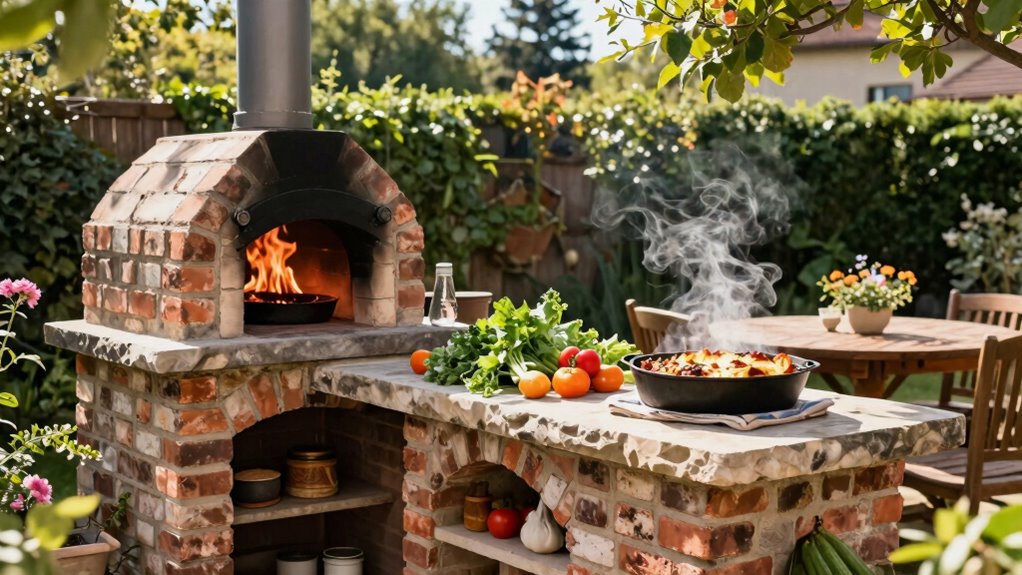
Outdoor ovens and cooking areas extend your household by turning your backyard into a versatile, social space for cooking and entertaining. They let you bake bread, roast vegetables, and make pizza outdoors, reducing indoor congestion and energy use. These setups boost your home’s functionality, promote eco-friendly practices, and enhance your outdoor environment. Plus, they create a stylish spot for family bonding and gatherings. Want to discover more about transforming your space? Keep exploring to see how.
Key Takeaways
- Outdoor ovens expand cooking options, allowing baking, roasting, and pizza-making beyond indoor kitchens.
- They create social spaces, fostering family bonding and entertaining in a relaxed outdoor environment.
- Outdoor cooking reduces indoor heat and humidity, enhancing overall home comfort during hot months.
- Sustainable outdoor ovens use natural fuels, lowering energy consumption and household carbon footprint.
- They transform backyard areas into versatile, stylish extensions of living space for leisure and functional use.
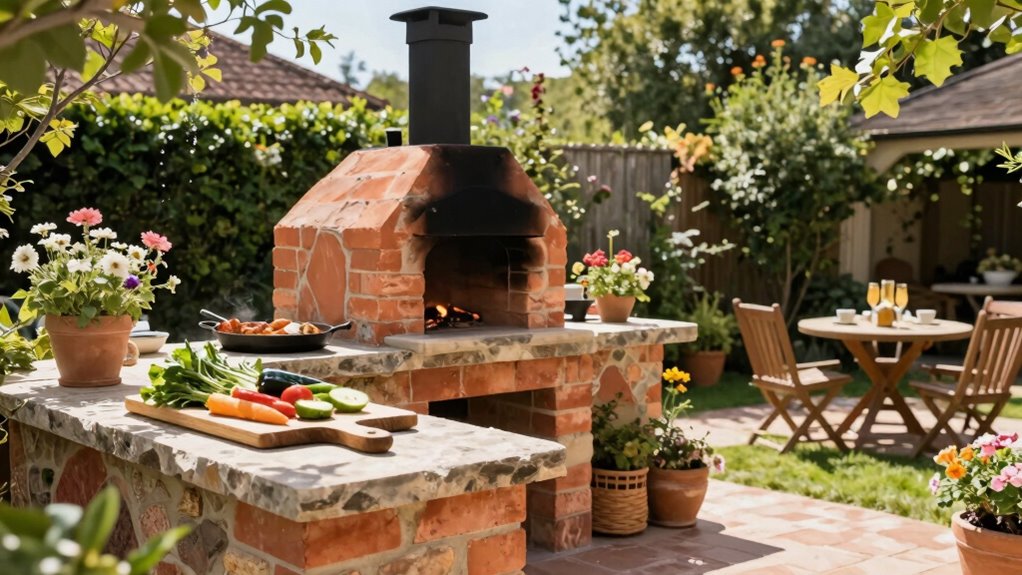
Creating an outdoor oven or dedicated cooking area can transform your backyard into a versatile culinary space. It’s a game-changer that lets you expand your household’s cooking options beyond the traditional indoor kitchen. With the rise of indoor kitchen innovation, homeowners are now blending modern technology with outdoor spaces to create seamless culinary experiences. An outdoor oven isn’t just about grilling; it’s about embracing a more sustainable outdoor living approach, reducing reliance on energy-heavy indoor appliances, and enjoying fresh air while you cook. You’ll find that having a dedicated outdoor cooking area makes meal preparation more social, inviting friends and family to gather around and share the joy of cooking together.
Transform your backyard with a dedicated outdoor oven for versatile, sustainable, and social cooking experiences.
By adding an outdoor oven, you open the door to a broader range of culinary possibilities. Imagine baking homemade bread, roasting vegetables, or even making pizza in a stone oven that captures the essence of traditional cooking. This extends your household’s capabilities, giving you an alternative space to prepare meals without congesting the indoor kitchen during busy dinner hours. It also helps you make better use of your backyard, turning it into an extension of your living space where cooking and entertaining become more relaxed and spontaneous. Additionally, outdoor ovens can incorporate sustainable outdoor living principles, making your backyard more eco-friendly and resource-efficient. Incorporating indoor air quality considerations, such as proper ventilation, ensures that outdoor cooking remains a safe and enjoyable activity.
Sustainable outdoor living is a key benefit of installing outdoor ovens and cooking areas. Many models are designed to be energy-efficient, using natural fuels like wood or charcoal, which can be more eco-friendly than electric or gas-powered indoor appliances. Plus, outdoor cooking reduces indoor heat and humidity, making your home more comfortable and lowering cooling costs during hot months. With the right setup, you can also incorporate solar-powered lighting and eco-conscious materials, further aligning your backyard with sustainable living principles. This not only enhances your outdoor space but also promotes environmental conservation by lowering your household’s carbon footprint. This creates a more environmentally friendly household that values resourcefulness and reduces carbon footprint.
Furthermore, your outdoor cooking space becomes a focal point for family bonding and social gatherings. It’s easier to entertain when you can cook and converse in the same space. You’ll find that meals prepared outdoors often taste better, thanks to the smoky, flavorful results from the oven. Also, outdoor ovens tend to require less maintenance than indoor appliances, freeing up your time and reducing household clutter. All these factors combined make your backyard not just an outdoor escape but a functional, stylish extension of your everyday living, blending indoor innovation with outdoor sustainability.
As an affiliate, we earn on qualifying purchases.
Frequently Asked Questions
How Do Outdoor Ovens Affect Home Property Values?
Outdoor ovens boost your home’s property value by enhancing its market appeal and offering a unique property enhancement. When potential buyers see a well-designed outdoor cooking area, they view your home as more functional and inviting, increasing its desirability. This added feature not only makes your outdoor space more enjoyable but also signals a commitment to lifestyle quality, making your property stand out in the market and potentially raising its overall value.
What Are the Maintenance Requirements for Outdoor Cooking Areas?
You need to keep your outdoor cooking area in top shape by following regular cleaning routines, like scrubbing grills and wiping surfaces after use. Check for and seal any cracks to prevent pest entry, and remove food debris promptly. Protect your equipment from weather by covering it or storing it indoors during harsh conditions. These simple steps help maintain your outdoor kitchen’s functionality and keep pests away.
Can Outdoor Ovens Be Used Year-Round in All Climates?
Outdoor ovens can often be used year-round, especially if you adapt to your seasonal climate. In colder areas, only about 30% of outdoor ovens are used in winter without proper insulation. Using insulation techniques, like thermal blankets or insulated enclosures, helps retain heat and makes year-round cooking feasible. With proper planning, you can enjoy baking and grilling no matter the season, extending your outdoor cooking enjoyment throughout the year.
Are There Safety Concerns With Outdoor Ovens and Cooking Spaces?
Yes, there are safety concerns with outdoor ovens and cooking spaces. You should prioritize fire safety by keeping flammable materials away and ensuring proper ventilation. When installing appliances, follow manufacturer instructions and hire professionals if needed to prevent accidents. Regularly inspect your outdoor oven for cracks or damage. By taking these precautions, you can enjoy outdoor cooking safely and minimize risks associated with fire hazards and improper appliance installation.
What Are the Typical Costs Involved in Installing an Outdoor Oven?
They say “you get what you pay for,” and installing an outdoor oven varies in cost. The main cost factors include the oven type, materials, and labor for installation expenses. Basic models start around $2,000, while high-end custom setups can exceed $10,000. Additional costs might include countertops, ventilation, and permits. Planning ahead helps you budget effectively and guarantees your outdoor cooking space fits your needs and wallet.
Conclusion
By embracing outdoor ovens and cooking areas, you don’t just extend your household—you amplify its soul. These spaces become the heartbeat of your home, inviting laughter, shared stories, and timeless memories under the open sky. As the flames dance and aromas waft, you realize that your backyard transforms into a sanctuary—an eternal flame of connection that warms both body and spirit, reminding us all that home is where the heart, and now, the hearth, resides.