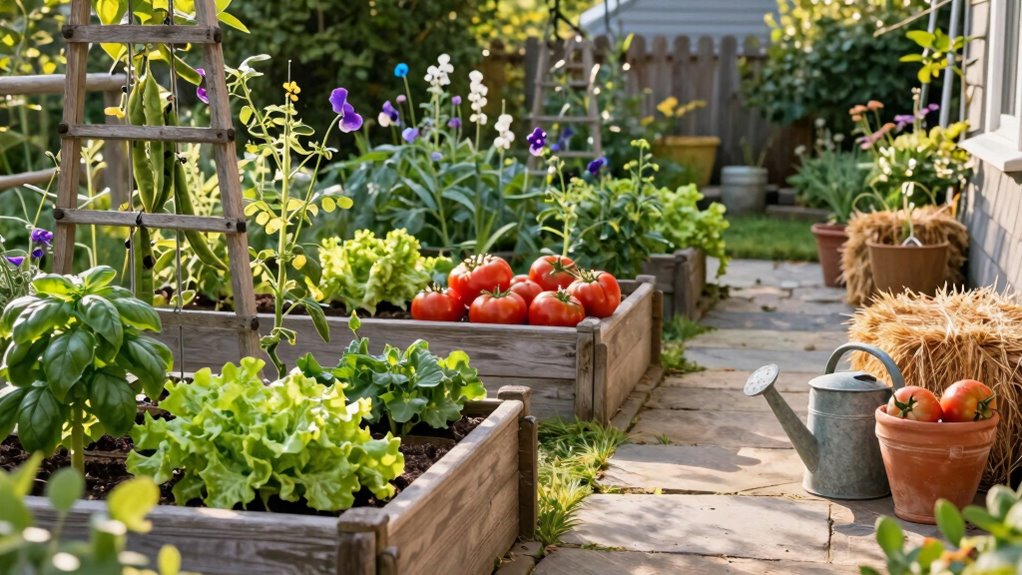
In New England, you balance beauty and utility in your kitchen garden by combining colorful flowering plants with useful herbs like basil and thyme. You plan your layout with raised beds and pathways for easy access, while vertical gardening maximizes space. You select plants suited to your climate, mixing perennials and seasonals for year-round harvests. Decorative touches add personality, creating a garden that’s both attractive and productive. Keep exploring to discover how these elements come together seamlessly.

Get furniture and decor delivered free with Prime
- Fast, free delivery on millions of items
- Prime Video, Amazon Music and more included
- Member-only deals all year
Key Takeaways
- Incorporating colorful flowering plants alongside herbs enhances visual appeal and attracts beneficial insects.
- Designing raised beds and pathways improves accessibility, organization, and overall garden aesthetics.
- Using vertical gardening maximizes space while adding layered visual interest and functional vining herbs.
- Selecting region-appropriate, perennial herbs ensures year-round beauty and utility with sustainable practices.
- Balancing contrasting textures, heights, and decorative elements creates a harmonious, functional garden space.

Kitchen gardens in New England have become a popular way for homeowners to grow fresh herbs, vegetables, and fruits right outside their back doors. You can create a space that’s both functional and beautiful, blending utility with aesthetic appeal. To do this, you need to carefully select herb varieties, choosing those that thrive in the region’s climate while adding visual interest to your garden. Popular choices include fragrant basil, hearty rosemary, and delicate chives, each bringing a unique texture and aroma to your garden design. Mixing these herbs with colorful flowering plants not only makes your garden more attractive but also attracts beneficial insects, which can improve overall plant health.
Create a beautiful, functional New England kitchen garden with herbs like basil, rosemary, chives, and colorful flowering companions.
When planning your garden design, think about layout and accessibility. You want your herbs and vegetables to be within easy reach so you’re encouraged to harvest frequently. Raised beds are an excellent option, offering better drainage and easier maintenance, and they can be arranged in geometric patterns for a neat, modern look. Alternatively, you might consider a traditional in-ground layout, dividing the space into distinct sections for herbs, vegetables, and flowering plants. Incorporate paths made of gravel or stepping stones to define areas and make tending your garden more comfortable. Mulching around your plants helps retain moisture, suppress weeds, and adds a finished look to the garden. Additionally, understanding climate considerations in your region can help you select the best plants for a successful and sustainable garden. Proper plant selection based on local climate also supports sustainable gardening practices, ensuring your garden remains healthy and productive over time.
In terms of herb varieties, diversity is key. Grow a mix of perennial herbs like thyme and mint, which come back year after year, and annuals like cilantro and dill, which you can sow each season. Incorporating plant diversity supports a resilient garden ecosystem and encourages a broader range of beneficial insects. Creating a balanced ecosystem in your garden helps maintain natural pest control and reduces the need for chemical interventions. Integrating herbs with different growth habits and colors enhances your garden’s visual appeal. To maximize space, consider vertical gardening techniques with wall-mounted planters or trellises, especially for vining herbs like peas or passionflowers. This approach saves room while adding vertical interest, making your garden appear more lush and layered.
The key to balancing beauty and utility in your kitchen garden is thoughtful garden design. Use plants with contrasting colors, textures, and heights to create visual harmony. Place taller herbs and vegetables at the back or center of your beds to prevent shading shorter plants. Incorporate decorative elements, such as small sculptures or garden stakes, to add personality without sacrificing functionality. With careful planning, your garden can serve as both a harvest hub and a charming outdoor space, reflecting your personal style while providing fresh ingredients for your kitchen. This harmony between form and function guarantees your New England kitchen garden remains a source of pride and pleasure year-round.
As an affiliate, we earn on qualifying purchases.
Frequently Asked Questions
How Do New Englanders Protect Plants From Harsh Winters?
To protect your plants from harsh New England winters, you should focus on winter protection and frost resistant techniques. Use mulch or straw around plant bases to insulate roots and cover vulnerable plants with burlap or frost cloths during extreme cold. Moving potted plants indoors or to sheltered areas also helps. These methods help your garden survive harsh conditions and stay healthy for the next growing season.
What Are the Best Native Plants for New England Kitchen Gardens?
You should consider native plants like rhododendrons and serviceberries for native shrubbery, which add structure and beauty. Incorporate wildflower diversity with blooms like black-eyed Susans and New England asters, perfect for attracting pollinators. These plants thrive in local soil and climate, requiring less maintenance. They blend utility and aesthetic appeal, making your kitchen garden both productive and visually pleasing year-round.
How Do They Maintain Soil Fertility Naturally?
Sure, you can just toss some scraps in the dirt and call it compost, but real New Englanders know better. They practice smart composting techniques, layering kitchen waste with straw and leaves, turning it regularly. Crop rotation keeps pests at bay and replenishes nutrients naturally. This way, your soil stays fertile without chemicals, ensuring your garden thrives season after season, all while preserving that charming rustic beauty.
What Are Common Pests and How Are They Managed?
You’ll often face pests like aphids, beetles, and squash bugs in your garden. To manage them, plant pest-resistant crops and encourage natural predators like ladybugs. Use organic pest control methods, such as neem oil or insecticidal soaps, to keep pests at bay without harming beneficial insects. Regularly inspect your plants and promptly remove affected parts to maintain a healthy, balanced garden that’s both beautiful and productive.
How Do Garden Designs Maximize Space Efficiency?
You maximize space efficiency by using companion planting, which arranges plants that benefit each other near one another, and vertical gardening, which elevates crops to save ground space. You can grow climbing plants like beans or cucumbers on trellises, while stacking herbs and greens in raised beds or wall planters. These methods optimize every inch, blending beauty and utility while keeping your garden productive and visually appealing.
Conclusion
As you step into a New England kitchen garden, you’re greeted by rows of vibrant greens and bursting blossoms, each plant carefully chosen for beauty and purpose. The scent of fresh herbs mingles with ripe tomatoes, creating a tapestry of colors and aromas. Here, practicality and elegance intertwine, turning your garden into a living portrait of balance. With each harvest, you feel connected to centuries of tradition, a proof to blending utility with timeless beauty.
Halloween Picks
halloween
As an affiliate, we earn on qualifying purchases.