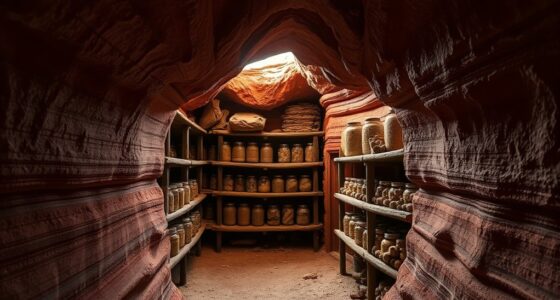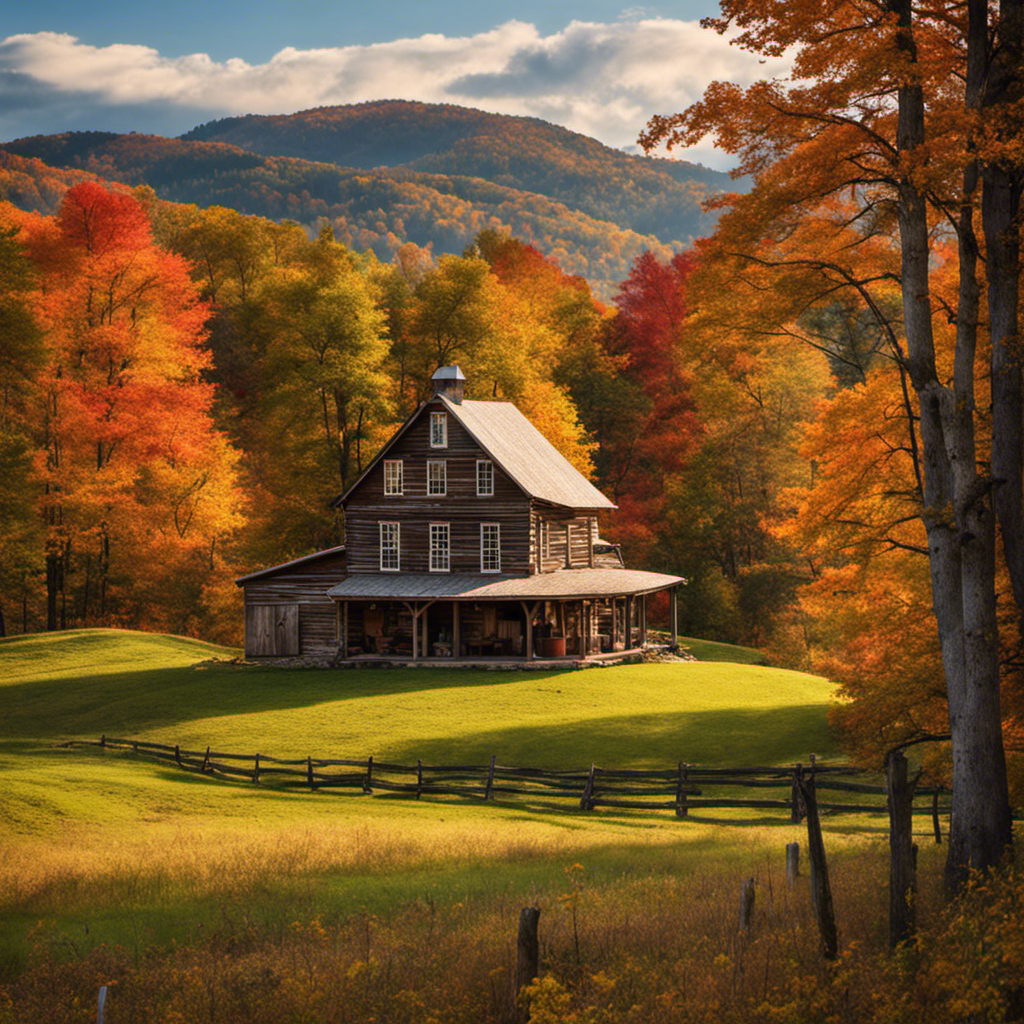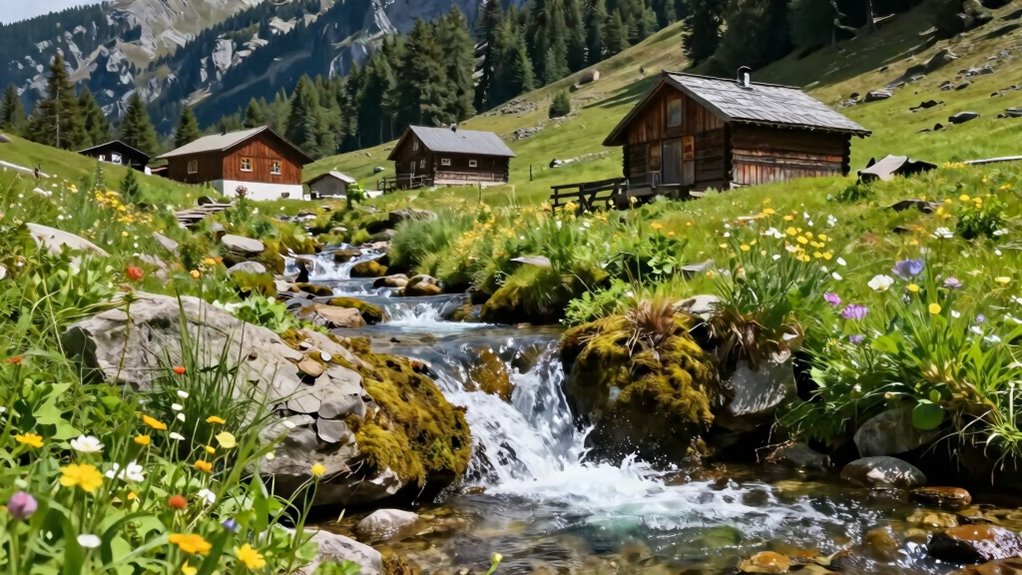

You’ll notice that mountain spring water greatly influences where homes and barns are built because settlers prioritize easy access to reliable, clean water sources. They often place structures downhill or close to springs where water flows steadily, reducing effort and ensuring a constant supply for daily needs, livestock, and crops. This pattern shapes the entire settlement layout, and if you explore further, you’ll discover how water flow patterns dictate the overall community design.
Key Takeaways
- Homes and barns were built downhill or near springs for easy access to reliable water sources.
- Settlement layouts centered around springs with consistent flow, shaping community infrastructure.
- Water flow reliability influenced the proximity of structures to reduce effort in hauling water.
- Areas with clean, abundant springs attracted more development, dictating settlement locations.
- Water source quality and flow patterns determined placement of animal pens, crops, and water infrastructure.
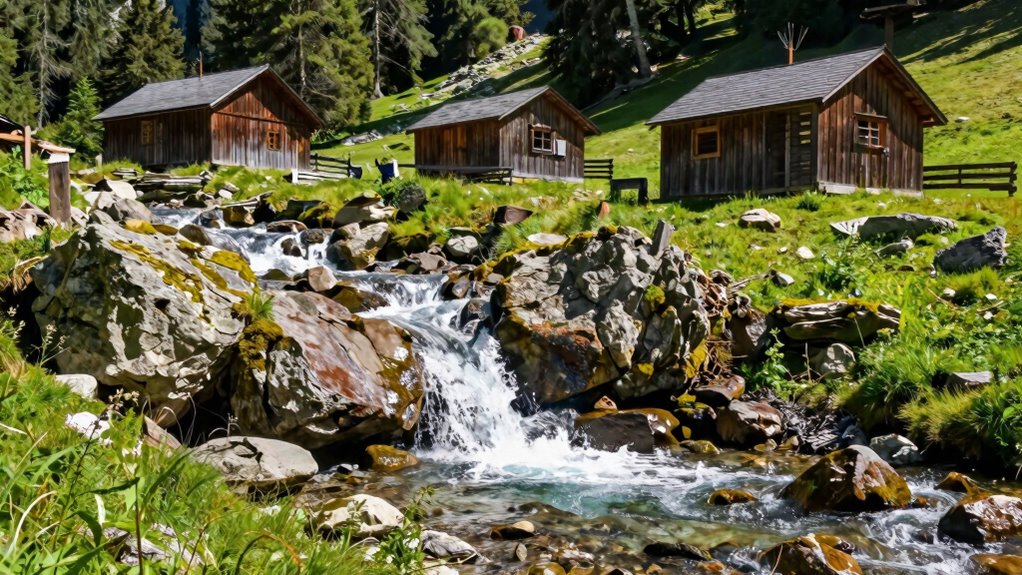
Many mountain communities historically chose where to build homes and barns based on the location of natural spring water sources. You’d notice that these spring sources often dictated the layout of entire settlements because water was essential for daily life, agriculture, and livestock. When you’re exploring these areas, you’ll see that the spring source’s position had a direct impact on settlement patterns. If the water flow was steady and reliable, it became the natural hub for the community. You could imagine how early settlers prioritized proximity to these springs, knowing that a dependable water source was critical to survival.
The water flow from these springs determined where homes and barns could be safely built. You’ll find that structures were often placed downhill or close to the spring source to ensure easy access to water. When water flow was abundant and consistent, it meant less effort in hauling water over long distances, which was a significant advantage in rugged terrain. Conversely, if the spring’s water flow was unpredictable or seasonal, settlers would sometimes settle further away, relying on rain or snowmelt to sustain their needs. In these cases, they might develop methods to store water or divert flow to ensure a steady supply.
The location of the spring source also influenced the placement of communal features, like wells or watering troughs for animals. You’ll see that the most successful settlements often centered around a spring with a reliable water flow, creating a natural gathering point. This not only made daily chores easier but also fostered community bonds. Over time, the placement of homes and barns around these springs became a practical response to the environment, shaping the entire settlement’s layout.
Furthermore, the quality of the water flow played a role. A spring with clean, fresh water encouraged development nearby, while springs with muddy or contaminated water might be avoided or require additional filtration. You’ll notice that early settlers often dug out small reservoirs or constructed channels to direct water from the spring to their homes and farms, maximizing their access. The spring source’s position and water flow patterns dictated the entire infrastructure, influencing everything from the location of animal pens to where crops were planted. In this way, the natural movement of water shaped human settlement in the mountains, embedding itself into the very geography of the community.

WaterPrepared 55 Gallon Unique Stackable Utility Water Tank, Blue
- Capacity: 55-gallon water storage tank
- Application: Ideal for camping, hiking, emergencies
- Material: UV-proof, food-grade plastic
As an affiliate, we earn on qualifying purchases.
As an affiliate, we earn on qualifying purchases.
Frequently Asked Questions
How Did Early Settlers Find Reliable Spring Sources?
You’d find reliable spring sources through spring water archaeology, studying natural water flow and underground channels. Early settlers relied on observing landscape features, such as lush vegetation and terrain dips, to identify spring locations. These insights helped shape settlement patterns, ensuring homes and barns sat near dependable water sources. By understanding natural spring behaviors, settlers could establish sustainable communities with consistent water access, essential for daily life and farming.
Did Spring Water Influence Community Social Structures?
Spring water influenced community social structures more than you might imagine—it’s like the heartbeat of early settlements. You participate in spring water rituals, which foster community bonding by bringing everyone together for shared traditions. These rituals create trust and cooperation, shaping social hierarchies and decision-making. The purity and accessibility of spring water became central, reinforcing communal ties and making the community stronger and more connected.
Were There Environmental Impacts From Settling Near Springs?
Settling near springs often caused environmental impacts like spring pollution, affecting water quality for everyone. Your community might’ve faced disputes over water rights, as more settlers drew from the same water source, reducing its availability. These issues could lead to contamination, making water unsafe for drinking or farming. To protect your environment, managing water rights and preventing spring pollution became essential, ensuring the springs remained a sustainable resource for all residents.
How Did Spring Water Affect Agricultural Practices?
Spring water greatly influenced agricultural practices by guiding where farms and barns were built. You relied on spring water distribution to guarantee a steady water supply for crops and livestock. Good water quality management was essential to prevent contamination and maintain healthy soil and plants. This reliance on natural spring sources shaped farming layouts, encouraging practices that prioritized preserving water quality and access, ultimately supporting sustainable agriculture in the region.
Were There Any Myths Associated With Spring Water Locations?
You might hear myths about spring water locations, often linked to their mythical origins or sacred sites. People believed these springs held spiritual power, guiding settlement decisions. Some thought the water’s purity signified divine favor, making these spots sacred. These stories shaped local traditions, and many still see spring water sites as places of spiritual importance, blending myth with community history.
Conclusion
As you walk through a rural landscape, imagine the ancient springs guiding your steps, like silent guardians of home sites. Just as a river carves its path through rocks, water shaped where families built their lives—foundations grounded in nature’s steady flow. Think of it this way: without those springs, your favorite countryside might just be an empty field, waiting for a different story. Water’s quiet influence continues to shape our lives, even today.