You’ll notice that barns and houses often share the same local stone because it creates a strong sense of community and regional identity. Using nearby stones makes construction easier, more affordable, and durable against weather, helping structures last longer. The consistent material also reflects local geology, giving buildings a harmonious appearance that connects them to their environment. This shared use of stone carries cultural value and history, making each structure meaningful. If you want to explore how this tradition shapes regional architecture, keep looking closer.
Key Takeaways
- Using local stone reinforces community identity and preserves regional cultural heritage across generations.
- Local sourcing reduces transportation costs and simplifies construction processes.
- Stones from nearby quarries are durable, weather-resistant, and long-lasting, ensuring structural resilience.
- Matching materials create a cohesive aesthetic and regional character for both homes and barns.
- Utilizing regional stones reflects local geology, history, and craftsmanship, embedding cultural symbolism into architecture.
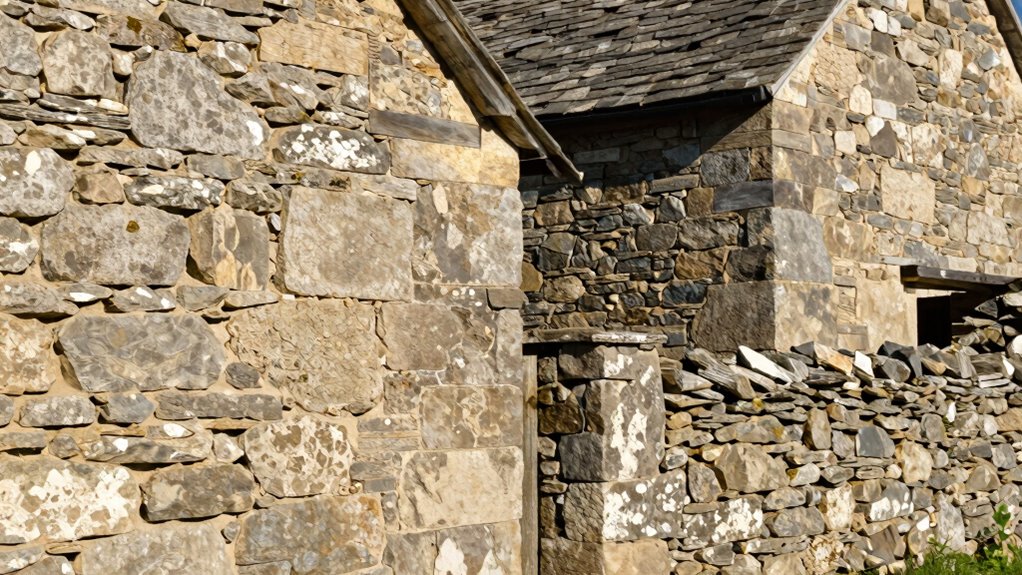
Many rural communities have long relied on the same local stone for constructing both barns and houses, creating a harmonious and enduring architectural style. This choice isn’t just about aesthetic consistency; it’s deeply rooted in practicality, tradition, and the local environment. When you look at these structures, you’ll notice how the stone’s natural qualities have stood the test of time, embodying both historical significance and architectural resilience. The stones used often come from nearby quarries or natural deposits, making them readily accessible and cost-effective. This local sourcing fosters a sense of community and continuity, as generations of builders reuse the same materials, reinforcing a shared cultural identity.
Using local stone for homes and barns strengthens community, tradition, and resilience across generations.
The historical significance of using local stone runs deep. For early settlers, sourcing durable building materials close to home was essential, especially when transportation options were limited. Over time, this practice became a tradition, passed down through families and communities. These stones tell stories of past eras—of settlers, craftsmen, and their ways of life—embedding history into the very walls of homes and barns. As a result, structures built with local stone serve as tangible links to the past, preserving regional heritage in a form that’s both functional and symbolic. Additionally, the local geology influences the unique appearance and characteristics of the stones, further tying these structures to their specific regions. Recognizing the significance of regional materials underscores how geography shapes architectural choices.
Architectural durability is another key reason why these materials are favored. Local stone, especially varieties like limestone or sandstone, is naturally resistant to weather and time. You’ll find that buildings constructed with these stones require less maintenance and stand firm through storms, snow, and rain. Their robustness means fewer repairs and longer lifespans, making them economical choices over generations. The weight and density of the stone also contribute to the stability of the structures, ensuring they remain standing even as decades pass. This resilience fosters a sense of security and permanence, qualities highly valued in rural architecture. The practical advantages of using these stones continue to support their widespread use in rural construction. Furthermore, the ability to easily source and work with local stone simplifies construction processes, adding to their practicality.
Furthermore, using the same local stone for both barns and houses creates a cohesive aesthetic, blending functionality with regional character. The visual harmony between these structures reinforces community identity and pride. The durability and historical importance of the stone make these buildings more than just shelters—they become landmarks that embody local history and craftsmanship. When you walk through these communities, you see how the shared material links the past with the present, underscoring a timeless tradition rooted in practicality, resilience, and cultural continuity.

Early Stone Houses of Kentucky
- Condition: Used Book in Good Condition
As an affiliate, we earn on qualifying purchases.
As an affiliate, we earn on qualifying purchases.
Frequently Asked Questions
How Does the Local Climate Influence Stone Selection for Construction?
Your local climate influences your choice of stone for construction because you need material properties that adapt well to temperature, humidity, and weather conditions. For hot, dry areas, you select stones with good thermal mass to keep interiors cool. In damp climates, you choose stones resistant to moisture and decay. This climate adaptation guarantees your buildings withstand environmental stresses, making them durable and comfortable over time.
Are There Historical Reasons for Using the Same Stone in Both Buildings?
You’ll find that using the same local stone in both barns and houses stems from historical reasons rooted in practicality and tradition. Architectural styles favored consistency, blending structures seamlessly into the landscape. Cultural symbolism also played a role, reflecting community identity and resourcefulness. By sharing stones, builders preserved regional character, upheld longstanding customs, and showcased a unified appearance that connected everyday life with local heritage.
What Are the Durability Differences Between Stone Used for Barns Versus Houses?
You’ll find that stone used for barns is often more durable and less refined than that for houses, prioritizing stone preservation for structural integrity. Barn stones are usually coarser and withstand weather better, while house stones focus more on aesthetic considerations, offering a refined appearance. This difference helps guarantee both structures last longer, with barns resisting harsher conditions and houses balancing durability with visual appeal.
How Does Local Geology Affect Stone Availability for Construction?
Your local geology shapes what stones are accessible, like a landscape painting with natural palette choices. The types of stone available depend on quarrying techniques and how easily you can transport them. If the stone is abundant nearby, it becomes the go-to material for both barns and houses, blending seamlessly into the environment. This natural availability influences construction choices, making the local landscape a silent architect behind building styles.
Are Modern Construction Codes Still Favoring Local Stone?
Modern construction codes don’t always favor local stone, but some still emphasize using it for architectural symbolism and aesthetic consistency. You’ll find regulations encouraging local materials to preserve historical character and reduce environmental impact. However, durability, safety, and building standards often lead to the use of other materials. So, while local stone remains valued for its traditional beauty, codes balance its use with modern requirements.
Conclusion
So, next time you see a barn and house built from the same local stone, remember it’s more than just aesthetics. It’s about practicality, tradition, and making the most of what’s available. You’ll find that sharing local materials isn’t just cost-effective but also helps keep the community’s character alive. After all, when it comes to building with local stone, it’s clear that old habits die hard—and often for good reason.