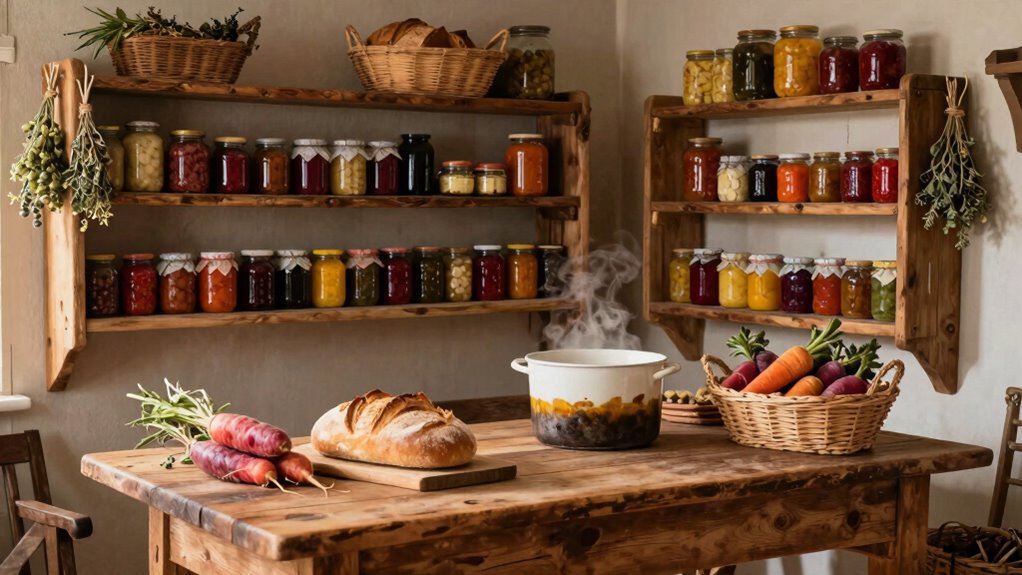

In large rural families, pantry traditions create a strong sense of resilience and community. Everyone shares the work of harvesting, preserving, and passing down recipes, making food a symbol of self-reliance and shared effort. Canning and preserving foods together strengthen bonds across generations. These activities not only keep the family fed but also preserve cultural heritage and teach valuable skills. Keep exploring to discover how these practices continue to hold families close today.

Get furniture and decor delivered free — and shop member deals
- Fast, free delivery on millions of items
- Access to Prime Big Deal Days deals on October 6–7
- Prime Video, Amazon Music and more included
Key Takeaways
- Shared food preservation activities foster family bonding and teach essential skills across generations.
- Canning and preserving traditional recipes maintain cultural heritage and family identity.
- Collective harvest and preservation efforts strengthen community ties among large rural families.
- Passing down preserving techniques ensures self-reliance and resilience during tough seasons.
- Food preservation practices serve as a vital link connecting families to their history and roots.
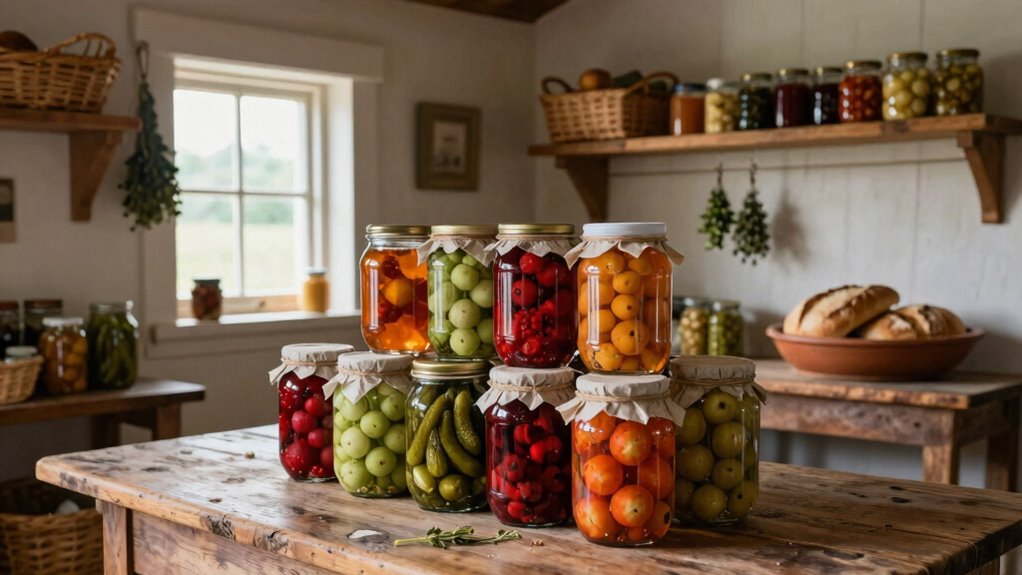
For large rural families, pantry traditions aren’t just about storing food—they’re about building resilience and fostering community. You learn early on that a well-stocked pantry isn’t just a convenience; it’s a lifeline during tough seasons and a way to maintain your family’s well-being. Canning techniques become second nature, and preserving recipes are passed down with pride. Every jar of homemade jam or pickled vegetable represents more than just food—it’s a symbol of self-reliance and shared effort.
You plunge into mastering different canning techniques, knowing that each method serves a purpose. Water bath canning is perfect for jams, jellies, and acidic foods, ensuring they’re safe for long-term storage. Pressure canning, on the other hand, allows you to preserve low-acid foods like green beans or meats, providing hearty staples for the winter months. You understand that these techniques aren’t just about following recipes; they’re about respecting the process and ensuring safety. Over the years, you develop your own preserving recipes, blending traditional flavors with personal touches. Whether it’s a spicy tomato salsa or a sweet peach chutney, each recipe becomes a part of your family’s story.
This practice creates a cycle of sustainability. When harvest season arrives, you and your family gather to put up food together, turning preservation into a communal activity. It’s not just about filling jars—it’s about sharing knowledge, passing down skills, and strengthening bonds. You learn to adapt recipes based on what’s available, making each batch unique and meaningful. The process reinforces the importance of patience and precision, as you carefully test and adjust your techniques to achieve the best results. Over time, you become confident in your ability to keep the pantry stocked with nutritious, homemade food. Understanding food preservation science helps you refine your methods and ensure safety and quality in every jar. This knowledge also deepens your appreciation for traditional food preservation techniques, which connect you to generations before you. Additionally, familiarizing yourself with pest control methods helps you maintain healthy plants and prevent damage to your garden produce, ensuring a steady supply of ingredients for your preserves.
These traditions also serve an educational purpose. Younger family members watch and learn, understanding the value of self-sufficiency. They see that preserving food isn’t just a chore but a way to connect with history and family heritage. You’re proud knowing that these skills will stay alive long after you’re gone, ensuring your family can weather any storm. Additionally, understanding the science behind food preservation helps you improve your techniques and achieve better results. In the end, pantry traditions aren’t just about food—they’re about resilience, community, and keeping your family’s legacy alive through the art of canning and preserving.
As an affiliate, we earn on qualifying purchases.
Frequently Asked Questions
How Did Pantry Storage Methods Evolve Over Generations?
You see, pantry storage methods evolved over generations through innovations like evaporated canning, which preserved food longer and made storage easier. Root cellar storage became popular for keeping vegetables cool and fresh naturally, without electricity. These methods helped families stretch their supplies, adapt to changing needs, and pass down practical skills. Over time, they integrated modern techniques while maintaining traditional practices, ensuring food security and family unity across generations.
What Role Did Community Sharing Play in Family Pantries?
Community sharing strengthened family pantries by fostering bonds beyond immediate kin. While individual efforts focused on resource sharing within the family, neighbors often exchanged surplus goods, creating a web of mutual support. This community bonding guaranteed no one went hungry during tough times, reinforcing trust and interdependence. You see, these traditions helped families survive and thrive, turning pantries into symbols of collective resilience and care.
How Did Families Prioritize Food Preservation Techniques?
You prioritize food preservation techniques by relying on seasonal harvests and mastering culinary secrets like canning, drying, and fermenting. As each season offers different crops, you take advantage of fresh produce at its peak, conserving it for later use. This careful approach guarantees your family has a steady food supply year-round, while also passing down traditional methods that keep your pantry stocked and your family connected through shared culinary knowledge.
Were There Specific Recipes Passed Down Through Pantry Traditions?
Like a well-worn quilt, specific recipes were passed down through generations. You’d often find family favorites for preserves, stews, and baked goods nestled in the pantry. These recipes guided meal planning and ingredient sourcing, ensuring everyone knew what to prepare and gather. By sharing these traditions, you keep the family’s culinary history alive, creating a bond that’s as comforting as the flavors in each treasured dish.
How Did Pantry Routines Influence Daily Family Life?
Your pantry routines shape daily family life by making meal planning easier and more efficient. You rely on stored ingredients and traditional recipes to create nourishing meals quickly. Having emergency supplies on hand provides reassurance during unexpected events, ensuring your family’s needs are met without stress. This routine fosters a sense of stability and togetherness, as everyone benefits from the careful preparation and shared responsibility in maintaining the pantry’s balance.
Conclusion
Your pantry traditions aren’t just about storing food; they’re about creating a sense of security, community, and resilience for your large family. These routines foster connection and shared purpose, helping everyone feel rooted and supported. As you continue these practices, do you realize how much more they’re giving your family than just nourishment? They’re weaving a legacy of togetherness that can withstand any challenge, reminding us that what we keep close is often what holds us together strongest.
Fall Picks
fall essentials
As an affiliate, we earn on qualifying purchases.