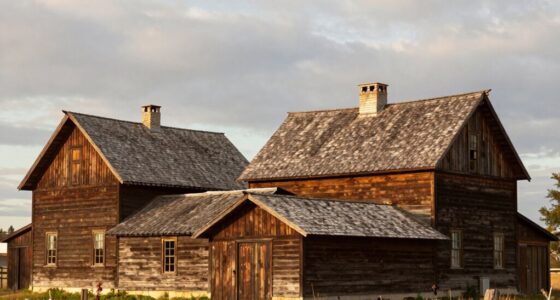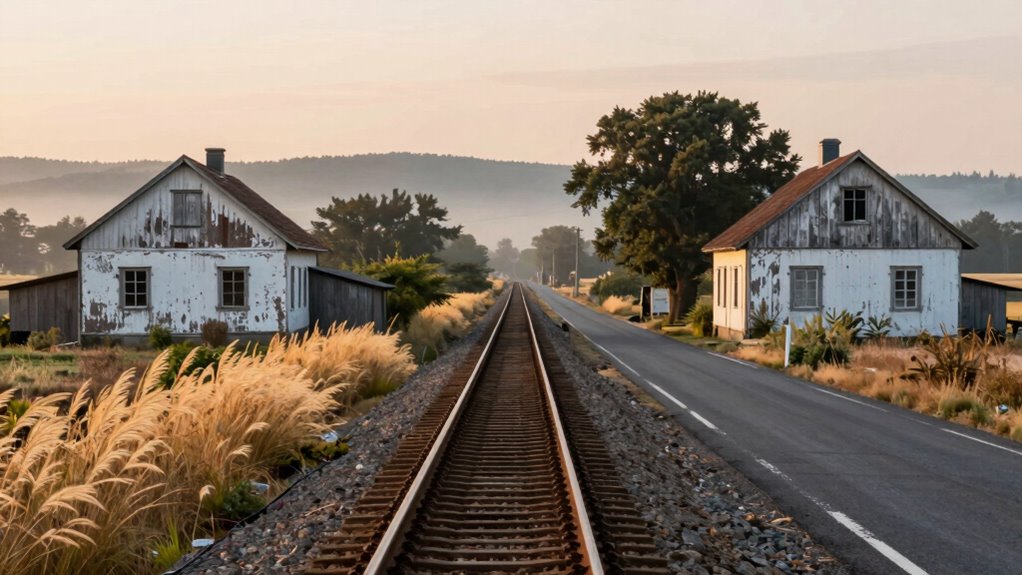

Rural roads and rail lines influenced where farmhouses face because they shaped access, transportation, and market connections. As these infrastructure elements expanded, farms adjusted their layout and orientation to improve movement of goods and ease of travel. Farmhouses were positioned to align with major routes, making it easier to connect with markets and supplies. This ongoing adaptation reflects how transportation advancements continue to transform farm layouts—if you explore further, you’ll learn even more about this evolution.
Key Takeaways
- Transportation routes influenced farm location choices to improve access to markets and reduce travel time.
- Farmhouses were oriented to facilitate efficient movement of goods via roads and rail lines.
- Infrastructure developments prompted redesigns of farm layouts to align with transportation pathways.
- Proximity to roads and rail lines became strategic for optimizing farm operations and logistics.
- The evolution of transportation networks shaped the physical orientation and positioning of farm buildings.
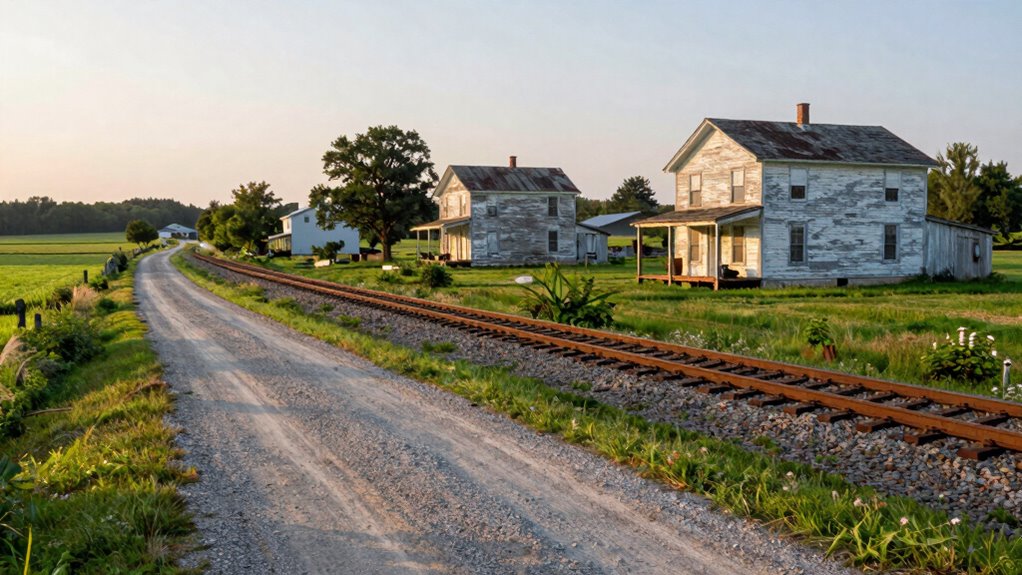
The changes weren’t just about infrastructure but also about the relationship between farms and their surroundings. With better roads and rail lines, farms no longer operated in isolation; they became integrated into regional and national markets. This increased connectivity led to modifications in farmhouses, such as the addition of loading docks, storage facilities, or larger homes designed for increased workforce or management needs. As transportation technology advanced, farmhouses faced new challenges and opportunities, influencing where they were built and how they evolved over time. The transportation infrastructure not only facilitated movement but also shaped the physical layout and orientation of farm buildings, reflecting broader economic and technological shifts. Additionally, the development of transportation networks directly impacted the geographic distribution of farms and their proximity to markets, encouraging strategic placement and design adjustments. Ultimately, the historical development of transportation infrastructure and ongoing technological advancements have continually reshaped where farmhouses face and how they function within the rural landscape. You see this evolution in the way farms are laid out, often aligned with major roads or rail lines, reflecting decades of adaptation to changing transportation needs. The landscape has transformed from isolated homesteads to interconnected hubs of agricultural activity, all driven by the flow of technology and progress. So, the way farmhouses face and are positioned today is a direct result of this rich history and continuous technological innovation.

RecPro Pontoon Boat Aluminum Loading Ramp for Shore and Dock Boarding | 600lb Capacity | Non-Slip Surface
- Material: Lightweight durable aluminum
- Capacity: 600-pound load capacity
- Dimensions: 74" long, 21" wide
As an affiliate, we earn on qualifying purchases.
As an affiliate, we earn on qualifying purchases.
Frequently Asked Questions
How Did Land Ownership Influence Road and Rail Placement?
Your land ownership rights and parceling considerably influenced road and rail placement. When land was divided into smaller parcels, infrastructure had to follow property boundaries, making roads and rails align with land ownership lines. Owners often negotiated access routes, shaping routes to suit their rights. This land parceling dictated where infrastructure could be built, ensuring routes respected property divisions and ownership rights, which ultimately affected the development of rural roads and rail lines.
What Role Did Government Policies Play in These Changes?
Government policies played a significant role by offering policy incentives that encouraged specific infrastructure developments, shaping where roads and rail lines were constructed. You benefit from these policies through increased infrastructure funding, which prioritized certain routes and locations. This strategic support often directed transportation networks away from traditional farmhouses, influencing the landscape and community development. Fundamentally, government actions steered the growth patterns, aligning infrastructure with broader economic and social goals.
Were There Environmental Impacts From Rerouting?
Rerouting rural roads and rail lines caused significant environmental consequences, including ecosystem disruption. You might notice habitat loss for local wildlife and reduced plant diversity as new routes fragment natural areas. These changes can lead to soil erosion, water pollution, and decreased air quality. By altering natural landscapes, rerouting impacts the environment directly, making it essential to contemplate ecological effects when planning infrastructure projects to minimize long-term damage.
How Did Community Reactions Affect Transportation Development?
Community activism and public consultations played an essential role in shaping transportation development. When residents voiced concerns or opposed plans, authorities often revisited proposals, leading to rerouted roads and rail lines. Your participation and feedback influenced decision-making, ensuring projects addressed local needs and minimized disruptions. This engagement fostered collaboration, allowing communities to have a say, which ultimately resulted in transportation systems better aligned with their preferences and environmental considerations.
Did These Changes Affect Local Farm Productivity?
In a blink of an eye, these changes did affect your farm productivity. You might have found that farm access became more streamlined, reducing transportation time and costs. However, some farmers experienced challenges in adapting to new road and rail directions, which could temporarily hinder productivity. Overall, the shifts aimed to improve efficiency, but the impact varied depending on how quickly you adjusted to the evolving infrastructure.
Conclusion
Imagine you’re walking along a quiet rural road, where once farmhouses faced the bustling rail lines or busy streets. These changes reshaped communities, much like a gardener pruning a tree to help it grow better. Just as the tree’s new shape fosters healthier branches, shifting roads and rails brought new life and opportunities to farms. Your journey through history reveals how these transformations turned silent fields into vibrant hubs of progress.