Acequia Cleaning Days are community events that celebrate water conservation and cultural heritage. By working together, you help remove debris, repair ditches, and keep water flowing to support farms and livestock. These days strengthen bonds, pass down important traditions, and honor ancestors who built these systems. Participating reminds you of the deep connection between land, water, and community. If you’d like to learn more about these meaningful practices, continue exploring their history and significance.
Key Takeaways
- Acequia Cleaning Days are annual community events that preserve irrigation ditches, honoring cultural traditions and ensuring water flow for agriculture.
- These events strengthen community bonds through collective efforts like debris removal, repairs, and storytelling.
- They serve as a way to pass down historical practices and cultural values related to water management.
- The tradition emphasizes environmental sustainability by conserving water and maintaining irrigation efficiency.
- Participating in Acequia Cleaning Days connects communities to their heritage, fostering pride and stewardship for future generations.
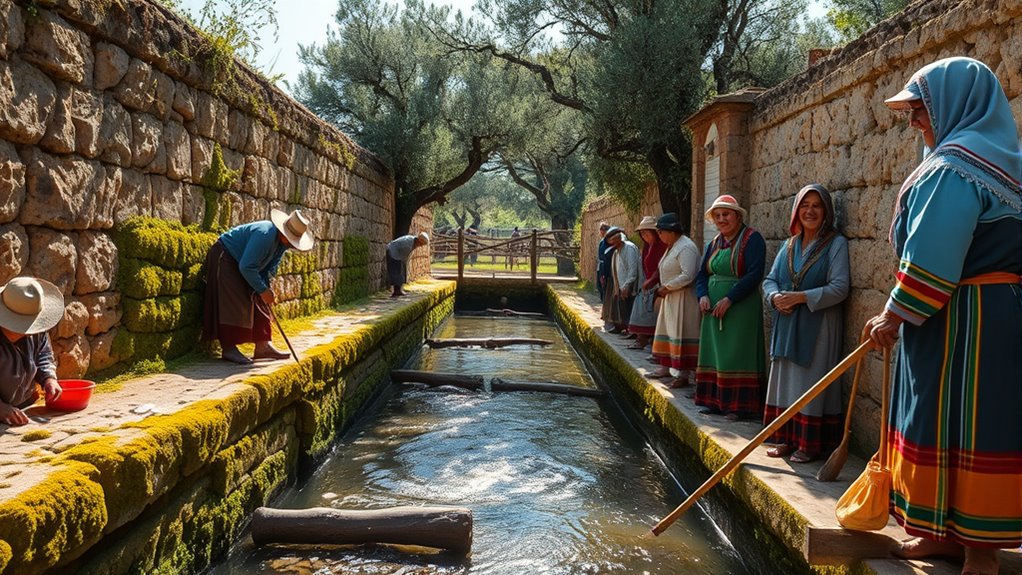
Each year, communities come together to clear and maintain the acequias, the historic irrigation ditches that sustain their land and way of life. This tradition isn’t just about keeping water flowing; it’s a crucial act of water conservation and a celebration of cultural heritage. You participate in these days knowing that your efforts help guarantee that water reaches every corner of the fields, supporting crops and livestock while preserving a way of life that’s been passed down through generations.
Communities unite annually to preserve acequias, honoring tradition and conserving water for future generations.
During acequia cleaning days, you’re reminded of the importance of conserving every drop of water. As you remove debris, clear blockages, and repair breached sections, you’re actively preventing water waste. This hands-on work ensures that water isn’t lost to evaporation or runoff, making your community’s irrigation system more efficient. It’s a practical, tangible way to practice water conservation, especially in arid regions where water is scarce. Your actions help stretch limited water supplies further, securing the land’s productivity and resilience amidst changing climate conditions.
Beyond the practical benefits, these days are steeped in cultural significance. The acequia system embodies local history and shared values, connecting you to ancestors who built and maintained these waterways long before modern technology. As you work alongside neighbors, elders, and youth, you’re participating in a living tradition that celebrates community, cooperation, and respect for nature. These gatherings often include storytelling, music, and communal meals, reinforcing a sense of identity rooted in the land and its water sources. You realize that maintaining the acequias isn’t just about irrigation; it’s about safeguarding a cultural heritage that defines your community’s character.
The annual tradition also teaches younger generations the importance of stewardship. You see children and teenagers learning the skills needed to keep the acequias functional, understanding that water conservation isn’t just a civic duty but a way to honor their ancestors’ hard work. These days foster a sense of shared responsibility, ensuring the legacy of sustainable water management continues. You feel pride knowing your participation helps keep alive a practice that respects both the environment and the cultural roots of your community.
In the end, acequia cleaning days serve as a reminder that protecting water resources and honoring cultural heritage go hand in hand. Your effort, whether digging, clearing, or simply being part of the community, helps sustain the land and its people. It’s a tradition that renews your connection to the environment and to each other, ensuring that generations to come will continue to benefit from this crucial, living legacy.
Frequently Asked Questions
How Are Acequia Cleaning Days Scheduled Annually?
You can find out when acequia cleaning days are scheduled annually by checking local community notices or contacting your town’s agricultural office. These events are typically planned with community involvement, often in early spring or fall, depending on the region. Participating helps maintain the acequia’s health, reducing environmental impact and ensuring water flow for everyone. Your involvement makes a difference, fostering tradition and supporting sustainable water management in your community.
Who Participates in Acequia Cleaning Traditions?
Imagine a river of community involvement flowing through your town, where everyone plays a vital role. You participate alongside neighbors, elders, and local families, united by a shared sense of purpose. These traditions hold deep cultural significance, connecting generations through collective effort. By joining in, you help preserve a cherished heritage, ensuring the acequia’s liveliness while strengthening bonds that make your community resilient and vibrant.
What Tools Are Used During Acequia Cleaning?
During acequia cleaning, you use tools and equipment like shovels, rakes, and hoes to clear debris and maintain the canal. You might also use buckets or wheelbarrows to move sediment. Maintenance techniques involve removing obstructions, trimming overgrown vegetation, and repairing any damages to guarantee proper water flow. These tools help you efficiently keep the acequia in good condition, preserving its function and the tradition behind its upkeep.
Are There Specific Rituals Associated With Acequia Cleaning?
Yes, there are specific rituals associated with acequia cleaning. You participate in local customs that often include ceremonial practices like offering prayers or blessings for a good irrigation season. These rituals strengthen community bonds and honor the water source. During cleaning, you might see processions or shared meals, reinforcing the cultural importance of maintaining the acequia. These practices guarantee respect and cooperation among community members, preserving the tradition for future generations.
How Do Acequia Traditions Vary Across Regions?
You’ll find that acequia traditions vary across regions due to cultural variations and local customs. In some areas, communities hold elaborate ceremonies and communal work days, while others emphasize quiet, ritualistic practices. These regional practices reflect the history and values of each community, shaping how they maintain and honor their acequias. By participating, you’ll experience unique traditions that connect people to their land, water, and shared heritage.
Conclusion
As you participate in Acequia Cleaning Days, remember you’re honoring a tradition as old as the land itself, much like the farmers who once relied on these waters. By keeping the acequias clear, you’re nurturing more than just a canal—you’re preserving a legacy of community and resilience. Just as rivers carve valleys over time, your efforts help sustain a heritage that flows through generations, reminding us that caring for the land is also caring for ourselves.